Oral surgery codes can be troublesome for dental billing. Extraction, root tip removal, and surgical incision all have specific CDT codes that go with them. Sending the wrong code can result in insurance claims denied—or paid out wrongly—angering patients and practices.
This guide breaks down the root tip extraction code and other significant oral surgery billing codes so you can make appropriate claims, avoid denials, and get fair reimbursement.
Why Oral Surgery Billing Codes Matter?
Oral surgery is one of the most billed dental specialties. Procedures range from simple extractions to complicated surgical removals. All of them require precise CDT coding for insurance claims.
Proper coding guarantees:
- Proper reimbursement for providers
- Fewer denials or delays in insurance
- Simplified communication between insurer, patient, and dentist
Because oral surgery typically involves emergencies—e.g., impacted teeth or infected root tips—the precise billing is even more important.
Root Tip Extraction Code Explained
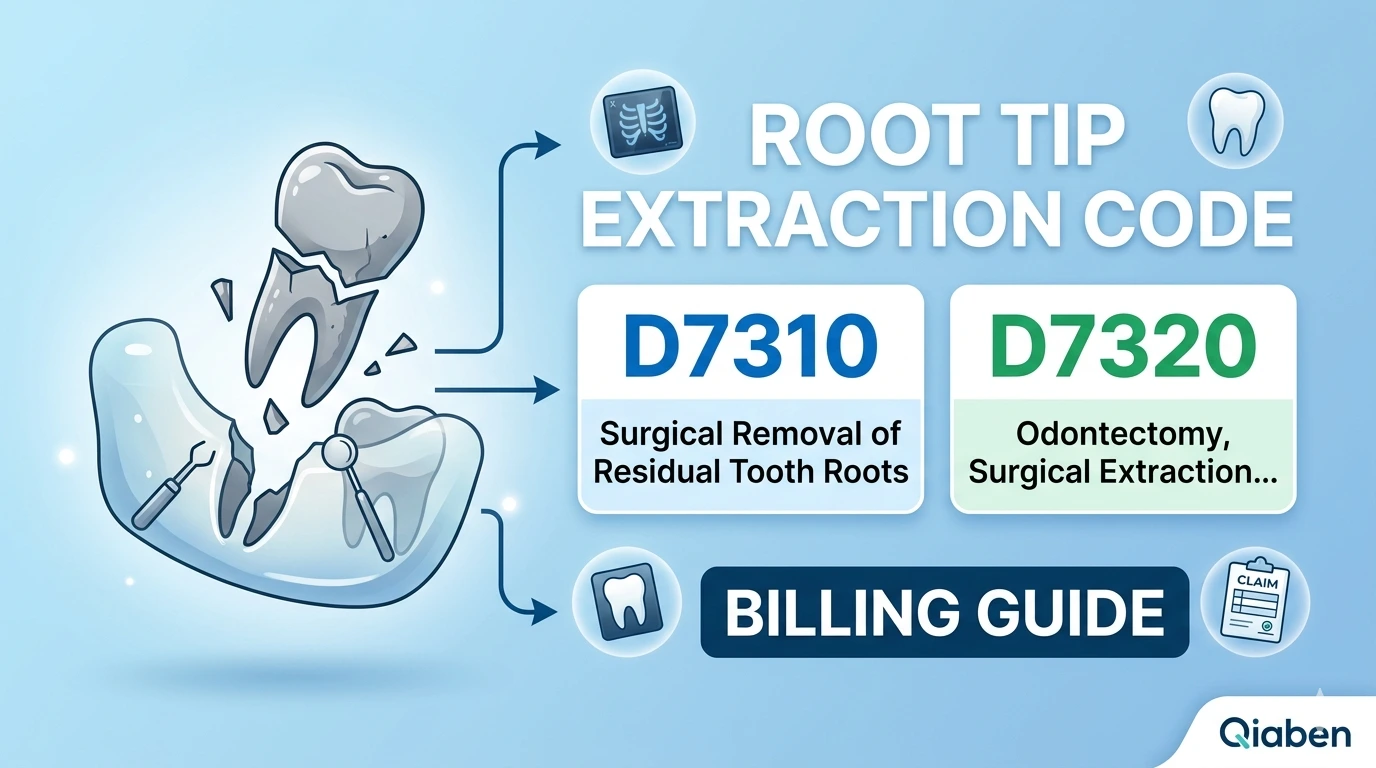
The extraction of the root tip is a unique oral surgical procedure in which a tooth root left behind in the jawbone is removed by a dentist or an oral surgeon after the crown or visible part of the tooth breaks.
CDT Code for Removal of Root Tip:
- D7250 – Surgical removal of remaining tooth roots (cutting procedure)
The code is used when:
- Surgical exposure to the gum tissue is required for the root tip
- The surrounding bone of the root tip may have to be destroyed
- Sutures after surgery may be required
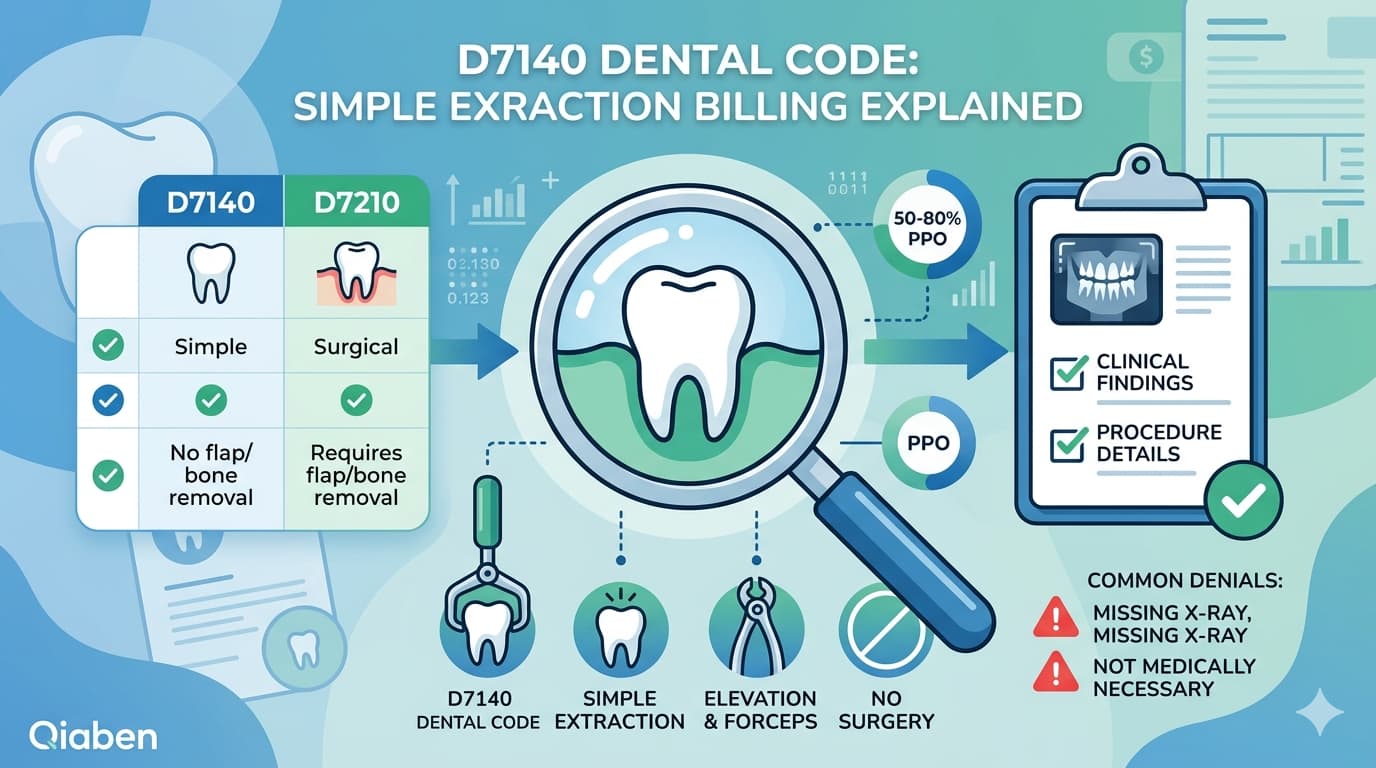
Note: Don’t confuse this with a simple extraction (D7140), which involves removal of an erupted tooth that is accessible and can be extracted without surgery.
Common Oral Surgery Billing Codes
Here’s a breakdown of the most frequently used oral surgery CDT codes besides root tip extraction
Code | Procedure | Description |
Simple extraction | Removal of an erupted tooth or exposed root (elevation and/or forceps only) | |
D7210 | Surgical extraction (erupted tooth) | Removal of erupted tooth requiring bone removal and/or sectioning |
D7220 | Removal of impacted tooth (soft tissue) | Tooth covered by soft tissue; incision and flap needed |
D7230 | Removal of impacted tooth (partial bony) | Tooth partially covered by bone; partial removal required |
D7240 | Removal of impacted tooth (completely bony) | Tooth fully covered by bone; requires extensive surgical removal |
D7241 | Removal of impacted tooth (completely bony, unusual) | More complex procedure with complications (e.g., nerve involvement) |
D7251 | Coronectomy (intentional partial tooth removal) | Surgical removal of crown, leaving roots intact when root removal risks nerve damage |
D7280 | Surgical access of an unerupted tooth | Procedure to aid eruption (often used with orthodontics) |
D7283 | Placement of device to facilitate eruption | Assists in guided eruption |
D7510 | Incision and drainage (intraoral soft tissue) | For treatment of abscesses |
D7511 | Incision and drainage (complicated) | Extra time/effort due to complications |
D7520 | Incision and drainage (intraoral, soft tissue) | Similar to D7510, often overlaps based on complexity |
D7953 | Bone replacement graft | Used during extraction sites for ridge preservation |
How to Choose the Right Code?
The distinction between a paid claim and a denied claim usually boils down to paperwork.
Oral surgery selection tips:
- Look at surgical vs. simple – Did bone removal or sectioning occur? It’s surgical (not D7140).
- Check if tooth was impacted – Was it encased in soft tissue, partial bone, or complete bone? Use D7220–D7241 appropriately.
3. Provide elaborate descriptions – If the procedure was complicated, add X-rays and clinical notes to bolster coding.
4. Do not double-code – Bill for the most suitable single code for each tooth/procedure only.
Real-Life Example Situations
Case 1: Root Tip Removal
- Patient cracks a molar during chewing. The crown is lost, but root fragments are present.
- Roots are surgically removed by the dentist after he or she opens the gum.
- Right Code: D7250
Case 2: Simple Extraction
- Patient’s premolar is mobile. Dentist raises and extracts it with forceps.
- Correct Code: D7140
Case 3: Completely Bony Impacted Wisdom Tooth
- Patient’s wisdom tooth is impacted behind bone. Bone needs to be removed with surgical access.
- Correct Code: D7240
Documentation Best Practices
Insurance companies deny oral surgery claims because proper documentation is missing. To prevent this:
- Send pre-treatment estimates whenever possible.
- Attach radiographs (periapical or panoramic X-rays).
- Add clinical notes explaining the complexity.
- Specify anesthesia if given (separate codes are used, i.e., D9222–D9223 for deep sedation).
Frequent Errors in Oral Surgery Billing
- Incorrect use of D7140 over D7250 – Root tip removals nearly always demand surgical coding.
- Failure to code for impaction level – Impacted teeth need different codes depending on whether soft tissue or bone is present.
- Failure to include narratives – Insurance won’t presume complexity; they need evidence.
- Not separate billing grafting – If bone grafting (ridge preservation) was performed, bill D7953 additionally.
Patient Perspective: Why Codes Matter
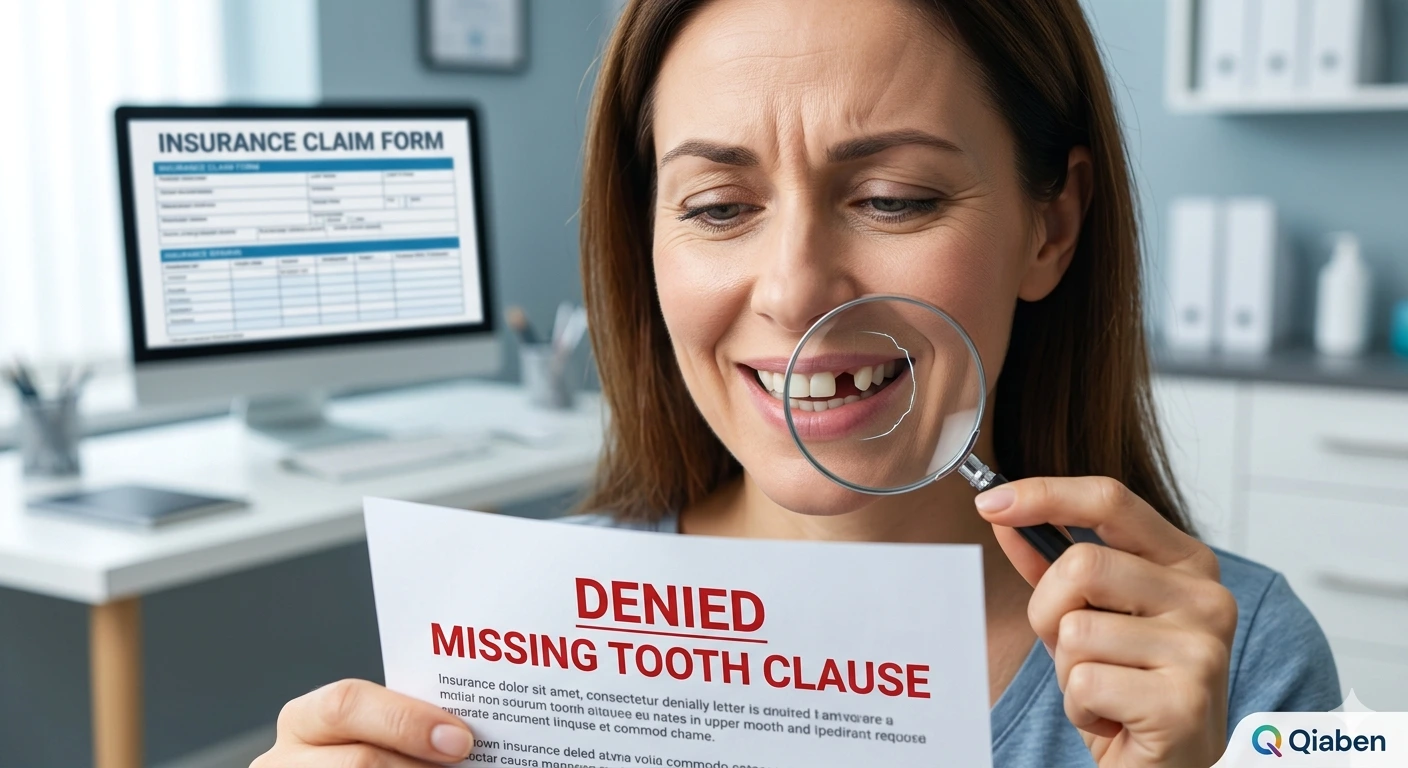
Patients ask themselves: “Why does my bill look so complicated?” or “Why was this denied?”
Here’s the reality:
- CDT codes are more than numbers—they decide how much the insurance company pays and how much patients will pay.
- A mere coding mistake can leave a $1,200 surgical extraction all on the patient.
- Informed patients who know codes can ask informed questions and prevent surprise bills.
Key Takeaways
- The Root Tip Extraction Code is D7250 (surgical removal of remaining tooth roots).
- Other key oral surgery codes are D7140 (simple extraction), D7210–D7241 (impactions), and D7510–D7953 (surgical procedures, grafting, and drainage).
- Documentation matters—always document X-rays, narratives, and clinical information.
- Coding errors result in denied claims, delayed payment, and patient dissatisfaction.
With knowledge of oral surgery billing codes, providers and patients alike can safeguard against unnecessary fees and facilitate easy insurance processing.