If you’ve ever looked at a dental bill or an insurance claim form, you’ve probably seen codes like D7140, D4341, or D1110. At first, these numbers may feel confusing. However, dental professionals rely on them for clear communication, accurate insurance claims, and proper documentation.
These codes come from the (CDT) system, which the American Dental Association (ADA) maintains. CDT codes form the backbone of dental billing and ensure that every dental procedure is described consistently across the country.
In this guide, we break down the most common dental codes—such as D7140 (tooth extraction) and D4341 (scaling and root planing). You’ll learn what they mean, why they matter, and how understanding them can make your dental visits and bills much less overwhelming.
Why Dental Codes Matter
Before going into individual codes, it helps to understand why dental codes exist in the first place.
1. Insurance and Billing Accuracy
Dental insurance companies and dentists use CDT codes to communicate clearly. Instead of saying “simple extraction,” a dentist uses D7140, and insurers instantly know what procedure was done and how to process it.
2. Consistency Nationwide
Whether you’re visiting a dental office in New York, Dallas, or Los Angeles, a CDT code always has the same meaning. This consistency prevents confusion and eliminates guesswork.
3. Patient Transparency
Although these codes may look complicated, they actually help patients understand exactly what they are paying for. When you recognize the codes, your treatment plans and billing statements make more sense.
4. Legal and Compliance Requirements
Accurate coding protects dental practices from compliance issues and helps ensure fair reimbursement.
Think of CDT codes as the “universal language” of dentistry, translating procedures into terms everyone can understand.
Decoding Some of the Most Popular Dental Codes
Let’s look at some of the most frequently used CDT codes and what they actually represent.
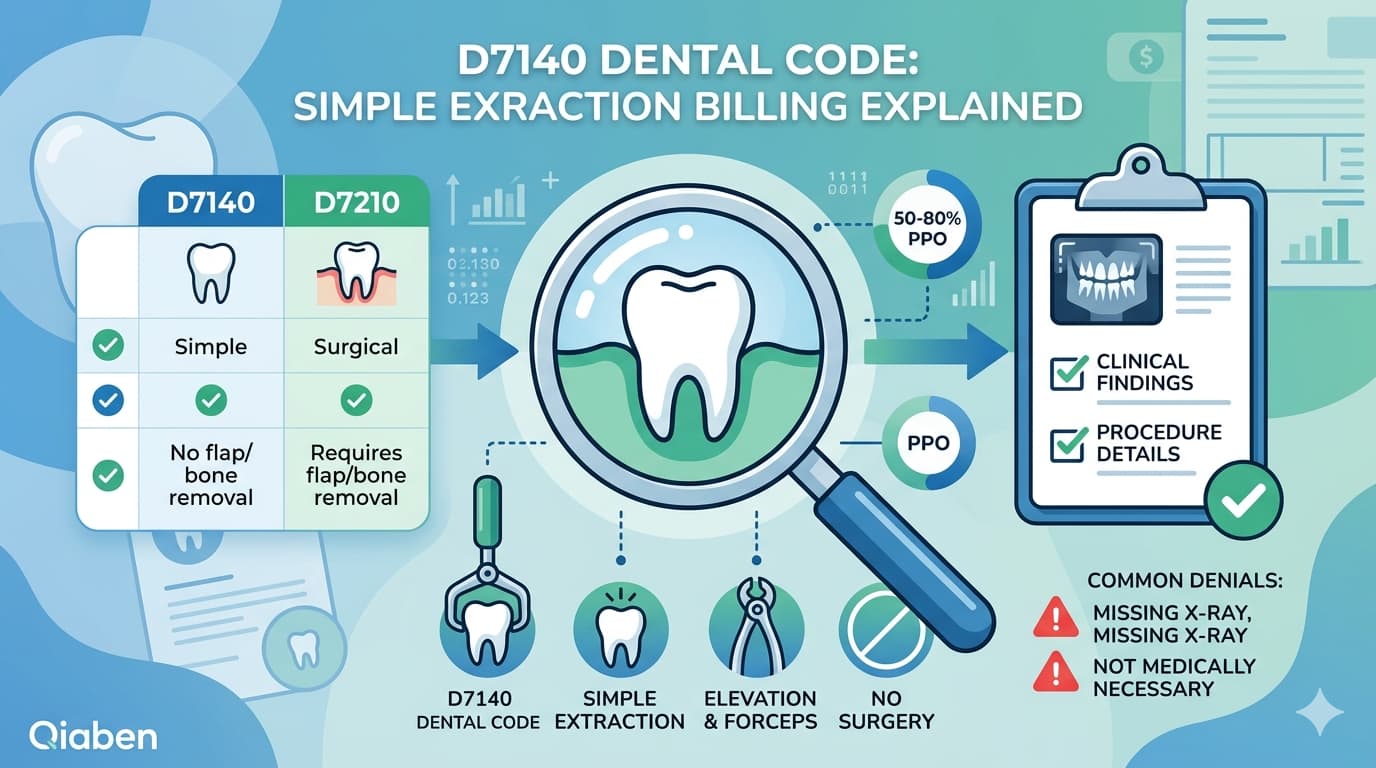
D7140 – Extraction, Erupted Tooth or Exposed Root
This code applies to removing a tooth that has already erupted or has an exposed root.
Severe tooth decay
Infection that cannot be treated with a root canal
Broken or damaged teeth
Preparing for orthodontic treatment
What it doesn’t include:
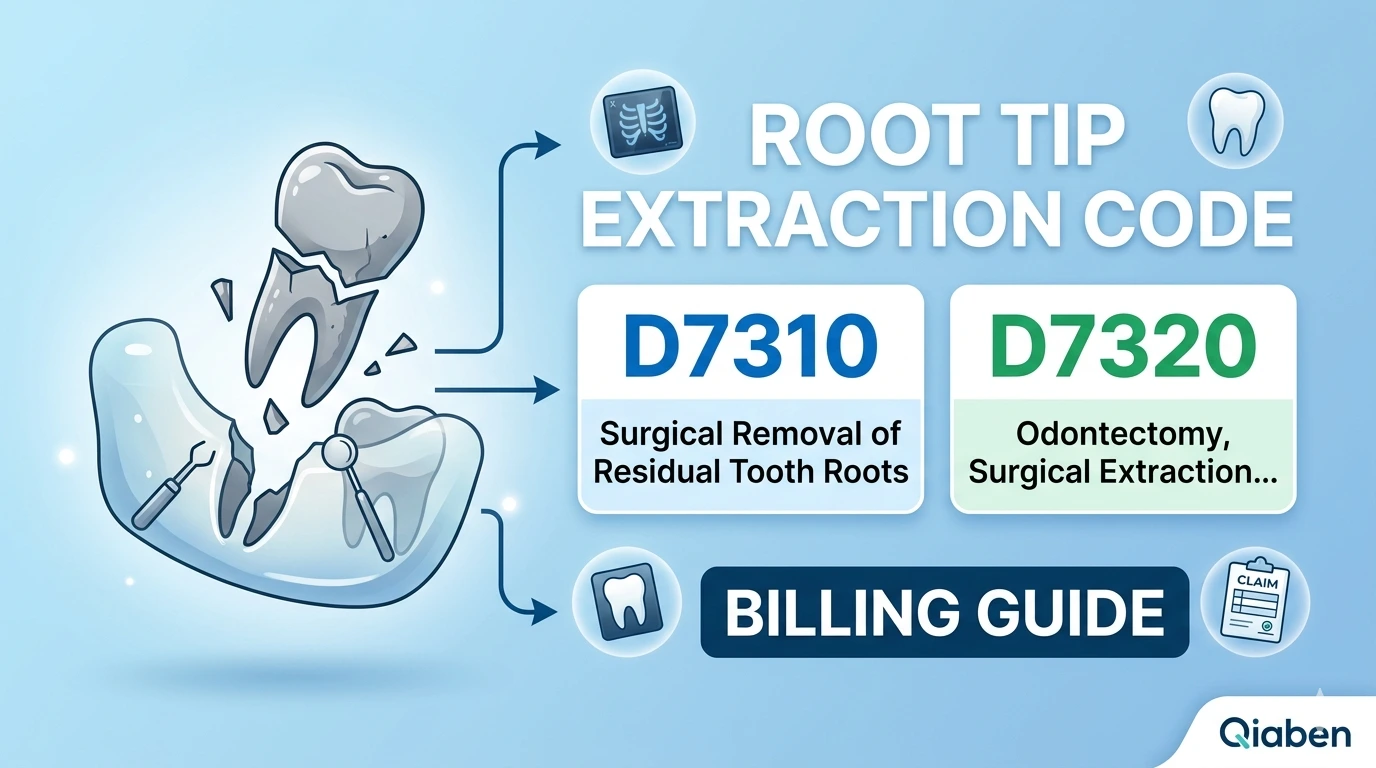
More complex surgical extractions—such as impacted wisdom teeth—use codes like D7210.
Insurance insight:
Most insurance plans cover a large portion of simple extractions, although copayments may still apply.
D4341 – Periodontal Scaling and Root Planing (SRP), Four or More Teeth Per Quadrant
This code refers to a deep-cleaning procedure for patients with mild to severe gum disease.
When it’s used:
Periodontal pockets of 4 mm or deeper
Gum inflammation or bone loss
Preventing further damage from gum disease
What to know:
D4341 applies when four or more teeth in a quadrant need treatment.
When fewer teeth are involved, D4342 is used instead.
Insurance insight:
Insurance usually covers SRP but may require periodontal charting or X-rays as proof. Coverage limits also apply, often once or twice a year.
D1110 – Prophylaxis, Adult (Cleaning)
This code represents a standard adult cleaning performed during a regular check-up.
When it’s used:
Preventive care for patients without active gum disease
Removal of plaque, tartar, and stains above the gumline
Difference from SRP:
Routine cleanings are preventive. In contrast, SRP treats gum disease.
Insurance insight:
Most plans cover D1110 at 100%—usually twice a year.
D2740 – Crown, Porcelain/Ceramic Substrate
This code refers to a full ceramic or porcelain crown.
When it’s used:
Broken, cracked, or heavily filled teeth
Cosmetic improvements requiring natural-looking materials
Insurance insight:
Insurers often cover only part of crown procedures, leaving the patient with a portion of the cost.
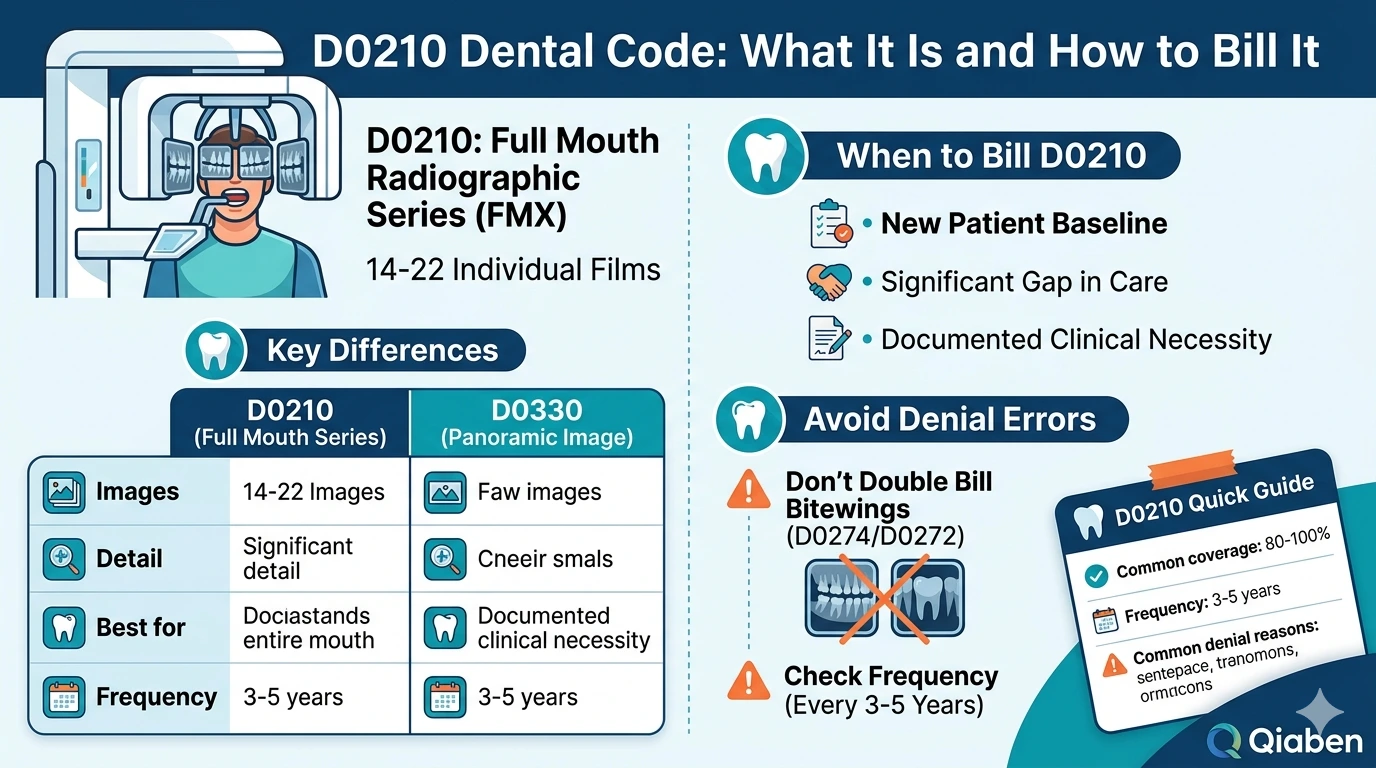
D0330 – Panoramic Radiographic Image (Panoramic X-Ray)
A panoramic X-ray gives a complete view of the mouth, including the teeth, jawbones, sinuses, and joints.
When it’s used:
Evaluating wisdom teeth
Diagnosing jaw issues
Planning orthodontic or implant procedures
Insurance insight:
Most insurance plans cover a panoramic X-ray every 3–5 years.
D2391 – Resin-Based Composite, One Surface, Posterior
This code represents a tooth-colored filling used in back teeth.
When it’s used:
Small to moderate cavities
Decay in molars or premolars
Why patients prefer it:
Composite fillings match natural tooth color, unlike silver amalgam fillings.
How Dentists Make Decisions about Which Codes to Use
Dentists do not choose codes randomly. Instead, they select codes based on the actual treatment provided and the documentation in your record.
For example:
Routine cleaning cannot be coded as SRP unless gum disease is documented.
Extraction codes vary depending on whether a tooth is erupted, impacted, or requires surgery.
X-rays have different codes based on type—bitewing, full-mouth, or panoramic.
Accurate coding prevents overbilling and ensures fair reimbursement.
Patient Tips for Understanding Dental Codes
1. Request a Written Treatment Plan
Ask for a treatment plan that includes CDT codes so you can understand what is planned and what insurance may cover.
2. Look Up Codes
Since CDT codes are widely available, you can easily look them up. For example, D4341 always refers to deep cleaning.
3. Know Your Insurance Limits
Most plans limit certain procedures. For instance, D1110 is usually allowed twice per year.
4. Ask for Clarification
Your dentist or billing coordinator can explain any code in simple terms.
The Bigger Picture: Dental Codes and Oral Health
Dental codes reflect your overall oral health journey.
If you see mostly D1110 (cleanings) and D0120 (checkups), you’re maintaining good preventive care.
If D4341 (deep cleaning) or D7140 (extraction) appears often, your dentist is addressing more advanced issues.
Understanding these codes helps you make confident decisions about your dental care.
Final Thoughts
Dental codes like D7140, D4341, and D1110 may look confusing at first. However, they play a crucial role in helping dentists communicate clearly, maintain accurate records, and ensure consistent billing.
By becoming familiar with the most common CDT codes, you can:
Understand your treatment
Avoid billing surprises
Ask the right questions
Navigate your dental care with confidence
Your oral health is one of your best long-term investments. Learning the “language” of dental codes helps you take charge of it more effectively.