When a tooth breaks during an extraction and the root tip is left behind, or a patient presents specifically to have a retained root removed, you’re no longer in simple extraction territory. The root tip extraction code you use will depend on exactly what was done, and getting it right matters both for accurate documentation and for getting paid correctly.
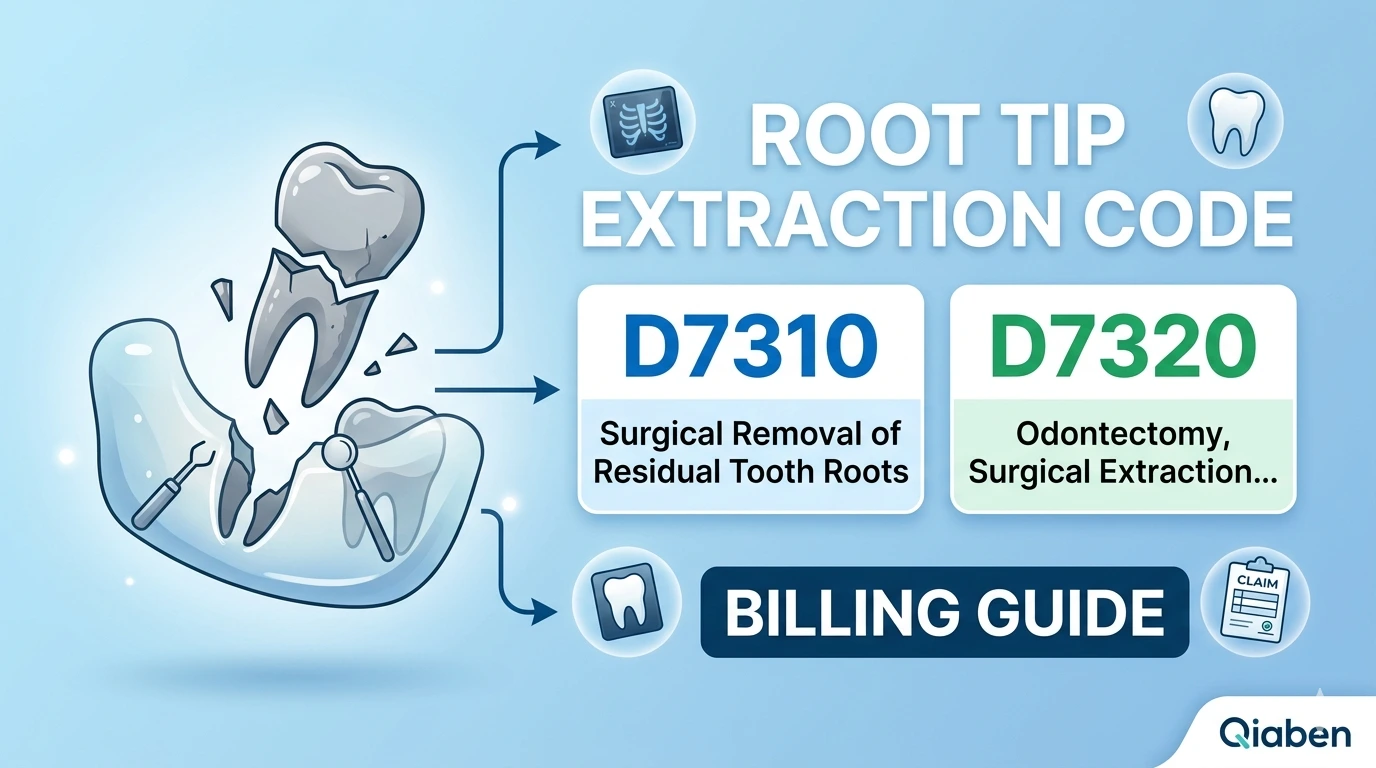
This guide covers the main root tip extraction codes — D7310 and D7320 — what each one covers, when to use which, and how to document and bill them to avoid the denials that commonly come up with these procedures.
What Is a Root Tip Extraction?
A root tip extraction refers to the surgical removal of a root tip or root fragment that remains in the jaw after a tooth has been extracted, either from a previous extraction or from the current procedure where the crown portion broke.
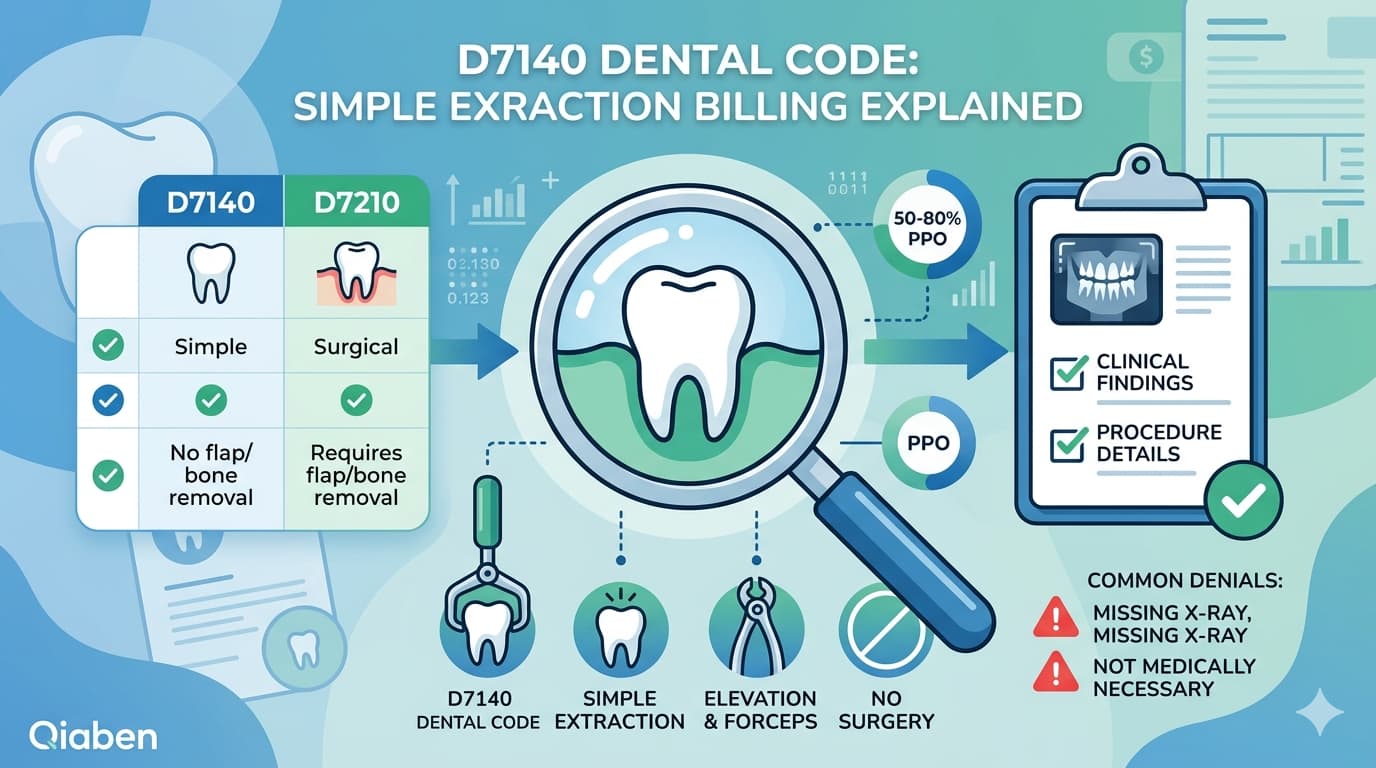
This is different from a routine extraction because it typically involves reflection of a mucoperiosteal flap, bone removal to access the root tip, surgical elevation and removal of the fragment, and suturing the site closed.
D7310: The Root Tip Extraction Code for Retained Roots
D7310 — Surgical removal of residual tooth roots (cutting procedure) — is the root tip extraction code used when removing a root tip or fragment retained in the jaw following a previous extraction. Key characteristics:
- The root tip was retained from a previous extraction at a different appointment
- A surgical cutting procedure is required
- This code is billed when only the root tip remains — there is no crown
Root Tip Left During Current Extraction: Which Code?
If a root tip breaks off during the current extraction and requires surgical removal, this is more nuanced. If the root tip removal is part of the same surgical encounter, some dentists bundle it into the original extraction code. If it significantly increases the complexity and time, a separate root tip extraction code may be justified — but documentation must support it.
The safest path: document clearly in the clinical notes that the root fractured during extraction, what was done to retrieve it, and whether additional instrumentation or bone removal was required.
Documentation Requirements
Regardless of which root tip extraction code you’re billing, your clinical notes should include:
- The reason the root tip is present (previous extraction, fracture during current procedure)
- The location — which tooth, which root, which quadrant
- The surgical technique used — was a flap reflected? Was bone removed?
- Time spent, if your fee schedule includes time as a factor
- Post-operative instructions and materials used
Peri-apical x-rays showing the retained root before and after removal are strongly recommended as attachments.
Common Denials for Root Tip Extraction Codes
“Procedure not covered under this plan.”
Some basic dental plans don’t cover surgical extractions or oral surgery at all. Verify benefits specifically for surgical oral surgery procedures before the appointment.
Missing x-ray attachment.
For any retained root from a previous procedure, periapical radiographic evidence is almost always required. Submit it as part of the original claim.
Down-coded to simple extraction.
Some payers will attempt to process the root tip extraction code as a simple extraction. If this happens, appeal with surgical documentation and x-rays.
Quick Reference
Code | Description | When to Use |
D7310 | Surgical removal of residual tooth roots (cutting procedure) | Root tip retained from previous extraction |
Documentation needed | X-ray, surgical notes, flap/bone description | Always required |
Final Thoughts
The root tip extraction code situation is one of those areas where documentation really does carry the claim. The procedure itself is often straightforward; the billing issue is almost always a documentation gap. Build the pre/post radiograph attachment into your protocol for any retained root case, and write clinical notes that describe the procedure specifically enough that a reviewer who wasn’t in the room can picture what was done.
If root tip extraction denials are a recurring issue for your practice, Qiaben can help identify the pattern and fix the documentation workflow. Contact us here.
~1,590 words | Keyword density ~0.9%