Dental insurance can be like a foreign language—codes, clauses, and fine print galore. For patients, it’s daunting. For billing offices and dental practices, misinterpretation of insurance jargon can result in rejected claims, slow payments, and angry patients.
That’s why it’s essential to know three of the most misinterpreted aspects of dental insurance billing:
- Missing Tooth Clause
- Coordination of Benefits (COB)
- Non-Duplication of Benefits
Here are the confounding clauses they’ve distilled in plain language so you can feel secure about how to navigate dental insurance—whether as a patient, practice manager, or dental biller.
Why Dental Insurance Clauses Are Important
Dental treatment is costly. A crown is more than $1,000. Dental implants usually cost $3,000–$5,000. Insurance only benefits you if you know the rules.
Many denials and unexpected out-of-pocket bills aren’t because the insurance didn’t cover the service—it’s because the fine print limited coverage. That’s where clauses like the missing tooth clause, COB, and non-duplication come in.
By the end of this article, you’ll know what these terms mean, why they exist, and how to work around them.
What Is the Missing Tooth Clause?
What Is the Missing Tooth Clause?
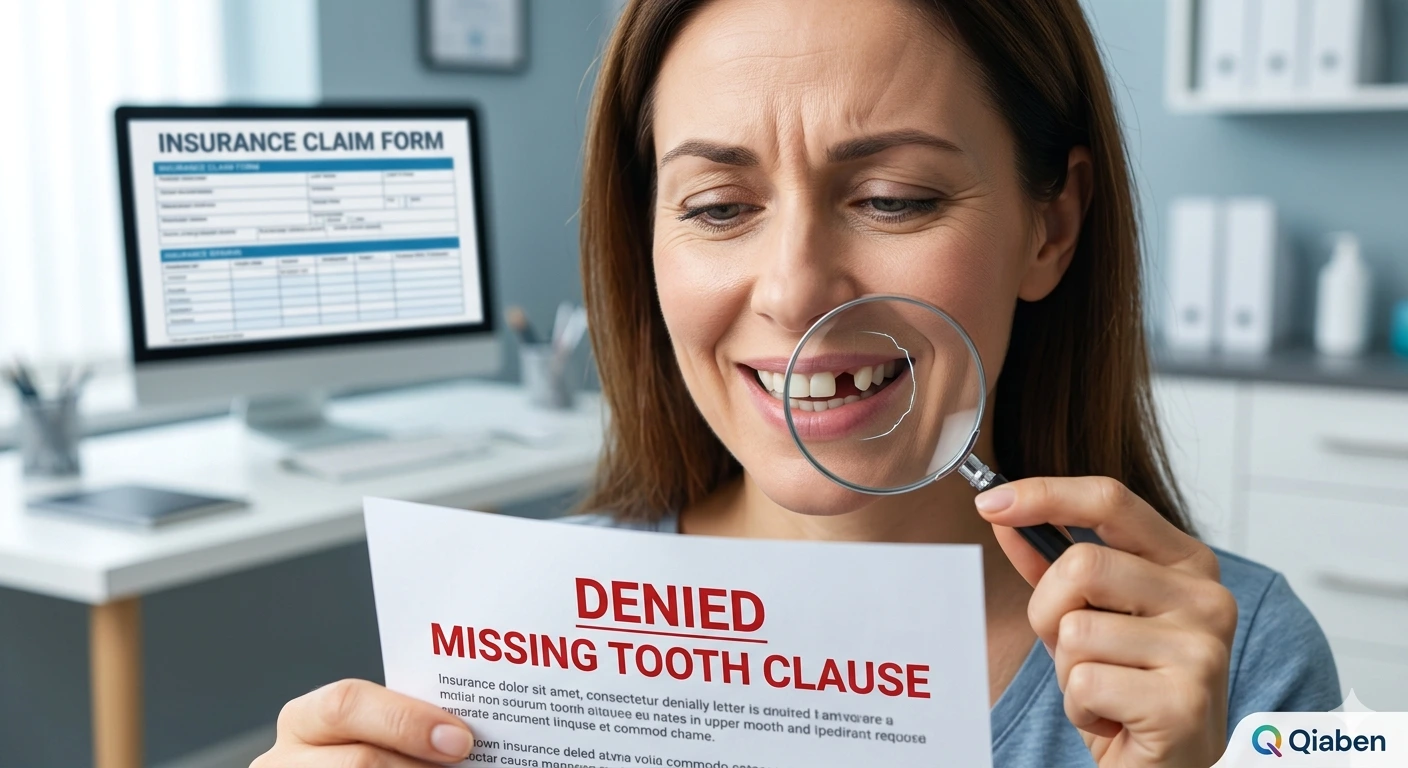
Missing Tooth Clause is a policy in most dental insurance policies that states if you lost a tooth prior to your coverage, then your plan won’t pay for you to replace it.
Example:
- You lost a tooth in 2020.
- You purchase dental insurance in 2024.
- You require a bridge or implant to replace that tooth.
- Result: Your insurance might deny the claim because the tooth was missing prior to coverage.
Why Do Insurers Use This Clause?
The missing tooth clause helps shield insurance companies from the cost of pre-existing conditions. Without it, individuals would purchase insurance after losing a tooth, have a costly replacement, and then drop their coverage.
What Does It Apply To?
The clause typically applies to:
- Bridges
- Dentures
- Dental implants
It generally does not apply to fillings, crowns, or other restorative procedures on existing teeth.
How to Work Around It?
- Verify the policy prior to enrolling. There are premium plans without the missing tooth clause.
- Employer plans tend to be less restrictive.
- Consult your dentist for alternatives—sometimes partial dentures are less restrictive than implants.
What Is Coordination of Benefits (COB)?
Coordination of Benefits (COB) is what you use when you have two dental plans. This occurs a lot—such as when a child is on both parents’ plans, or when you have coverage through your employer and also from your spouse.
COB decides which plan covers first (primary) and which one covers second (secondary).
Example:
- You have two plans: Plan A and Plan B.
- Your dentist charges $200 for a cleaning.
- Plan A (primary) covers $120.
- Plan B (secondary) can cover the remaining $80—depending on COB rules.
How Is Primary vs. Secondary Decided?
- For children: The “birthday rule” usually applies—the parent with the earlier birthday in the calendar year is the one who gives the primary plan.
- For adults: Your own employer’s plan is typically primary, and your spouse’s plan is secondary.
Why It Matters
Without COB, both plans could overpay—or neither could pay. That’s why proper billing and proper coordination are essential.
What Is the Non-Duplication of Benefits Clause?
The non-duplication of Benefits clause restricts how much a secondary insurance plan will cover after the primary plan has already paid out a claim.
In other words: your secondary plan will not pay anything if your primary already paid out an amount of or more than what the secondary would have covered.
Example 1:
- $150 for cleaning cost
- Plan A (primary) pays: $120
- Plan B (secondary) would pay $100 normally
- Since Plan A already paid higher ($120 > $100), Plan B pays $0.
Example 2:
- Crown expense: $1,000
- Plan A pays: $500
- Plan B would otherwise pay $400
- Since Plan A paid lesser, Plan B can cover the shortfall (but no more than $400).
Reason Insurers Employ This Clause
It discourages patients from “double-dipping” and insurers from overpaying.
Key Differences: COB vs. Non-Duplication of Benefits
It’s easy to confuse COB and non-duplication. Here’s the breakdown:
Term | What It Does | When It Applies |
COB | Determines which plan is primary vs. secondary | Any time a patient has two active dental insurance plans |
Non-Duplication of Benefits | Limits how much the secondary plan pays if the primary already paid more | Only if the secondary plan has this clause |
Real-Life Scenarios
Scenario 1: The Missing Tooth
Mary had a molar go missing years ago. She signs up for dental insurance and requests an implant. Her claim is rejected because of the missing tooth exclusion—so she pays out of pocket.
Scenario 2: Double Coverage Without Non-Duplication
James has two plans (his employer + his spouse’s). Plan A pays 70% of a filling, and he owes $60. Plan B pays the remaining $60. He pays $0.
Scenario 3: Double Coverage with Non-Duplication
Sarah has two policies. Plan A pays 80% of her crown. Plan B has a non-duplication rider. Because Plan A paid more than Plan B would have paid, Plan B pays nothing. Sarah pays the difference.
How Dental Practices Can Prevent Billing Headaches
For office managers and dental billers, these riders can be headaches if they are not dealt with properly. Here’s how to remain ahead:
- Check benefits in advance. Always call or go online to review clauses prior to treatment.
- Inform patients. Discuss their responsibility before they get in the chair.
- Get CDT codes right. Incorrect codes = denials. Always verify the procedure with the right code.
- Document rules of COB. In case a patient has two coverages, maintain clean records of which plan is primary.
- Get claims submitted properly. Include narratives, X-rays, or period charts if necessary.
Patient Tips: How to Safeguard Yourself
If you are a patient, here’s how to prevent surprise bills:
- Request clauses. Before enrolling, ask: “Is this plan missing tooth covered? Non-duplication of benefits?”
- Contact HR. If you have employer coverage, HR can clarify COB rules.
- Request pre-treatment estimates. Dentists can file a “pre-determination of benefits” with your insurance so you know exactly what’s covered.
- Keep records. In case you change plans, retain evidence of earlier coverage—it can be used to waive waiting periods or provisions.
Final Thoughts
Provisions in dental insurance such as the Missing Tooth Clause, Coordination of Benefits, and Non-Duplication of Benefits sound like fine print but indeed have tangible financial consequence.
- The Missing Tooth Clause shields insurers against pre-existing conditions.
- Coordination of Benefits prevents dual payments for similar benefits.
- Non-Duplication of Benefits caps how much secondary plans will cover.
By familiarizing themselves with these definitions, patients can prevent surprise bills and dental practices can minimize claim denials and maintain cash flow steady. The key takeaway? Don’t wait until after treatment to learn your coverage rules. Read the policy, ask questions, and work with your dentist’s billing team to make the most of your benefits.