Top Dental Billing Issues and Solution for 2025
The dental sector has been experiencing a tremendous digital revolution over the last couple of years, and with 2025 on the horizon, its billing is still its most challenging—and important—aspect. More practices, changing rules, and patients demanding smooth service have dental billing experts working in an increasingly dynamic world on a daily basis. In this blog, we address the biggest issues dental offices are now facing in billing and present solutions that work on the current best practices and technologies.
Why Dental Billing Is Changing Rapidly in 2025
Post-COVID, technology uptake has accelerated in healthcare. Dentistry, otherwise less amenable to change, now has the same degree of digital maturity as hospitals and large health organizations. From cloud-based dental PMS through automated claims monitoring, remote employees, and AI-based analytics, the billing landscape is light years from five years ago.
The driving forces for transformation are:
- High claim denial rates.
- Rising labor and training expenses.
- Regulatory monitoring and HIPAA compliance revisions.
- Multi-site practice central billing.
- Gaining velocity towards AI-based automation and analytics.
- Patient digital ease expectations.
- Inflation and insurer financial squeezes
Let’s analyze the largest 2025 dental billing issues and best approaches to overcome them.
Largest 2025 Dental Billing Issues
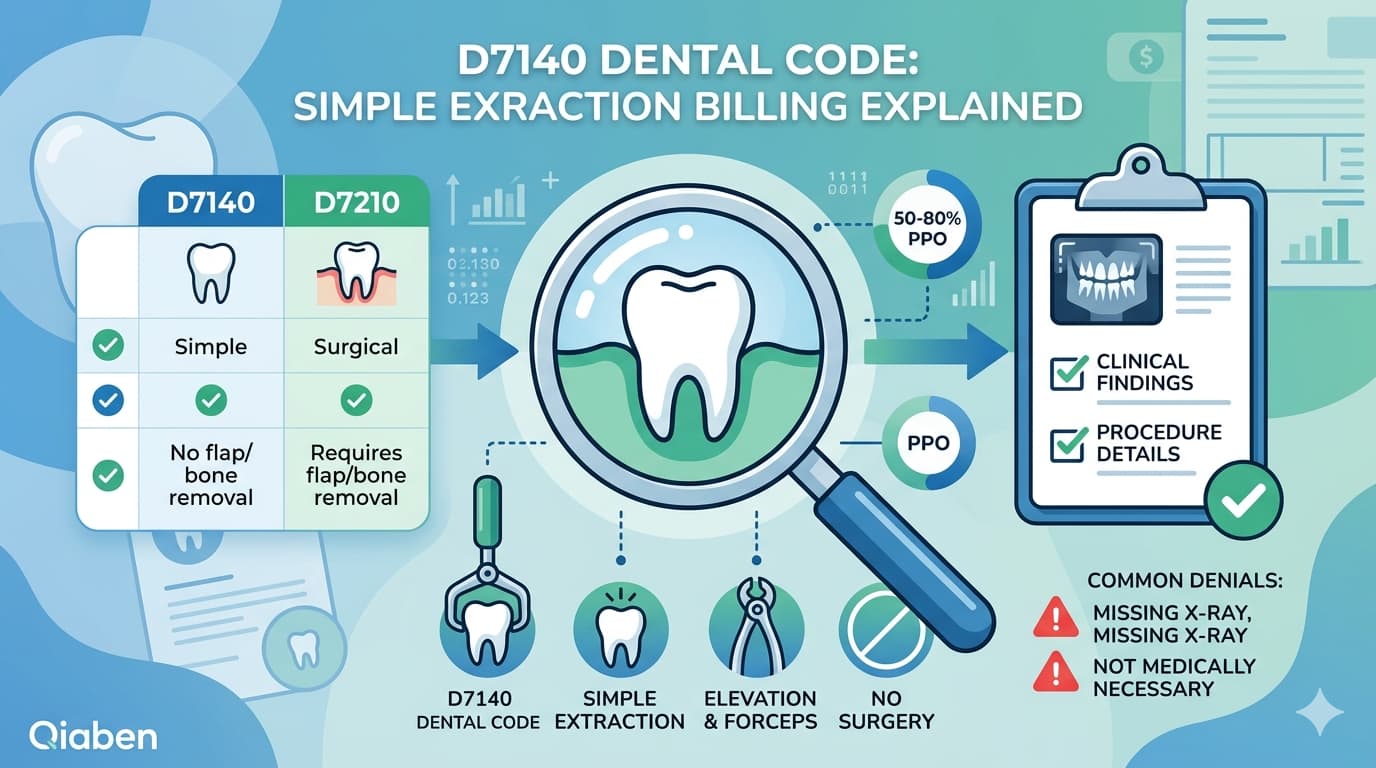
1. Coding Mistakes & Claim Denials
Among the most common problems in dental billing these days is incorrect coding. Even
slight mistakes in CDT or ICD-10 coding will cause rejections or claim delays.
Research indicates that approximately 80% of dental claims denials are caused by errors in documentation, improper use of codes, or lack of pre-authorizations.
Why It Happens:
- Updated code sets more often than not.
- Inadequate training for in-house billing personnel.
- Availability of unavailable real-time claim scrubbing technology.
2. Staff Shortages & High Turnover
Recruiting and retaining talented dental billing staff is challenging. Practices are plagued by high turnover, extended vacancies, and expensive onboarding processes.
Why It Matters:
- Errors in billing escalate during transitions.
- Fatigued staff make more errors.
- In-house or internal billing can be 60–70% more expensive than outsourcing on extended operations.
3. Managing Multi-Location Practices
Group practice or Dental Service Organizations (DSOs) struggle to standardize billing in multiple offices.
Typical challenges are:
- Inconsistent implementation of PMS.
- No centralized SOPs.
- Challenging tracking of KPIs such as AR days and denial rates from office to office.
4. Challenges with Insurance Verification
5. Increasing Compliance Burdens
HIPAA, Medicaid, and state regulations continue to change. Rules on security, access audits, and documentation make compliance a matter of more than just checkboxes.
A 2025 report revealed 1 of every 4 dental offices didn’t meet new HIPAA audit requirements because they used outdated software or training.
6. Inefficient Utilization of Technology
Whereas some have embraced digital solutions, there are others that are not effective in utilizing them or investing in sufficient training, and that creates inefficiencies.
Signs of Underuse:
- Manual entry of EOBs instead of using integrations.
- Using older, locally installed PMS.
- No data analytics for budgeting and forecasting.
Solution That Work in Modern Billing
Having pointed out the major challenges, let’s discuss solutions that have been shown to be effective in 2025.
1. Leverage AI and Automation
Artificial Intelligence is a game-changer in dental billing. AI software can:
- Auto-detect claim errors prior to submitting them.
- Identify rejections or slow payment trends.
- Foresee denials and automate appeals
Real-World Example: One practice used AI-powered scrubbing software and decreased denials by 30% within 60 days.
2. Invest in Billing Team Training
Quarterly education for your billing team on CDT code updates and general insurer policy is a must. The majority of systems these days do include real-time coding recommendations directly within PMS systems.
Bonus Tip: Conduct mock audits so the team is compliance-ready.
3. Leverage Outsourced Billing Partners
Having billing done by credentialed billing experts eradicates errors, lowers long-term expenditure, and increases collection rates. It’s especially helpful for:
- Specialty procedures.
- Payer coordination that is complicated.
- High-volume claims settings.
Comparison Snapshot:
4. Leverage Real-Time Insurance Verification Tools
Software such as Vyne Dental and DentalXChange enable front office to verify insurance in real-time, minimizing the likelihood of denied claims or coverage disputes.
5. Centralize Multi-Office Group Billing SOPs
Centralized billing platform with standardized SOPs and dashboards ensures that all locations are running off the same playbook. Key performance indicators (KPIs) must be tracked weekly by location.
Recommended KPIs:
- Average Days in AR.
- Claim Denial Rate.
- First-Pass Resolution Rate
6. Enhance Security for Remote Billing Activity
Remote work is the new reality, so practice must have secure access procedures in place:
- Cloud-based, HIPAA-compliant apps.
- VPN or encrypted access routes.
- Role-based user access and audit history
7.Predictive Analytics for Smarter Decisions
Analytics solutions can now assist practices to predict:
- Which codes are most likely to be denied.
- Slowest-paying payers.
- Staff productivity based on claims processed
Bonus Tip: Practices with predictive analytics attain 20–25% faster payment cycles and fewer rejected claims.
8. Leverage Centralized Dashboards
Streamline reporting with Power BI or Tableau with your PMS. Enable quicker visibility into:
- Claims outstanding.
- Aged AR balances.
- Payer or location trends
9. Automate Payment Posting
Advanced PMS software can auto-post EOB, eliminating manual labor and error. Fewer posting errors translate to less reconciliations and better financial reporting.
Compliance and Documentation Excellence
Practices
should make sure all documentation is insurer-compliant, particularly
higher-priced procedures such as crowns, implants, and ortho.
Documentation Improvement Tips:
- Employ narrative templates as part of your PMS.
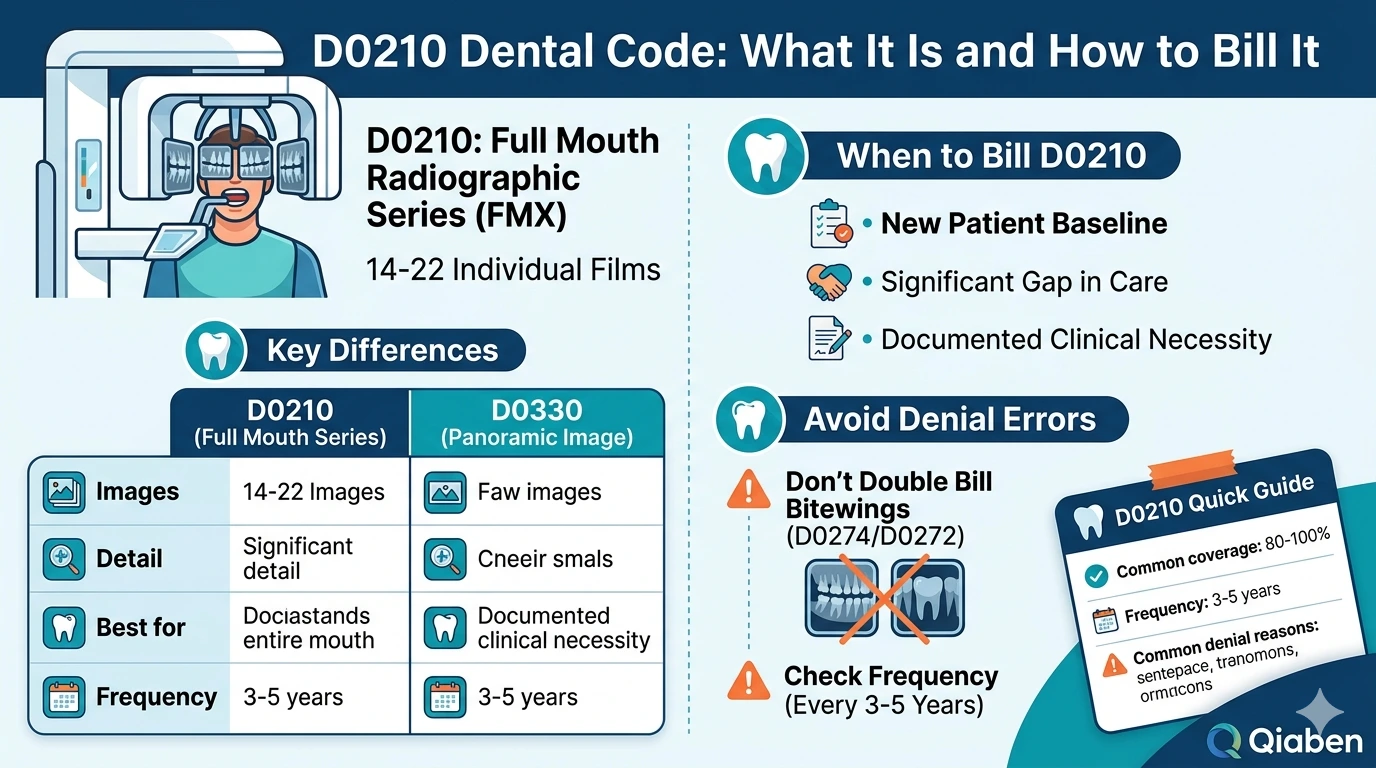
- Include radiographs and perio charts where indicated.
- Educate hygienists and front desk on documentation quality
Documentation Audit Checklist:
- Narrative descriptions consistent with code used.
- Pre-op and post-op radiographs completed.
- Diagnostic information corroborating treatment plan.
- Signed consent forms stored securely.

What the Data Says: Key 2025 Billing Statistics
Metric | Value |
Avg. Claim Denial Rate | 15% |
In-House Billing cost (per claim) | $8.5 |
Outsourced Billing cost | $5.25 |
Avg. time to collect payment | 23 days |
Revenue lost to billing errors (annual avg.) | $65,000 |
Practices using AI tools | 58% |
Practices outsourcing billing | 42% |
Emerging Trends to Keep an Eye On
1. Blockchain for Claims Tracking
Still in its infancy, but promising in validating claims and preventing fraud. Blockchain technology has the capability to deliver unalterable records that are accepted by insurers and providers.
2. AI-Driven Appeals
Automated appeals eliminate man-hours and can reply to denials in hours. Systems now are able to ascertain appealable denials and auto-generate appeal letters.
3. Staffing-as-a-Service
On-demand billing experts are now offered by some vendors, eradicating the delays of recruiting. Especially helpful in turnover or seasonal instability.
4. Unified RCM Platforms
Bipartner increased use of single platforms including eligibility, billing, payments, and analytics will be expected. Integration of the revenue cycle reduces errors and speeds processes.
5. Augmented Reality Staff Training
New augmented reality technology is being piloted to instruct front desk and billing personnel in an interactive, immersive manner. It enhances recall and lessens mistakes.
Last Thoughts: Dental Billing with Confidence
Dental billing isn’t just about claims submissions anymore. It’s strategy, tech, and effective process. You’re an office manager with a handful of practices, or a solo dentist trying to keep your head above water in the AR, doesn’t matter. Navigating the new landscape of 2025 is crucial.
Embracing automation, improving training, and choosing the right support model—in-house, outsourced, or hybrid—is the way you reduce errors, get paid faster, and stay compliant.
The 2025 billing headaches are real, but so are the solutions. Your practice can prosper with the right systems and partners.
Need expert billing assistance or strategy guidance?
Go to Qiaben.com to:
- Find remote billing solutions.
- Download our free 2025 Billing Optimization Kit.
- Schedule a consultation with experts
Make 2025 the year your dental billing process is a strength—not a struggle.