The Changing Role of Dental Billing Services in Modern Dentistry: What Every Practices Needs to Known in 2025
No longer is billing dental an afterthought in the back room; it’s a best friend for every successful 2025 dental practice. Paper claims, navigating old insurance cards, or battling the ever-changing nature of healthcare compliance are all in our rearview mirror. So now it actually does boil down to how your dental billing is done: it can make or break your practice—in patient satisfaction and employee morale, cash flow, and even your ability to grow and expand.
In this in-depth guide, we’ll explore the real role of dental billing services in modern dentistry, with over 2,000 words of actionable insights. Whether you’re a solo dentist, office manager, or part of a multi-location group, understanding how to optimize your billing function is essential to long-term success.

What Exactly Are Dental Billing Services?
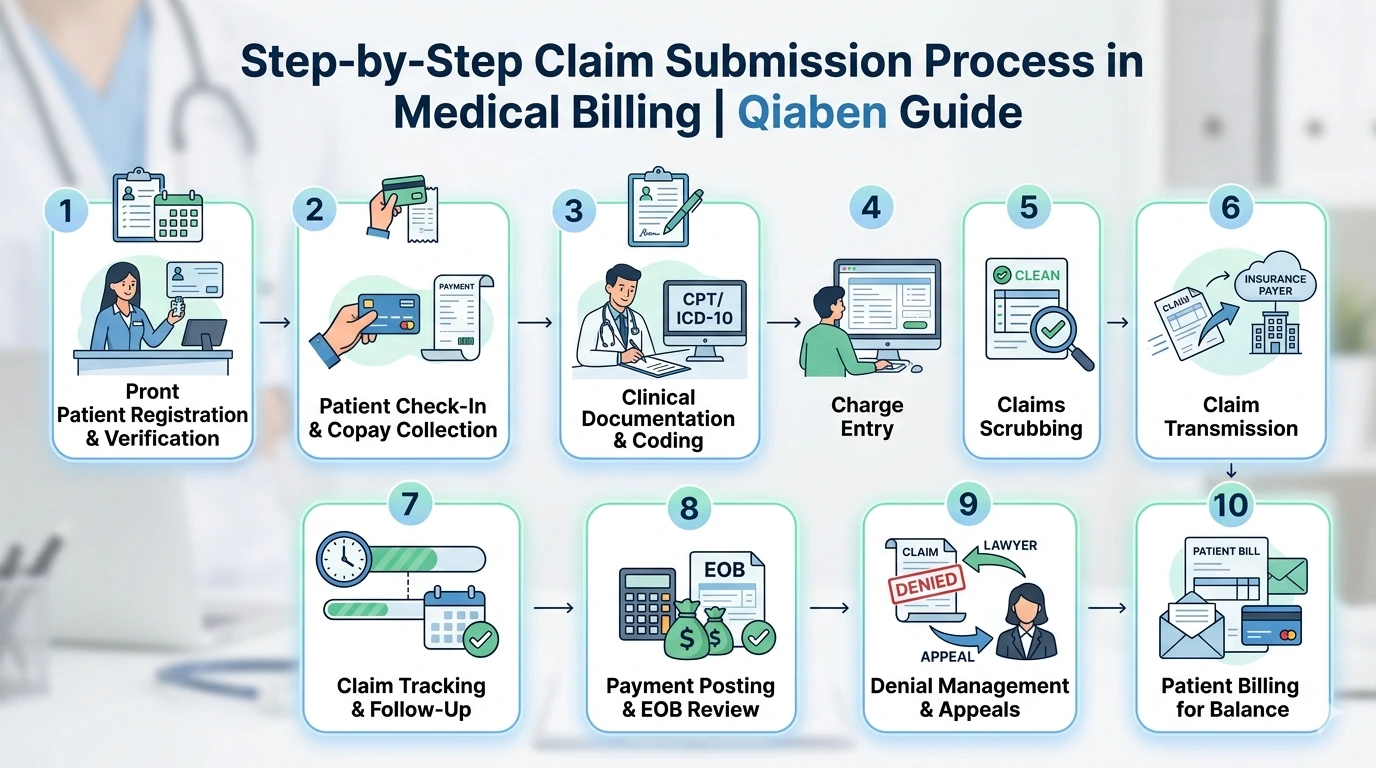
Dental billing procedures and operations that include the preparation, submission, follow-up, and processing of dental service claims. These were usually included:
- Insurance verification.
- Proper coding of procedure by CDT codes.
- Submission of claims for insurance.
- Posting payments and adjustments.
- Denial or rejection processing on claims.
- Patient billing and collection processing
Things are very different in 2025. With the advent of AI technology, HIPAA compliance issues, increased payer complexity, and having to get reimbursed quicker, dental billing services have evolved into a technology-focused, compliance-based, and strategically complex business.
Why Dental Billing is More Important in 2025 than Ever Before
Patient Expectations Have Changed
Patients are more informed, dollar-conscious, and eager to be completely knowledgeable about their coverage, co-pays, and out-of-pocket spending. Surprise billing or unbilled coverage will earn bad online reviews and loss of patients.
Insurance Guidelines Are Constricting
New payers’ regulations are emerging every quarter. Claims with improper documentation and radiographs or pre authorizations are being rejected in greater quantities. Dental billing has evolved into a compliance ritual.
Margins Are Becoming Slimmer
With operating costs increasing and insurance payment rates level, each dollar needs to be optimized. Ineffective billing is costing practices tens of thousands of dollars a month in underpaid or unrecovered claims.
Technology Provides an Edge
Artificial intelligence, cloud-based software, analytics, and automation are revolutionizing the potential of a successful billing function. Those practices utilizing these technologies are collecting more and faster.
Staff Turnover: a Way Too Likely Threat
Front-desk burnout and administrative stress have never been more paramount. Offices are outsourc-ing the billings or spending money for improved systems to reduce human error and stress.\
The Top Qualities of High-Performance Dental Billing Services in 2025
Let’s talk about the most important skills of a high-performing, effective dental billing operation:
Real-time Insurance Verification
Don’t wait to obtain EOBs or wait to see what prints on a card. Practices now use vendorssuch as Vyne Dental, DentalXChange, or PMS built-in functionality to:
- Authenticate benefits 48 hours prior to appointments
- Authenticate procedure eligibility
- Alert changes in co-pay, deductible, or waiting periods
AI-Enabled Claim Scrubbing
AI assists with scrubbing claims before submission to:
- Locate missing information (e.g., radiographs, stories)
- Create code combinations accurate for improved CDT codes
- Predict denials using historical trends
Dynamic CDT Code Management
The ADA releases updated CDT codes each year. A current billing service:
- Uses revised codes only.
- Informs clinical staff of new deletions or additions.
- Ensures priority pay protocols such as D4341 (SRP) are documented accurately.
Detailed Documentation Support
Documentation is no longer an option. Billing staff now assists with:
- Standardizing SOAP or DAP notes.
- Clustered radiograph and perio charting for claim.
- Entering narratives and patient consents
Data-Driven Denial Management
Denials are the name of the game—cunning practice doesn’t take them lying down. Instead, they:
- Track denials by payer, provider, and code.
- Identify root causes (e.g., coding vs. documentation).
- Reduce denial rates over time
Cybersecurity and HIPAA Compliance
Billing staff are compliance warriors in 2025, too. They:
- Keep data in HIPAA-compliant, encrypted apps.
- Conduct access audits
Regularly train employees to prevent PHI breaches.
In-House vs. Outsourced Dental Billing: What’s Best in 2025
Most of the dentists are now wondering, “Do we bill in-house, or outsource?” It
is all relative to your size, staff, and current setup.
Advantages of In-House Billing:
More control of staff and workflow.
More communication with clinical staff at a faster pace.
More patient rapport for collections
Disadvantages of In-House Billing:
More staff cost and turnover.
More training in order to remain updated.
Room for burnout, errors, and delays
Advantages of Outsourced Billing:
Access to skilled professionals and coders.
Increased turnaround and less error.
Capable of growing with practice growth
Cons of Outsourced Billing:
Less day-to-day visibility (unless you’ve found your perfect partner).
Reliance on third-party systems
Tip: The best practices nowadays use a hybrid model: in-office for insurance verification and patient communication; outsourced for claim submission, coding assistance, and AR follow-up.
The Most Common Dental Billing Errors (and How to Avoid Them)CDT Codes Older Than 3 Years
This results in auto-denials. Make sure to keep a CDT code cheat sheet accessible and
resubmit your practice software every 3 months.
Failure to Document
If your codes and clinical notes conflict, your claim will be audited or denied. Have SRP, crowns, and implants SOAP notes in sync.
Failure to Verify Insurance Prior to Appointments
If they’re not covered, patients will be unhappy—and you’ll never see a penny. Employ PMS-integrated applications to verify real-time eligibility.
Not Tracking Denials by Category
“`Text No data is being equal to flying blind. Segment denials and fix systemic issues through your PMS or AI apps.“`
Lack of Cybersecurity
A data breach of your practice’s data can cost more than a year’s worth of revenue. Encrypt all data and insist on 2FA logins.
How to Choose the Proper Dental Billing PartnerIf you are thinking about outsourcing, this is what to seek:
- Well-documented history with your practice management system.
- Report and follow-up transparency.
- Account manager and coding staff committed.
- HIPAA-trained staff.
- Claim scrubbing by AI.
- Appeals and reprocessing support
Ask for references, walk through their process, and have them be proactive communicators.
Case Study: How One Practice Increased Collections b7y $180,000 in 6 Months
Dr. Patel, a medium-sized group practice owner in Austin, Texas, was losing more than $25,000/month in uncollected claims. His office was overwhelmed with staff, and denials were not being appealed.
With the inclusion of an outsourced dental billing firm:
- Denials reduced 68% within 3 months.
- More claims submitted daily without hiring more staff.
- Collected a record $180,000/month
Credits increase to:
- Improved insurance verification procedures.
- AI claim review of all claims prior to submission.
- Effective follow-up processes for persistent AR.
Final Thoughts: Why Dental Billing Services Are Your Growth Driver
Dental billing isn’t a cost—it’s a revenue driver, a compliance requirement, and a business advantage in today’s environment. By using the proper systems, support, and approach, your system of billing can:
- Boost your revenue each month.
- Decrease claim denials and delays.
- Enhance patient satisfaction.
- Released staff to concentrate on care
Best practices in 2025 will be those that consider billing a core competency—and not an afterthought.