Improving Revenue Cycle Management with OpenEMR and Qiaben
Managing the financial side of patient care is as essential as managing the clinical side in today’s competitive healthcare space. In fact, Revenue Cycle Management (RCM) is an area of necessary focus by healthcare practices that are trying to keep their business financially viable and efficient while providing the best care possible to patients. From the patient scheduling an appointment to payment collection and everything in between, every interaction needs to be optimized and compliant. That is where the OpenEMR and Qiaben integration can transform a practice’s operations. Together, they create an effective and affordable solution to create a speedy and compliant billing, a more efficient cash flow and greater efficiency to reduce administrative effort.

Comprehending the Healthcare Revenue Cycle
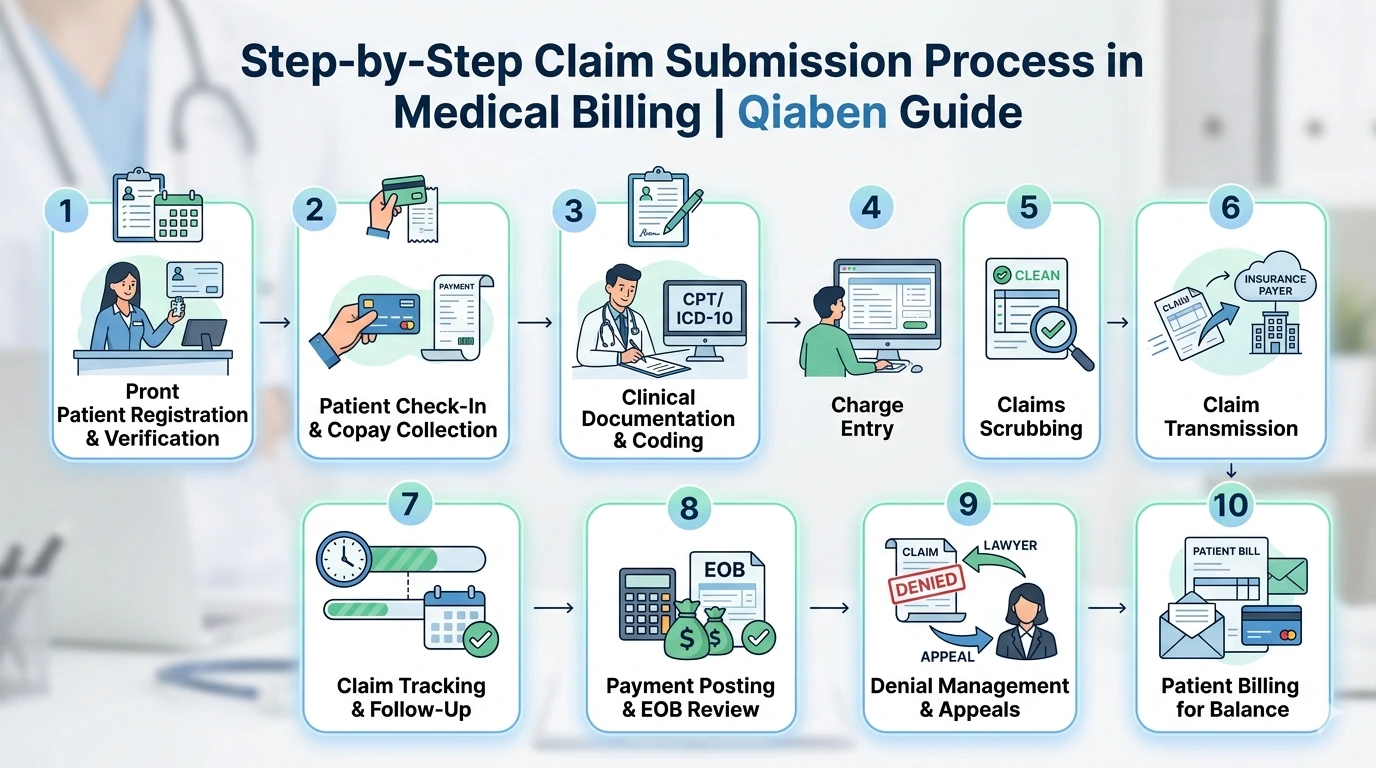
Revenue Cycle Management is the process a healthcare provider uses to manage the entire financial cycle, tracking patient care episodes from registration and appointment scheduling to final payment of a balance. The healthcare revenue cycle consists of many moving parts including insurance verification, charge capture, coding, claim submission, denial management, and patient collections. A tiny blunder in any of the stages could mean delays in payments or complete claim denial in the future. With a system already burdened by regulation and staffing challenges, the last thing a provider wants is to deal with disentangled platforms or manual billing systems. This is why the need for a solid and thorough integrated system is needed.

The Importance of Electronic Medical Records and Optimizing Revenue
An Electronic Medical Record, or EMR is much more than just a container of patient information. When it is configured appropriately, it can serve as the nerve center for clinical documentation and the biller. With OpenEMR, one of the most widely used open-source EMR systems in the world, clinicians have a seamlessly integrated solution to immediately connect the patient encounter and billing system. You will no longer need to use to systems and require duplication of data entry, thereby limiting the possibility of missing or erroneous information. An EMR is not enough to ensure you have an optimized revenue cycle, you need to strategically utilize the EMR. This is where Qiaben comes in.
OpenEMR: A Versatile Basis for Billing Success
OpenEMR is an structured software that offers patient scheduling, electronic health records, e-prescribing, and a full medical billing suite. However, it is its flexibility that allows it to be successful for revenue cycle management. Clinics can adapt workflows, utilize customized coding templates, and connect to clearinghouses and insurance portals. Moreover, OpenEMR has built in eligibility checks and provides suggestions on coding as the clinics are completing documents. Mistakes are caught at the source before they are costly rejected claims. OpenEMR handles electronic submission of claim, electronic remittance advice, and real-time reporting. The beauty of OpenEMR is that clinics do not need to engage with various systems for scheduling appointments, documenting material, and accepting payment–it’s all connected in one place!
The Qiaben Advantage: Specialized RCM Support for OpenEMR Customers
OpenEMR is a terrific product, and logical practice management and electronic health records are valuable when appropriate support is added. Through implementation and customization, training, and revenue cycle services, Qiaben helps a health provider realize the value of OpenEMR. Qiaben collaborates with the provider to ensure the OpenEMR system is configured correctly for the practice’s specialty, workflow, and billing. Most importantly, Qiaben’s billing specialists handle the complete revenue cycle for making claims—from coding/ICD-10 coding to dispatch and follow-up on denials. It is what makes the use of of OpenEMR more specific and individualized for the user’s intended revenue cycle objectives.

Addressing Denials Before They Occur
Claim denials can be one of the greatest sources of lost revenue for medical practices. Claims can be denied for countless reasons, which could be extremely basic reasons, such as incorrect patient demographics, or more involved ones, such as missing prior authorizations or missing proper coding. The worst part is, a very large percentage of denied claims are never reprocessed, resulting in permanent revenue loss. Using OpenEMR and Qiaben, it eliminates many of these risks. The eligibility verification can be automated at the time of scheduling, which allows to confirm that the patient’s insurance information is valid, and allows for up-to-date insurance. Coding tools also flags any missing links between diagnosis and procedure(s), and Qiaben’s billing team checks every claim prior to submission. This will lead to cleaner claims, and faster reimbursements.
Revenue Strategies Based on Data
There’s no room for guesswork in today’s healthcare billing processes. Every financial decision must be based on solid data. OpenEMR offers dashboards and reports that present the real-time, financial metrics like claim status, denials, and accounts receivable aging. These financial indicators are critical for identifying inefficiencies and recognizing the services or payers that are holding up revenue flow. Qiaben works with practices to help relate this data to action so that process change can occur. As an example, if the dashboard displays that a particular insurance provider is taking a long time to pay for telehealth services, Qiaben can help practices find ways to optimize documentation or code usage to make sure claims are accepted.
Mid-Cycle Revenue Optimization: A Mistake
Practices are typically focused on either the front-end tasks (patient intake), or the back-end tasks (collections), while middle of the revenue cycle tasks are ignored altogether. Ignoring the middle of the revenue cycle is an expensive mistake. Mid-cycle tasks, charge capture, clinical documentation improvement (CDI) and medical coding, are often where revenue leakage occurs in the revenue cycle. Qiaben focuses on mid-cycle optimization. Their audit team will review medical records to confirm not only were services provided, documented, and coded for. This reduces compliance risk and ensures practices get full reimbursement for all care delivered.
Customized Workflows That Suit Your Practice
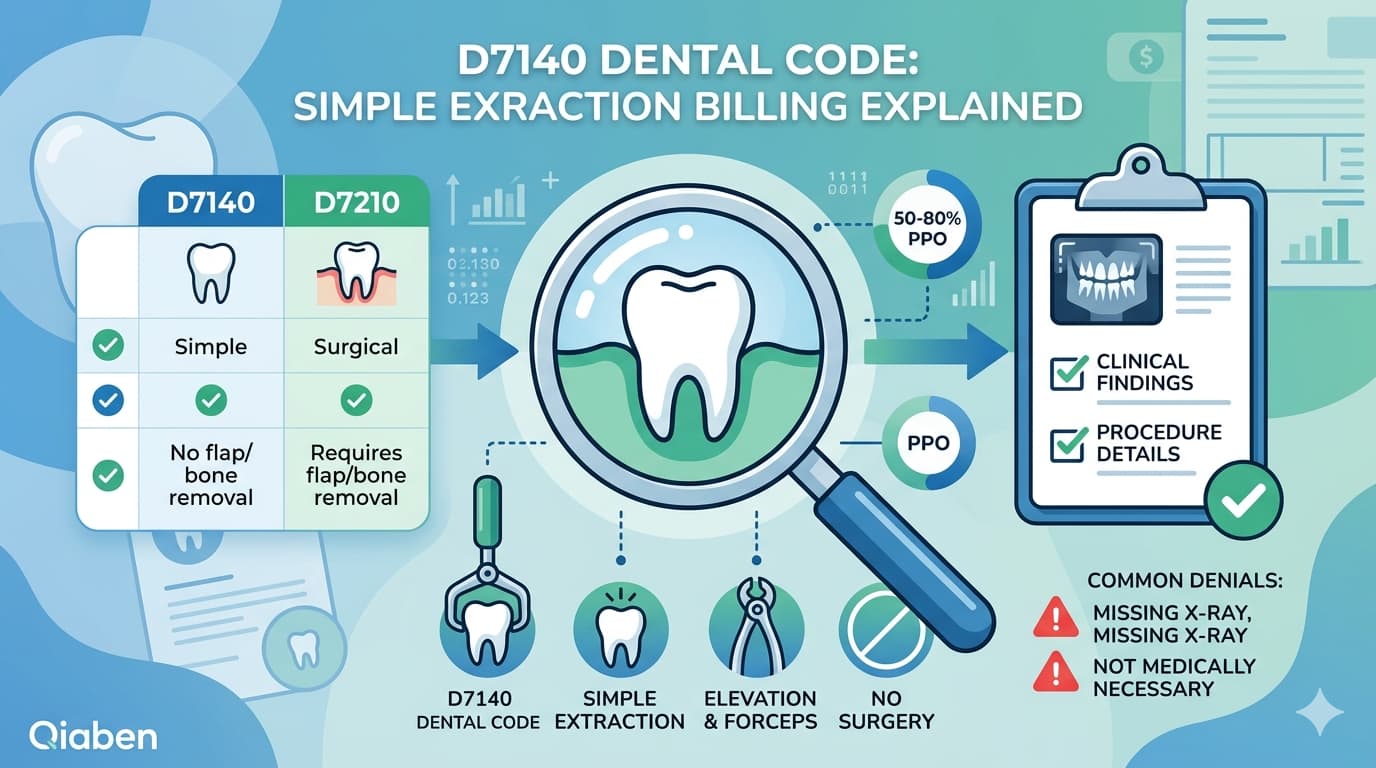
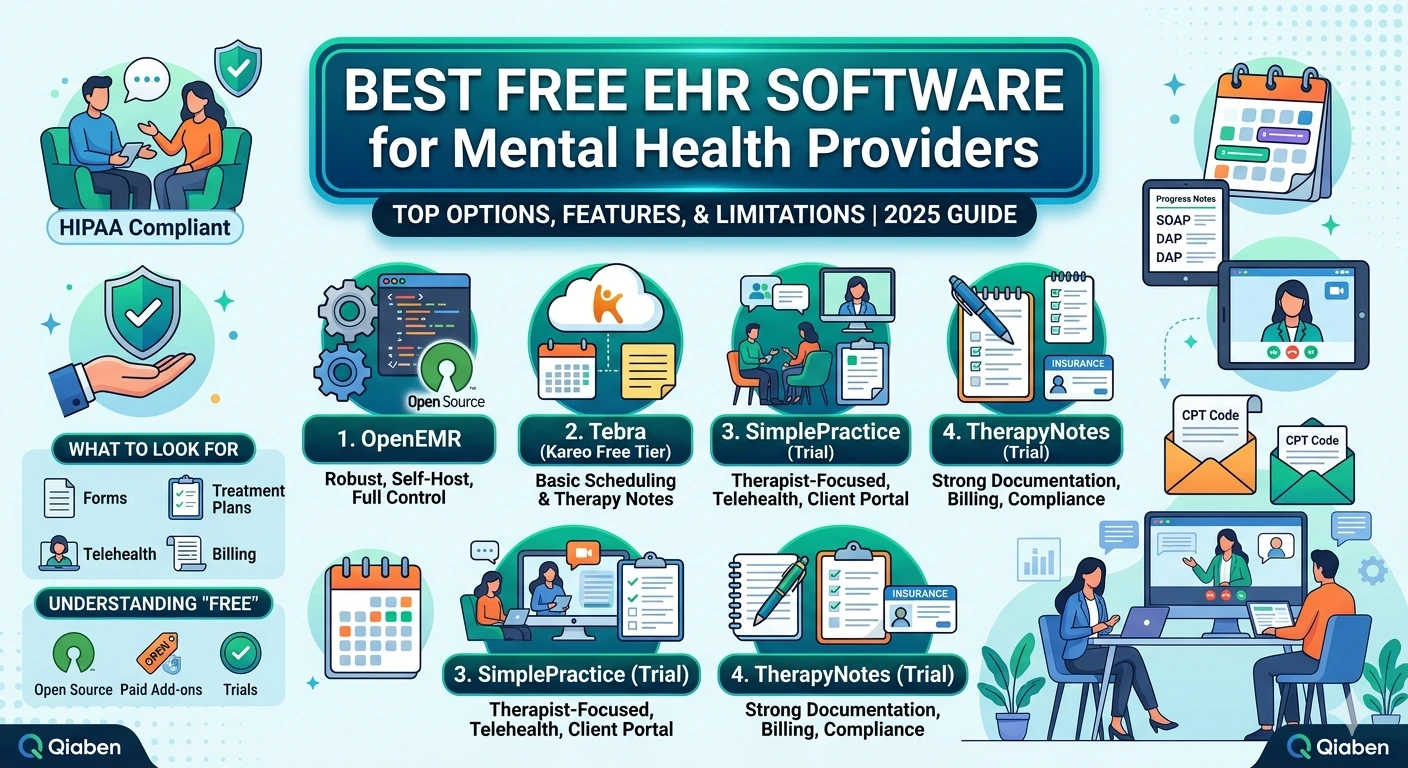
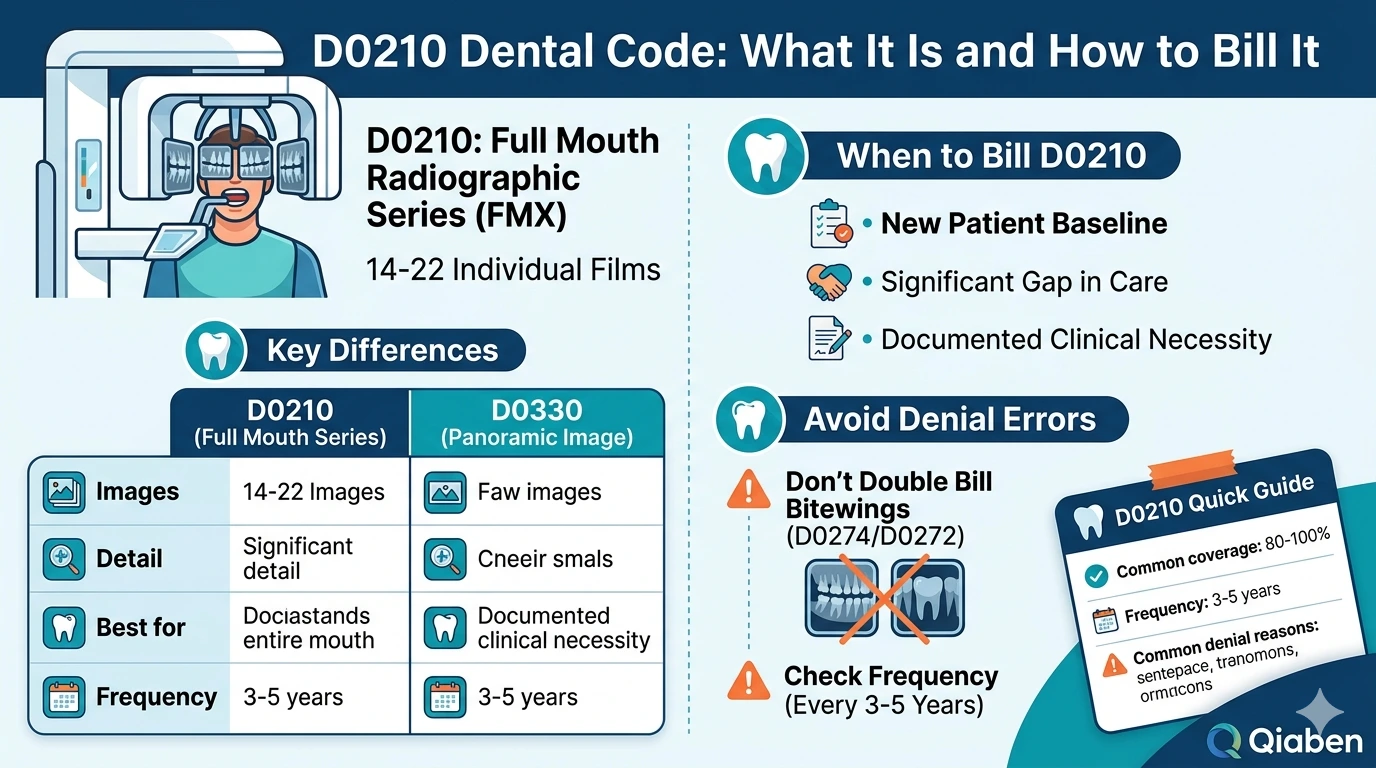
A big problem with many commercial EMRs is the prescribed workflows that simply don’t work the way the practice works. OpenEMR, in comparison, is built for flexibility. With Qiaben’s support, practices can construct workflows that offer convenience in the clinical and billing aspects of the practice. For instance, a dental clinic may have complex fee schedules and required CDT codes, while a mental health practice may have to use session notes that utilize billing codes. Qiaben offers customized capabilities within OpenEMR, such that “the EMR fits the practice” instead of vice-versa. Customizing an EMR reduces frustration among staff and improves productivity across departments.

Improving Staff Training and Support
All systems fail without proper user training. Staff will not utilize any EMR or billing tool efficiently unless trained in a manner that suits all levels of staff. Qiaben provides the modules that train every one of the front desk outstanding workflow, clinicians, and billing staff through the entire revenue cycle process in OpenEMR. Each staff member participates in the workflow of maintaining cash flow, from scheduling to all aspects of resolving rejection issues. Support can continue after modules are provided so that practices can at any time will require support for all workflow issues or billing concerns. This allows them to reduce down time, and experts can attend to any issues prior to them snowballing into revenue delays.
Adjusting to Changes in the Industry and Payer Policies
Insurance payer policies and government regulations are always changing. In an environment with constant changes, it is often difficult to stay compliant and maximize revenue. The open-source characteristic of OpenEMR allows for many changes to occur rapidly, all to support clinical documentation requirements, such as changes in codes, modifiers, and reimbursement rules. Qiaben partners with practices in the active monitoring of the policy landscape to ensure practices receive alerts related to change initiatives that may impact their workflows. As an example, when changes are made to payout of telehealth reimbursement guidelines or changes to processes in anticipating the delivery of ICD-11 coding, practices are able to remain “one step ahead,” impacting both revenue and compliance.
Final Thoughts
In the evolving era of healthcare, practitioners can ill afford to be held back by obsolete protocols or inefficient monitoring of work processes that reduce their revenue. OpenEMR gives clinics a flexible, comprehensive technology platform for all their billing and RCM needs, while Qiaben provides the practical, hands-on RCM service. The partnership of OpenEMR and Qiaben brings clinics the best of both worlds, while keeping the practice compliant, expediting claims, and enhancing efficiency in billing. Whether a solo provider or large multispecialty group, enhancing revenue cycle management with this dynamic partnership is not just smart—it’s necessary, and now is the perfect time to improve your billing and collections practices—with OpenEMR and Qiaben the way forward is clear.

Frequently Asked Questions
1. What is Revenue Cycle Management (RCM) in healthcare?
RCM encapsulates managing patient care revenue; to include scheduling, patient encounter, and the collection of the final payment.
2. How does OpenEMR improve the collection of medical bills?
OpenEMR connects clinical documentation with the billing system, reducing costs with automated claims submissions, improved accuracy, and faster closing all with access to real-time reporting.
3. Why should OpenEMR users be interested in Qiaben?
Qiaben offers specialized RCM services, customization, and training that can improve the usage of open-source EMRs.
4. Can OpenEMR help reduce claim denials?
Yes. OpenEMR verifies insurance coverage, flags coding mistakes, and supports generating clean claims, to preempt costly denials.
5. How does Qiaben assist with mid cycle optimization?
Qiaben reviews clinical documentation, and charge capture assurance to ensure full and compliant reimbursement; preventing loss of revenue.
Get in touch
Have other questions?
Lorem ipsum dolor sit amet, consectetur adipiscing elit. Ut elit tellus, luctus nec ullamcorper mattis, pulvinar dapibus leo.
Email us
support@yourdomain.tld
Call us
+6221.2002.2012
Location
Jln Cempaka Wangi No.22 Jakarta - Indonesia
Follow our social media :
Have a question?
Send us a message
Lorem ipsum dolor sit amet, consectetur adipiscing elit. Ut elit tellus, luctus nec ullamcorper mattis, pulvinar dapibus leo.