How to Optimize Mid Revenue Cycle Services for More Profit

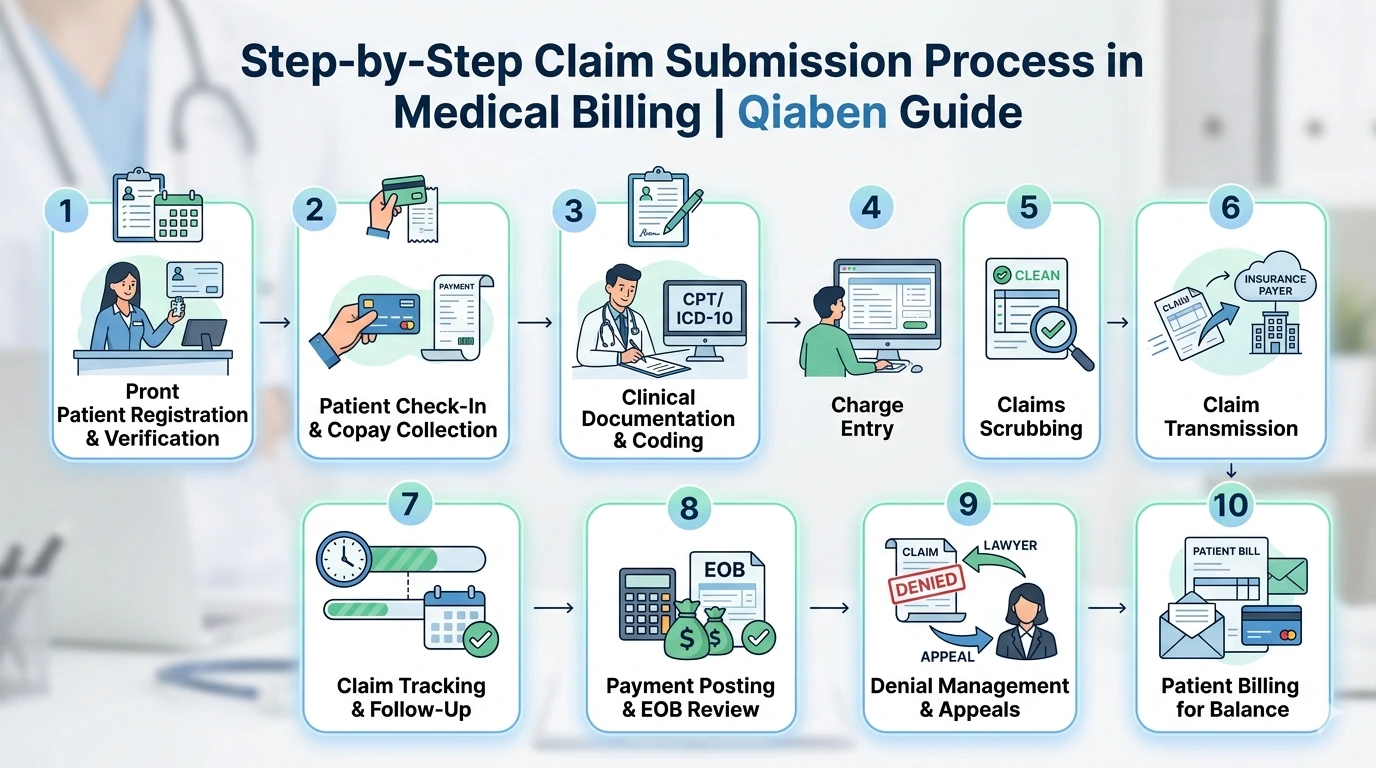
The mid revenue cycle plays a critical role in ensuring financial success in healthcare. It covers medical coding, charge capture, clinical documentation improvement (CDI), and claim submissions. A well-optimized mid revenue cycle leads to fewer denials, improved cash flow, and better patient satisfaction. By refining these processes, healthcare providers can maximize revenue while maintaining compliance.
Understanding the Mid Revenue Cycle
The mid revenue cycle bridges the clinical and financial aspects of patient care. It ensures that services provided are accurately documented, coded, and billed. Any inefficiencies in this phase can lead to revenue leakage, claim denials, and compliance risks. Healthcare providers must adopt best practices to optimize this cycle and enhance profitability.
1. Strengthen Clinical Documentation Improvement (CDI)
Accurate clinical documentation is essential for proper reimbursement. Errors in documentation can lead to claim denials or underpayments. Implementing CDI programs helps ensure complete and precise patient records. Training physicians and coders to improve documentation quality is vital. Regular audits can identify gaps and improve documentation standards.
2. Enhance Medical Coding Accuracy
Medical coding is a crucial component of the mid revenue cycle. Errors in coding can result in claim denials or incorrect reimbursements. Investing in well-trained coders and continuous education ensures compliance with updated coding guidelines. Using advanced medical billing services with automated coding tools can enhance accuracy and efficiency.
3. Optimize Charge Capture Processes
Charge capture mistakes lead to lost revenue. Healthcare providers should implement robust charge capture systems to track all billable services. Automating charge capture can reduce manual errors and ensure accurate billing. Regular reconciliation of charges and services helps identify discrepancies early.
4. Improve Claims Management
Claim denials and rejections slow down revenue cycles. Healthcare facilities must focus on proactive claim management. Submitting clean claims the first time reduces the risk of delays. Medical billing services equipped with AI-driven tools can streamline the claims process. Identifying denial trends and addressing them proactively improves cash flow.
5. Leverage Medical Billing Services for Efficiency
Outsourcing medical billing services can enhance efficiency and profitability. Professional billing companies use advanced technology and expertise to minimize errors. They help manage claim submissions, follow-ups, and appeals effectively. This allows healthcare providers to focus on patient care while improving financial performance.
6. Conduct Regular Audits and Compliance Checks
Audits help identify revenue leakage and non-compliance issues. Regular internal and external audits ensure that coding and billing practices align with industry regulations. Compliance checks prevent legal risks and optimize reimbursements. Healthcare organizations should create a culture of continuous improvement to refine mid revenue cycle processes.
7. Utilize Data Analytics for Revenue Optimization
Data analytics provide valuable insights into revenue cycle performance. By analyzing trends, healthcare providers can identify inefficiencies and improve processes. AI-powered tools help forecast revenue, detect anomalies, and enhance decision-making. Integrating analytics into medical billing services improves accuracy and maximizes reimbursements.

8. Implement Advanced Technology and Automation
Technology plays a key role in optimizing the mid revenue cycle. Implementing AI-driven billing solutions, automated coding tools, and electronic health record (EHR) integrations enhances accuracy. Automation reduces manual errors, speeds up processes, and increases revenue collection efficiency. Investing in technology ensures a streamlined and error-free billing cycle.
9. Improve Staff Training and Communication
A well-trained staff is crucial for an optimized revenue cycle. Continuous training on medical billing services, coding updates, and compliance regulations enhances accuracy. Effective communication between billing teams, coders, and physicians prevents errors and ensures seamless operations. Encouraging teamwork leads to better financial outcomes.
10. Focus on Patient-Centred Billing
Transparent and patient-friendly billing improves collections and satisfaction. Providing clear billing statements, multiple payment options, and financial assistance programs enhances the patient experience. Engaging patients in the billing process reduces disputes and improves payment rates.
Best Practices for Mid-Revenue Cycle Improvement
Optimizing the mid-revenue cycle is just as critical as strengthening front- and back-end revenue cycle management. Implementing best practices can reduce denials, improve compliance, and maximize revenue capture.
Addressing Documentation Gaps
Research shows that more than half of medical charts require documentation improvements. Time constraints and gaps between medical terminology and coding standards are common obstacles. Clinical Documentation Improvement (CDI) programs help bridge these gaps by training clinicians and staff, ensuring that patient encounters translate into accurate coded data. Emerging tools like EHR scribe technology and AI-driven documentation are further enhancing CDI efficiency.
Enhancing Coding with Technology
Advanced tools like computer-assisted coding (CAC) and autonomous coding solutions are transforming medical coding. These technologies support coders by increasing accuracy, reducing turnaround times, and improving productivity. While AI offers significant support, human oversight remains critical to validate coding accuracy and maintain compliance.
Leveraging Technology and Training
Integrating AI and automation into the revenue cycle management workflow requires balance. Training staff to use these tools effectively ensures technology enhances performance rather than replacing human expertise. The most successful organizations combine technology with skilled staff to achieve long-term mid-cycle improvements.
Conclusion
Optimizing the mid revenue cycle is essential for financial success in healthcare. Strengthening CDI, improving coding accuracy, and leveraging medical billing services enhance efficiency. Automation, audits, and data analytics further drive profitability. By adopting these best practices, healthcare providers can reduce denials, increase revenue, and focus on quality patient care.