How OpenEMR Streamlines Medical Billing Procedures
OpenEMR is a powerful open-source EHR software that has become a trusted solution for healthcare providers worldwide. Currently supporting more than 200 million patients and over 100,000 medical professionals, it stands out as one of the most widely adopted platforms in the healthcare industry.
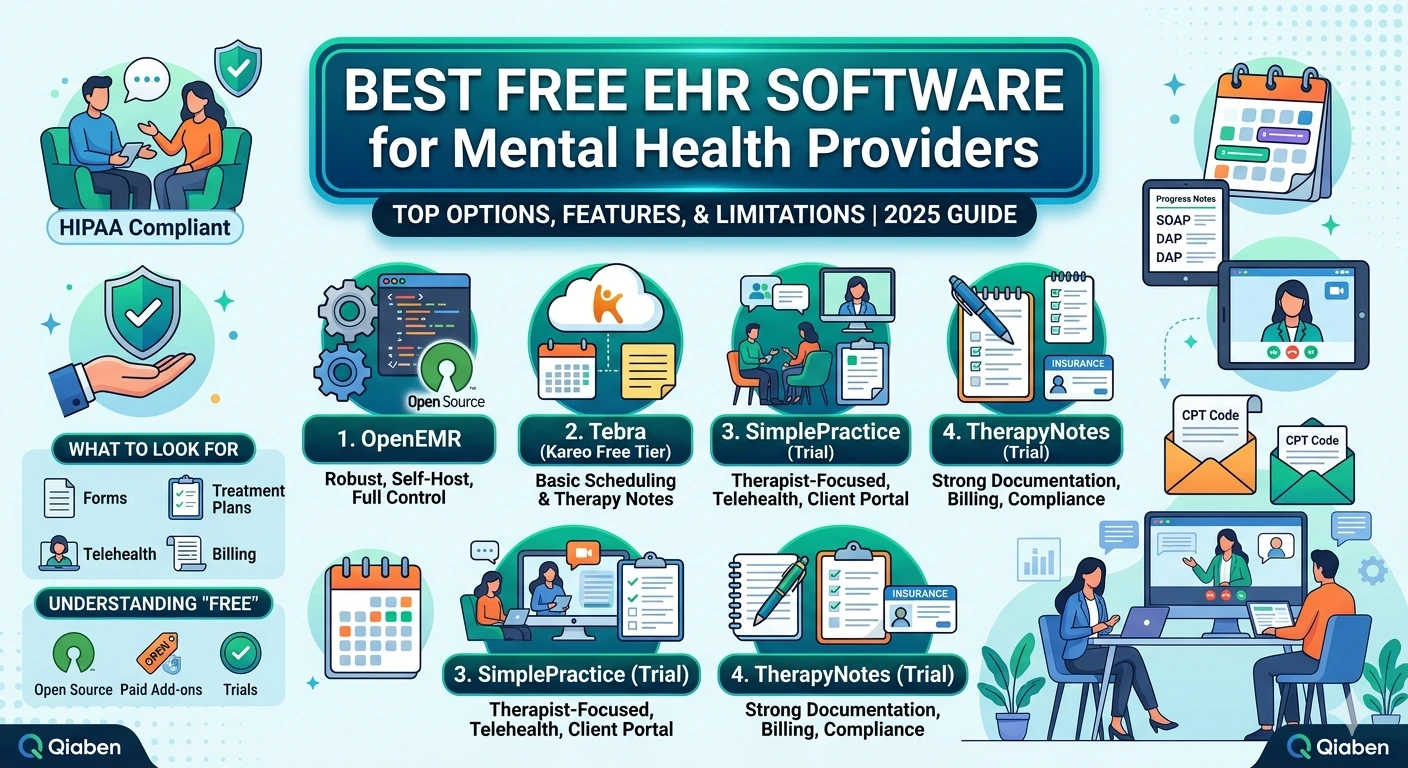
This all-in-one practice management software offers a wide range of features, including patient demographics, appointment scheduling, e-prescriptions, billing, and laboratory system integration. Among these, OpenEMR medical billing is one of the most valuable modules, helping practices improve accuracy, reduce errors, and streamline claim submissions.
Why Efficient Medical Billing Matters
Before discussing how OpenEMR assists with billing, a definition of what medical billing is and how it fits into healthcare must be understood. Simply put, medical billing takes patient visits and turns them into bills and insurance claims. They are forwarded to the insurance companies or patients themselves to be paid.
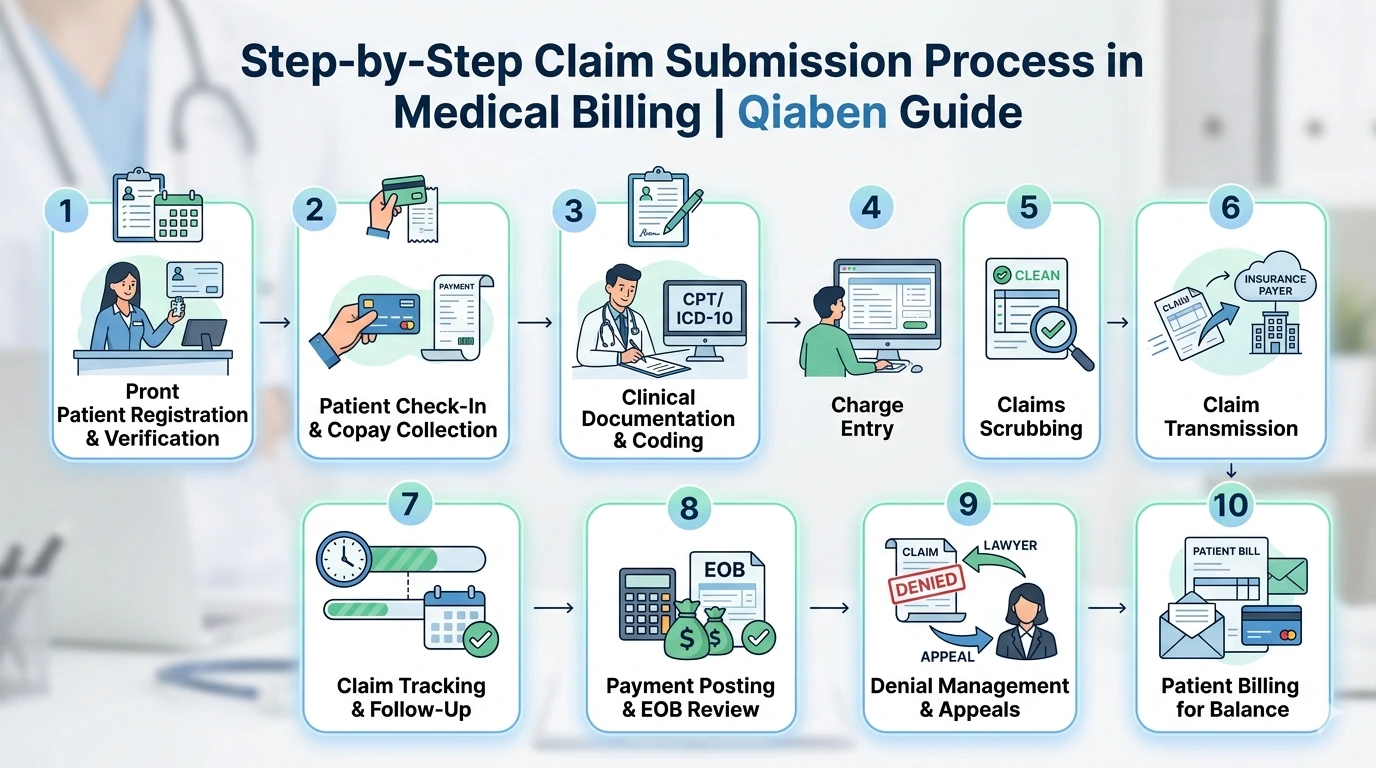
There are several steps to the billing process:
Coding diagnoses and procedures
Sending claims
Tracking payments
Managing denials or rejections
Legacy systems or manual billing are susceptible to errors, delays, and lost revenues. OpenEMR addresses this issue by minimizing these activities to one entire system. This saves practices time and money and gets them paid sooner.

One Platform for All Your Needs
One of the best things about OpenEMR is that it is a one-stop shop. It has appointment calendars, clinical notes, and billing all in one location. Health teams do not have to toggle between multiple different tools; they can do it all from one dashboard.
For example, when the patient is brought in, OpenEMR gets encounter data automatically. The data becomes available to generate bills without requiring resubmission of the data. Claims can be viewed and sent by the billing clerks directly from within the system. Data entry errors decrease while claim releases are quicker with the streamlined process.
By integrating billing into the EHR process, OpenEMR erases delays historically caused by stand-alone billing and documentation applications. It translates to better cash flow and fewer lost billing opportunities.
Automated Claims Processing
OpenEMR has good electronic claims management. If a patient record has accurate codes and insurance claims are automatically generated, the system sends them electronically using Electronic Data Interchange (EDI).
There are several advantages of electronically submitting claims:
Faster turnaround times
Support for primary and secondary claims
Monitoring of real-time claim status
Automation stops human error, such as typing in bad insurance IDs or codes. OpenEMR also checks claim information prior to submission, which minimizes denials and rejections.

Easy Patient Billing
Not everything that comes in healthcare is covered. Patients may have deductibles, co-pays, or charges for non-covered services. OpenEMR makes patient billing easy and accurate.
The system allows for pre-billing from services on the appointment. Bills explicitly show what the insurance covers, what the patient owes, and what remains as a balance. Clinics are able to print bills or send bills electronically, saving paper and increasing collections.
With OpenEMR, you stop duplicate billing and improve the patient payment process.
Modifiable CPT and ICD Codes
Accuracy in billing is ultimately based on accurate codes. OpenEMR provides editable CPT and ICD code libraries. These are simple to modify to accommodate new insurance and regulatory requirements.
This feature aids in several ways:
Reducing denials due to incorrect codes
Making reimbursement accurate to the penny
Streamlining bill processing
Patients are able to search and apply the correct codes within a patient’s record efficiently—no additional hardware or codebooks are necessary.
Instant Insurance Eligibility Checks
Validating a patient’s insurance status before they arrive avoids future billing disputes. OpenEMR allows for verification against databases of insurance companies before coverage validation.
This functionality allows staff to:
Have active insurance assurance.
Understand what is covered.
Adjust billing or services before treatment.
Pre-verifying eligibility avoids situations where services go unpaid due to stale or bad coverage. It also improves patient communications for pay responsibility.
Real-Time Reporting and Insights
OpenEMR possesses powerful reporting capabilities that help you monitor the bottom line of your practice. Billing clerks can report on:
Revenue trends
Outstanding claims
Payment on invoices
Aging accounts receivable
These kinds of reports help practices uncover:
High denial rates
Slow-paying insurers
Recurring billing problems
Through reactions based on these metrics, healthcare providers can streamline workflows, collect maximum revenue, and prevent future problems.

Intrinsic Compliance and Security
Security is extremely important when dealing with billing and patient data. OpenEMR has been designed to be HIPAA-compliant and other healthcare standards for data. It provides:
Encrypted databases
Role-based access controls
Audit logs of all user activity
This high level of compliance protects financial and clinical information from misuse. It also protects practices from costly legal liability and encourages patient trust.
User Roles and Flexible Workflows
OpenEMR enables practices to customize billing processes. Groups may set rules for payment follow-up, claim submission, and invoicing.
It also provides user role management so that employees may see only the functions they deal with. It increases security, reduces confusion, and enables accountability.
With such control, practices may associate OpenEMR with their own personalized processes instead of having to conform operations to a system.
Real-Life Example: A Mid-Sized Pediatric Clinic
One of the mid-sized category pediatric clinics was confronted with inefficiencies in billing, delayed payment, and rejection rates. It utilized separate systems for scheduling, records, and billing. This resulted in delays and disruption of communications.
When it switched to OpenEMR, the clinic was able to bring all its functions under a single umbrella. This facilitated the billing team to process claims more quickly, track payments more efficiently, and provide reports to management.
Within a mere three months, the clinic saw:
35% decrease in billing errors
Rapid reimbursements
Improved cash flow
This success story illustrates the manner in which merged solutions like OpenEMR transforms billing from liability to asset.
OpenEMR Billing FAQs
Q1. What is OpenEMR and how does it support medical billing?
OpenEMR is an open-source electronic medical record (EMR) system that automates billing tasks such as claim generation, coding, and payment tracking. It reduces manual errors and ensures faster reimbursement.
Q2. Can OpenEMR handle insurance claim submissions efficiently?
Yes. OpenEMR integrates with clearinghouses to streamline claim submission, validate patient data, and minimize denials, making the insurance billing process more efficient.
Q3. How does OpenEMR reduce billing errors in medical practices?
OpenEMR uses automated coding, eligibility verification, and claim scrubbing tools that identify errors before submission, improving accuracy and reducing rejected claims.
Q4. Does OpenEMR support compliance with healthcare regulations?
Absolutely. OpenEMR is HIPAA-compliant and supports ICD-10, CPT, and HCPCS codes, ensuring practices meet regulatory requirements while maintaining accurate billing records.
Q5. Can small practices benefit from OpenEMR’s billing features?
Yes. OpenEMR is cost-effective and customizable, making it ideal for small practices to manage patient records, billing, and payments without investing in expensive software.
Q6. How does OpenEMR improve revenue cycle management?
By automating claim processing, tracking unpaid invoices, and generating financial reports, OpenEMR helps practices accelerate reimbursements and strengthen overall revenue cycle management.
Q7. Is OpenEMR integrated with patient portals for billing transparency?
Yes. OpenEMR provides patient portal access where patients can view bills, make payments, and check claim statuses, improving transparency and patient satisfaction.
Conclusion
Billing doesn’t have to be difficult—but too often, it is. OpenEMR simplifies billing with automation, integration, and intelligent workflow. It simplifies practices to reduce errors, speed up payments, and ensure regulatory compliance.
By streamlining clinical and financial tasks into one system, OpenEMR reduces your workload and maximizes your bottom line. If you have one doctor or multiple doctors in your big clinic, OpenEMR is a smart, scalable solution to automate billing.
If you are to deploy OpenEMR, offer expert support to install the system correctly. Correct installation and training will assist OpenEMR in revolutionizing your practice and maximizing the health of your revenue cycle.