Avoid These 5 Costly Dental Billing Mistakes in 2025: A Complete Guide for Practice Profitability
By 2025, dental billing is no longer “back-room” paper. It’s the pump that keeps your practice pump pumping. With dental practices facing a changing world—changing insurance, impending HIPAA regulations, diminishing margins, and more informed patients—one thing is certain: your billing can propel your growth or send you spinning into a dead stop.
Whether you’re the practice owner, a billing specialist, or office administrator, anticipating the pitfalls of billing isn’t just about increased collections—it’s about gains in efficiency, patient trust, and remaining competitive in a hyper-competitive landscape.
This comprehensive, step-by-step guide will walk you through the most destructive dental billing mistakes still plaguing practices in 2025. More significantly, you’ll discover how to prevent them with new, battle-tested strategies. From CDT code updates to artificial intelligence and cyber security, we’ll walk you through the do-it-yourself steps you can implement immediately to streamline your billing process—and your bottom line..

1. Reporting Stale or Inaccurate CDT Codes
The Problems:
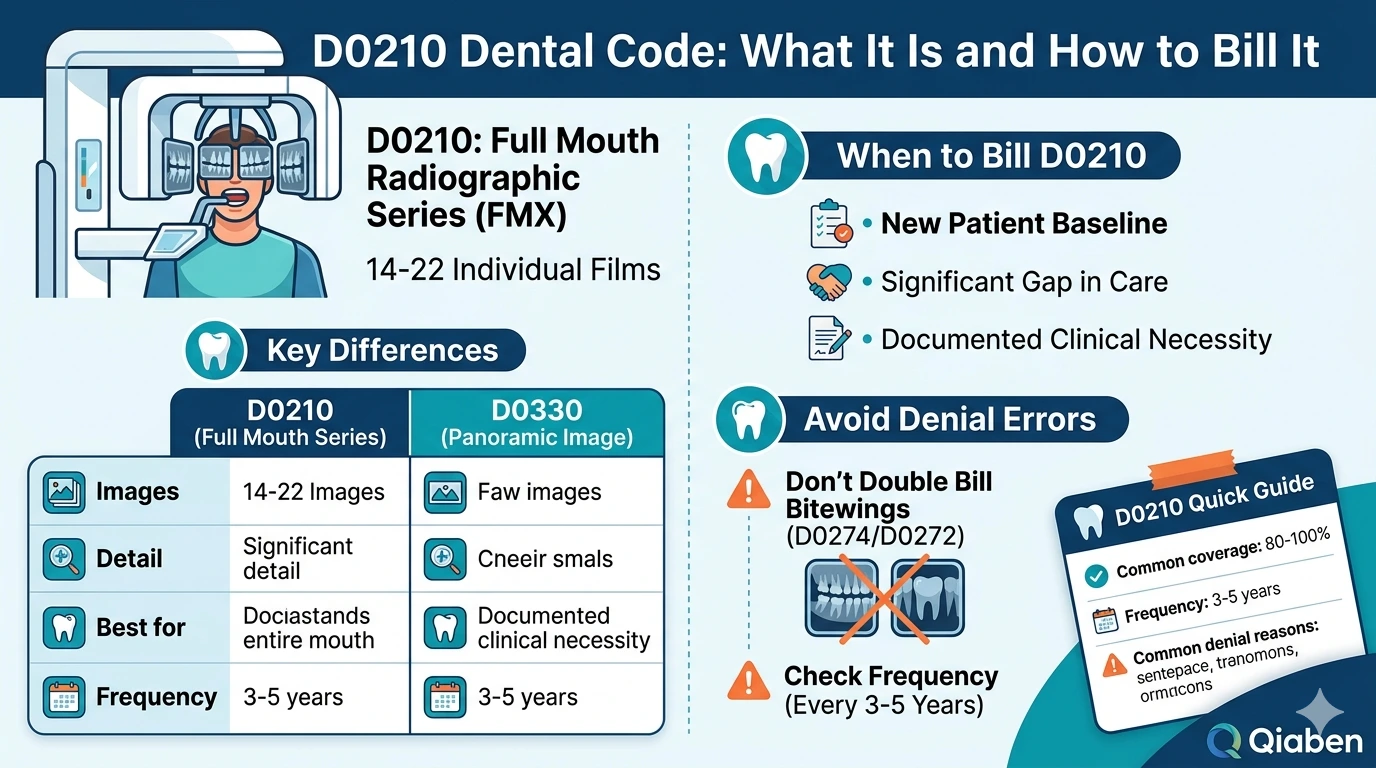
It’s 2025 now, and the ADA has published another set of updates to the Current Dental Terminology (CDT) code set. Still, most dental teams continue to report outdated codes—or worse, incorrect combinations—that directly result in claim denial.
What’s new this Year:
New CDT additions like D0356 (diagnostic digital scans) and D9998 (interprofessional care coordination) are billable in even more plans.
Ancient codes such as D4355 (full mouth debridement) now frequently need to be backed by an extensive examination (D0150).
The payers are becoming more strict regarding acceptance and need narrative correlation for every code submitted.
What’s this actually ends up costing you:
- Spontaneous denials, leading to cash flow delays.
- Increased claim rework, wasting staff time.
- Decreased reimbursement, particularly if improper downgrades are utilized.
What to do instead. Subscribe to ADA CDT updates annually and notify your staff. Have a monthly review committee on CDT, particularly if you do high-revenue procedures. Update your PMS software (e.g., Dentrix or Open Dental) soon after code changes. Offer monthly staff refreshers, like quizzes over changes in codes.
Pro Tip: Have a CDT “cheat sheet” of your 25 most common procedures
available at all front desks and operatories. When and if codes change, your
team is on the same page.
2. Inconsistent or Inadequate Insurance Verification
The issue:
Gone are those times when you would swipe an insurance card and assume you’re good to roll. In 2025, verification is a proactive pre-appointment activity. But numerous practices are skimping or doing the minimum on it—only to have to contend with denied claims or irate patients down the line.
The 2025 environment:
- Real-time eligibility systems are the standard, not the exception.
- Insurance payers have adopted 48-hour verification windows for most.
- Ongoing increases in coverage amount, co-pay, and deductible requirement make your prior information obsolete.
What this costs you:
- Unbillable services, particularly non-covered procedures.
- Delayed medical claim payment due to after-the-fact billing.
- Loss of patient trust, when the patient discovers that they will pay more than originally anticipated.
What to do Instead:
- Use automated verification tools like Vyne Dental, DentalXChange, or in-PMS functionality in Dentrix Ascend and Eagle soft.
- Schedule insurance a minimum of 48 hours prior to the appointment.
- Develop a note template to obtain copays, levels of coverage, and exclusions.
- Always give written treatment estimates prior to conducting any procedure.
Tip from Actual Practice: One front-office employee at a Chicago-based practice lowered
billing errors by 60% after implementing real-time verification technology and
using standardized benefit explanation templates for every new patient.
3. Inadequate or Inconsistent Clinical Documentation
The issue:
Documentation isn’t just for patient charts—it’s the basis of your billing. More often than not, in 2025, claims get denied because clinical documentation doesn’t justify the billed procedure.
What payers increasingly ask for:
- Complete clinical notes on all visits.
- Pre-op and post-op photos for surgery and cosmetic procedures.
- Perio charting, radiographs, and narrative reporting for scaling and root planing (D4341/D4342) claims.
What this costs you:
- Claim denials due to rework and appeals.
- Red flag clinical rationale audits.
- Lost revenues when practices fail to appeal or post-date of submission.
What to do instead:
- Utilize EHR templates for high-billed procedures to complete documentation.
- Train providers and hygienists to document clinical rationale in SOAP or DAP.
- Verify assistants to scan or upload radiographs and photos prior to claim submission.
- Audit 5–10 claims monthly to verify documentation requirements.
Example: When coding D4341 (scaling and root planing), ensure that the documentation includes:
- 5mm+ pocket depth.
- Radiographic evidence of bone loss.
- Periodontal disease diagnosis.
- Patient consent form (digital signature)
4. Excessive Lack of Use of AI and Predictive Tools in Your Billing Process
The problem:
While most offices are cleaning claims with the use of AI-based software, undercoding alerts them, and denials are avoided, most are still using systems manually that cost them dollars, though.
Dental AI software by 2025 is the most common. Offices using technology such as Jarvis
Analytics, Pearl AI, or Qmodo AI are streamlining collections by detecting
problems before submitting claims.
What this is currently costing you:
- Under coded procedures that are not being reimbursed.
- Claim errors that could have been avoided pre submission that could have been avoided pre submission.
- No actionable insight into why denials are happening
What to do instead:
- Leverage AI-powered claim scrubbers that catch missing, truncated codes, or garbled narratives to offer on cost savings.
- Apply predictive analytics for determining payers and codes most likely to deny.
- Employ dashboards for monitoring AR trends, claim aging, and per-provider billing efficiency.
True Story: Texas dental group utilized predictive software to cut AR by $120,000 in four months by catching mundane coding mistakes—such as omitting narrative reasons or submitting codes that aren’t encompassed under plans.
5. Inadequate Cybersecurity & HIPAA Compliance:
The problem:
Healthcare workers are seeing record cyberattacks, and dental offices are a new number one target. Still, most offices still store patient information unencrypted or omit annual HIPAA training. As of 2025, you are legally and ethically bound to have secure, confidential clinical and billing systems.
How much it will cost you:
- Up to $50,000 per violation in fines.
- Lawsuits from impacted patients.
- Lost business through reputation
What to do instead:
- Store billing and health data in HIPAA-compliant, encrypted databases.
- Have quarterly audits and monitor employee access based on role-based permissions.
- Sync patient and billing data to the cloud daily with versioning.
- Perform annual HIPAA and cybersecurity training with sign-off sheets.
Bonus Tip: Enable two-factor authentication (2FA) for all billing software logins. It’s one of the easiest ways to steer clear of phishing and ransomware attacks.

Bonus: Other Billing Blunders Costing You Costing Thousands
1. Poor Provider Credentialing:
Are you credentialing with a partially credentialed dentist with the payer? Expect
delays or denials.
Solution: Have a live credentialing tracker and re-credential 60–90 days before
expiration.
2. Denial of Failure to Deny Trend Report:
Do you have any idea which is your most denied CDT code? Most practices don’t.
Solution: Organize your denials by your PMS reports via:
- Provider.
- CDT Code.
- Payer
3. Poor Staff Training:
CDT codes, software releases, and payer policies refresh quarterly.
Solution: Establish a billing SOP and have monthly “Billing Huddle” meetings to
discuss ongoing issues.
Final Thoughts: Make 2025 the Year You Master Dental Billing
Dental billing is not forms. It’s optimizing profitability, patient satisfaction, and long-term survivability in an ever-changing healthcare economy.
Here’s what to do next:
- Check your top 20 CDT codes—are they updated and supported with solid documentation?
- Implement real-time insurance verification this quarter.
- Discover AI-powered billing solutions. Go big but start.
- Tune up your cybersecurity—before you’re audited or hacked.
Small changes today can save you thousands in the future. Master your billing process today, and your 2025 won’t be just compliant—but more profitable than ever.