The D7140 dental code is one of the most frequently billed extraction codes in dentistry, and also one of the most straightforward — in theory. In practice, the line between when D7140 applies and when a more complex extraction code is appropriate is something dental billers and dentists sometimes disagree on, and getting it wrong creates denials.
What Is the D7140 Dental Code?
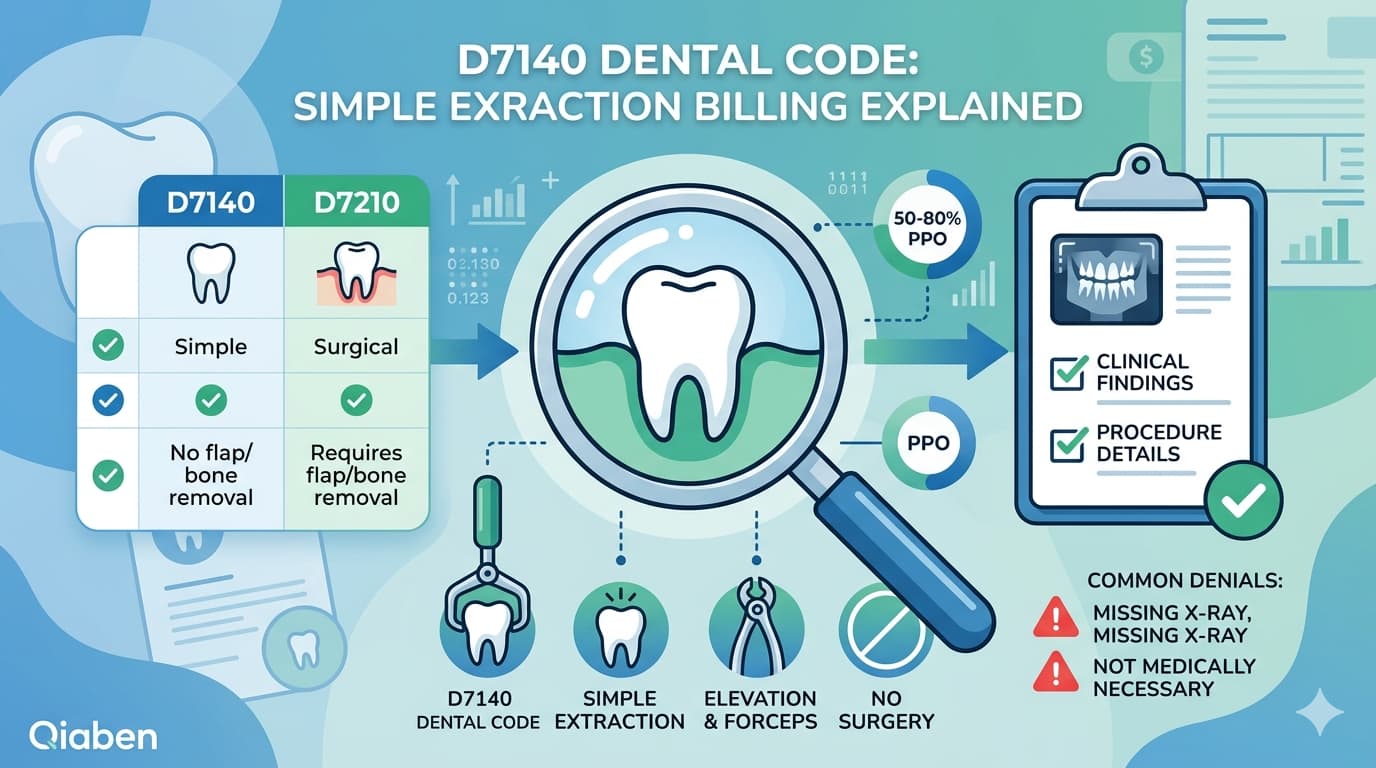
The D7140 dental code is the CDT code for extraction of an erupted tooth or exposed root (elevation and/or forceps removal). In plain language, this is a simple, routine extraction of a tooth that is fully erupted and accessible — no surgical intervention required. The procedure typically involves local anesthesia, elevation with a dental elevator, forceps removal, and basic wound care.
What it does not involve is incision, flap reflection, bone removal, or sectioning of the tooth. The moment any of those elements are required, you’re outside the scope of D7140 and into surgical extraction territory.
D7140 vs. D7210: Knowing the Difference
Feature | D7140 | D7210 |
Procedure type | Simple extraction | Surgical extraction |
Flap required? | No | Yes |
Bone removal? | No | Yes |
Tooth sectioning? | No | Sometimes |
Sutures? | No | Yes (if needed) |
Typical coverage | 50–80% | 50–80% (higher reimbursement) |
The practical issue is that some insurance companies push back on D7210 claims and try to process them at D7140 rates, especially if documentation isn’t specific enough about why surgical extraction was required.
Common Situations Where D7140 Applies
The D7140 dental code is appropriate when:
- A fully erupted, non-impacted tooth is being extracted with no surgical complications
- A retained root that is mobile and visible can be removed without bone removal
- Primary (baby) tooth extractions that are routine and don’t require surgical technique
- An erupted tooth in a compromised patient where the tooth itself doesn’t require surgical removal
Documentation for D7140 Claims
For a routine D7140 claim, your clinical record should include:
- Tooth number and surface being extracted
- Clinical findings supporting extraction — caries, fracture, failed restoration, patient request
- Anesthesia type and amount
- Procedure performed — elevation, forceps removal, hemostasis
- Post-operative instructions given
An x-ray of the tooth prior to extraction is best practice and often required by insurers, especially for multiple extractions.
Coverage and Reimbursement
The D7140 dental code typically falls under oral surgery benefits:
- Most PPO plans: 50–80% coverage after deductible
- Some plans: covered under basic services at 70–80% with no waiting period
- Medicaid: generally covered for medically necessary extractions, though fee schedules vary by state
Reimbursement for D7140 typically ranges from $75–$175 depending on the payer contract. Billing D7140 when D7210 was performed leaves money on the table.
Common Denials and How to Handle Them
Missing x-ray.
Many payers require a pre-operative x-ray as an attachment. Build x-ray attachment into your standard workflow for extraction claims.
Not medically necessary.
Your clinical notes need to support why extraction was chosen — patient preference, systemic health factors, or clinical assessment that restoration is not viable.
Frequency limitation.
Some plans limit the number of extractions per year. Check the plan’s frequency rules before submitting for multiple teeth.
D7140 Quick Reference
Field | Detail |
CDT Code | D7140 |
Full Name | Extraction, erupted tooth or exposed root |
Technique | Elevation and/or forceps — no surgery |
Requires flap/bone removal? | No — if yes, use D7210 |
Typical Coverage | 50–80% under oral surgery |
Common Denial Reasons | Missing x-ray, not medically necessary |
Documentation Must Include | Tooth number, clinical findings, procedure performed |
Final Thoughts
The D7140 dental code is as basic as dental billing gets — but the line between D7140 and D7210 trips up a lot of practices, both in terms of undercoding surgical procedures and in terms of documentation that doesn’t support the code billed. Know the line, document the technique, and attach the x-ray.
If you’re seeing consistent extraction denials or want help with your oral surgery billing workflow, Qiaben is here. Reach out to our team.