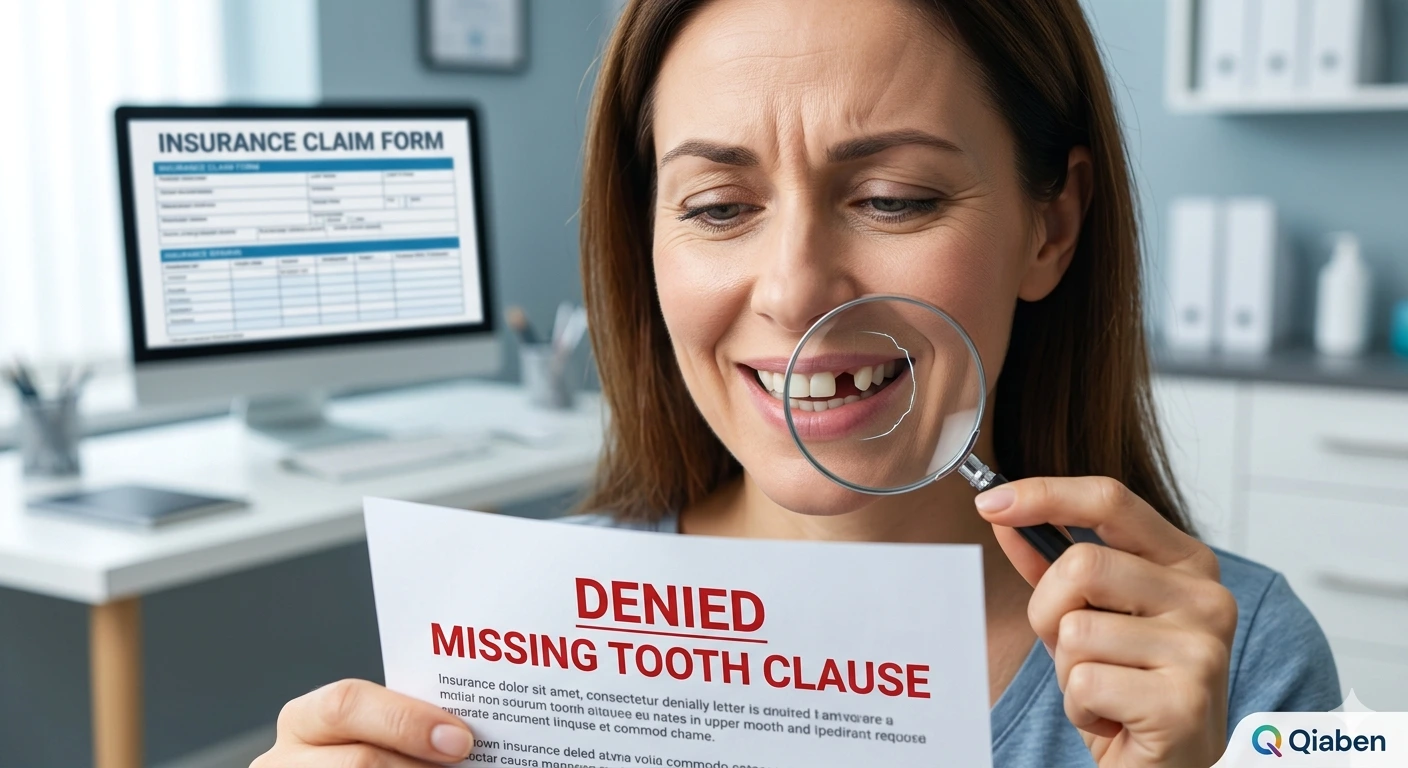
You’ve been paying dental insurance premiums for years, you finally need an implant or a bridge, and your insurance company sends back a denial citing the “missing tooth clause.” If this has happened to you — or you’re a dental biller dealing with it on behalf of a patient — it’s genuinely frustrating. And it catches a lot of people off guard.
The missing tooth clause is one of those insurance provisions that doesn’t come up until you need major dental work, and by then it’s too late to do much about it. Understanding how it works, when it applies, and what your options are can make a real difference.
What Is the Missing Tooth Clause?
The missing tooth clause is a provision in many dental insurance plans that excludes coverage for replacing teeth that were missing before the patient’s coverage began. In other words, if a tooth was already gone when you enrolled in the plan, the insurer won’t pay to replace it — even if you later get a bridge, implant, or partial denture while the plan is active.
The missing tooth clause is most commonly triggered when a patient:
- Gets a tooth extracted before starting their current dental plan
- Enrolls in a new plan after a gap in coverage during which a tooth was lost
- Switches employers or plans and has a pre-existing missing tooth
Which Procedures Does the Missing Tooth Clause Affect?
The missing tooth clause typically affects:
- Dental implants (D6010, D6040, D6050)
- Implant crowns (D6065, D6066, D6067)
- Bridges — fixed partial dentures (D6240, D6250, D6750)
- Partial dentures (D5213, D5214)
- Full dentures (D5110, D5120) — sometimes, depending on the plan
It does not typically affect restorations for teeth that are present. Fillings, crowns on existing teeth, and root canals are not affected by the missing tooth clause because those procedures treat a tooth that’s still in the mouth.
When the Missing Tooth Clause Doesn’t Apply
The tooth was lost after the effective date.
If a patient had a tooth extracted while their current plan was already active, the missing tooth clause shouldn’t apply — even if the replacement procedure is done years later. Document the extraction date versus the insurance effective date, and appeal with that documentation.
The plan doesn’t have a missing tooth clause.
Not every plan has this provision. Some states have enacted consumer protections that limit or prohibit missing tooth clauses in certain plan types. Check your state’s insurance regulations.
The clause has a time limit.
Some plans apply the missing tooth clause only for the first year or two of coverage. After that point, replacements may be covered.
What to Do When a Denial Is Valid
Wait out the clause period.
If the plan only applies the missing tooth clause for the first 12–24 months, it may be worth waiting until that period ends before proceeding with the replacement.
Switch plans at open enrollment.
Some plans don’t have a missing tooth clause. If open enrollment is coming up, researching plans without this provision might make sense for the following year.
Maximize what is covered.
Even if the implant or bridge isn’t covered, related procedures sometimes are. A bone graft (D7953, D4263) may be covered separately with proper clinical documentation.
Missing Tooth Clause vs. Waiting Periods
These are two different things and are often confused. A waiting period is a period after enrollment during which certain procedures are not covered at all — typically 6–12 months for major services. The missing tooth clause, by contrast, is specifically about whether the tooth was present at the time coverage began, not about how long you’ve been enrolled.
Preventing Issues Before They Happen
When verifying benefits for a new patient with missing teeth or planned prosthetic work, ask specifically:
- Does this plan include a missing tooth clause?
- If so, how long does it apply?
- What documentation is required to demonstrate the tooth was extracted after the effective date?
Getting these answers upfront lets you set accurate patient expectations. A patient who knows their implant isn’t covered because of a pre-existing missing tooth has a chance to plan financially.
Final Thoughts
The missing tooth clause is one of those insurance provisions that causes a disproportionate amount of patient frustration relative to how often it actually comes up. When it does apply, understanding exactly why — and whether the denial is correct — is the first step.
For dental billing teams, the workflow fix is simple: add the missing tooth clause check to every insurance verification for patients with existing missing teeth or planned prosthetic work.
If you’re navigating a missing tooth clause appeal or want help building better verification workflows, Qiaben’s dental billing team is here. Contact us here.
~1,640 words | Keyword density ~0.9%