Introduction
Healthcare is changing fast. Doctors and nurses need to work quickly while still focusing on patient details. Keeping track of records, test results, and treatment plans becomes difficult when there is too much information to manage.
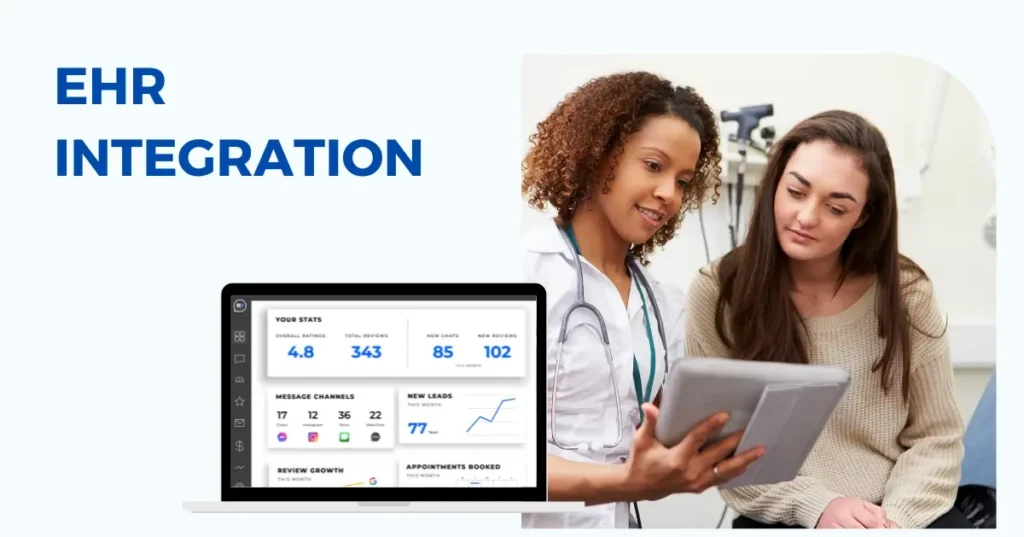
This is where an Electronic Health Record (EHR) dashboard helps. It places all patient information in one easy location so hospitals and physicians can make faster and smarter decisions.
Instead of searching through piles of files, they can see everything on one screen within seconds. This saves time and makes patient care smoother. Below are five key benefits of using an EHR dashboard in hospitals and clinics.
1. Quick and Easy Decision-Making
Doctors and nurses often need to act fast. They cannot spend time looking for files when treating a patient. Even a small delay can cause serious problems.
With an EHR dashboard, medical history, lab results, medications, and vital signs appear in one place. This helps the doctor quickly check past illnesses, current medicines, and recent test results before deciding the next step.
For example, if a patient arrives with sudden stomach pain, the doctor can view old reports instantly. They can see whether the patient has ulcers, kidney stones, or infections. This prevents repeated questions or unnecessary tests and allows treatment to start immediately.
2. Less Paperwork, More Time for Patients
Doctors and staff spend a lot of time filling out forms and searching through old records. This reduces the time they can spend caring for patients.
An EHR dashboard removes this extra work. Everything is stored electronically. Doctors do not need to rewrite information, and staff do not have to sort through old files. Records are saved in the right format and updated easily with just a few clicks.
For example, instead of searching through hundreds of files, staff can find one patient’s record within seconds. This makes daily hospital work much easier.
3. Complete Patient History in One Place
Most patients visit different doctors for different problems. They may see a general doctor for fever, a heart specialist for chest issues, and a dietitian for weight control. Keeping track of all treatments becomes difficult.
An EHR dashboard brings all this information together. Any doctor can view the patient’s full health history in one place. This helps them understand what treatments worked before and what needs to change.
For example, a diabetic patient visiting a new doctor does not need to explain everything from the beginning. The doctor can review sugar levels, past medicines, and complications directly in the system. This reduces confusion and keeps treatment moving smoothly.
4. Better Doctor–Patient Communication
Earlier, patients had to visit the hospital for small tasks like booking appointments, getting lab results, or asking simple questions. This took time and caused inconvenience.
Now, EHR dashboards make many of these tasks easy to complete online. Patients can:
Book appointments from their phone
View lab reports anytime
Send messages to their doctor for small queries
This is helpful for both patients and doctors. Patients avoid long waiting times, while doctors can manage their schedule more effectively.
For example, if a patient wants to check if their blood test is normal, they no longer need to come to the hospital. They can check the dashboard and message the doctor if needed.
5. Smarter Healthcare With Data Insights
Hospitals must not only treat individual patients but also manage overall performance. They need to know how many patients visit daily, which treatments work best, and where delays happen.
An EHR dashboard provides useful reports and trends to help the hospital improve its services. By studying the data, hospitals can:
Identify departments with high patient load
Understand common illnesses in the area
Detect slow processes and fix them
For example, if emergency cases are waiting too long, data from the EHR can highlight the problem. The hospital can then take action to improve the situation.
Conclusion
EHR dashboards make hospital work easier and improve patient care. They help doctors make quick decisions, reduce paperwork, and keep records updated at all times.
For hospitals, using an EHR system means:
Less manual work for staff
Faster and more accurate treatment
Better communication between doctors and patients
Smarter management based on real-time data
For best results, hospitals must train their staff properly and ensure the dashboard is easy to use. Regular updates and maintenance keep the system reliable.
As technology continues to advance, tools like EHR dashboards will become even more important. Clinics and hospitals that adopt them early will stay ahead in delivering high-quality healthcare.