Technology is no longer a nicety of the healthcare landscape of today—it’s de rigueur. EHR software is at the forefront, revolutionizing the practice of dental and medical practice in America. From computerized patient records to optimizing clinical decision support, electronic health records are now the norm for healthcare providers.
No matter if you have a small dental clinic or a collection of large medical clinics, knowing how EHRs are different from the older EMR systems and how they function can save time, avoid errors, and improve patient care.

The ABCs: EHR vs. EMR
What is an EHR?
- An Electronic Health Record (EHR) is an comprehensive, digital interpretation of a case’s medical history.
- EHRs are designed to be shared across health care organizations, and several providers can have access to one patient’s information.
- Core elements of data include clinical notes, lab results, medication lists, medical histories, and patient demographics.
What is an EMR?
- An Electronic Medical Record (EMR) is another electronic patient record but typically confined to the office of a single doctor.
- EMRs are mainly utilized to help clinicians see patient data longitudinally but are less transportable than EHRs.
- EMR systems are less interested in reporting office internal operations and care.
Learn more about the differences between EHR vs EMR
EHR vs EMR: What's the Difference?
Being aware of the differences helps avoid medical practices getting the wrong software. Here is a side-by-side summary:
Interoperability
- EHR: Created to share with multiple health care providers and systems.
- EMR: Destination is a single practice; sharing is very restricted.
Related link: https://qiaben.com/medical-billing-service/
Link highlights: Cross-system connectivity and data sharing relevance.
Data Scope
- EHR: Entire scope; lab results, images, meds, allergy data, and visit summary.
- EMR: Diagnosis and treatment of an individual office.
Patient Engagement
- EHR: Patient-consumable support for viewing, scheduling, and contacting providers.
- EMR: Patient-consumable function is minimal.
Related link: https://qiaben.com/specialties-2/
Link highlights: patient interactions and services offered.
Regulatory Compliance
- EHR systems are typically configured to comply with standards like HIPAA in the US for security and privacy.
- EMR systems may not have other compliance functions.
Cost & Implementation
- EHR: More costly upfront but long-term benefits with interoperability and productivity.
- EMR: Lower cost, less challenging to implement, but less scalable.

Why EHR Software Is a New U.S. Medical Practice Darling
Improved Patient Care
- Ease in obtaining patient history reduces medical mistakes.
- Allows for many providers to provide coordinated care.
Related link: https://qiaben.com/how-dental-narratives-enhance-patient-experience/
Effective Work Process
- Streamlines billing and scheduling processes.
- Saves staff time and reduces paperwork.
Data Analysis
- Tracks patient results to improve treatment plans.
- Helps practices identify trends and simplify services.
Regulatory Compliance
- Fully compliant with federal regulations regarding reporting and privacy regulations.
- Simplifies insurance claims and audits.
- Supports secure remote display of patient information by providers.
- Facilitates telehealth services, increasingly
- important in the health care profession today.
Related link: https://qiaben.com/medical-billing-service/
Use of EHR Systems in Dental and Medical Clinics: Main Benefits
The main benefits of EHR systems include complete patient records, improved communication, and time reduction. For a detailed guide on Benefits of EHR systems, check HIMSS.
1. Complete Patient Record
- All patient data in one place.
- Multiple provider access and remote viewing.
- Various providers to easily view and access.
2. Improved Communication
- Facilitates specialist, primary care doctor, and laboratory communications.
- Saves redundant tests and treatments.
3. Time Reduction
- Streamlined documentation, prescriptions, and billing.
- Liberates clinicians from extra time spent on patients.
4. Reduces Errors
- Allergy, drug interaction, and abnormal lab result alerts are made automatic.
- Saves human error.
5. Patient Participation
Patients can view records, book an appointment, and send a message to providers via portals.
6. Billing & Reimbursement Management
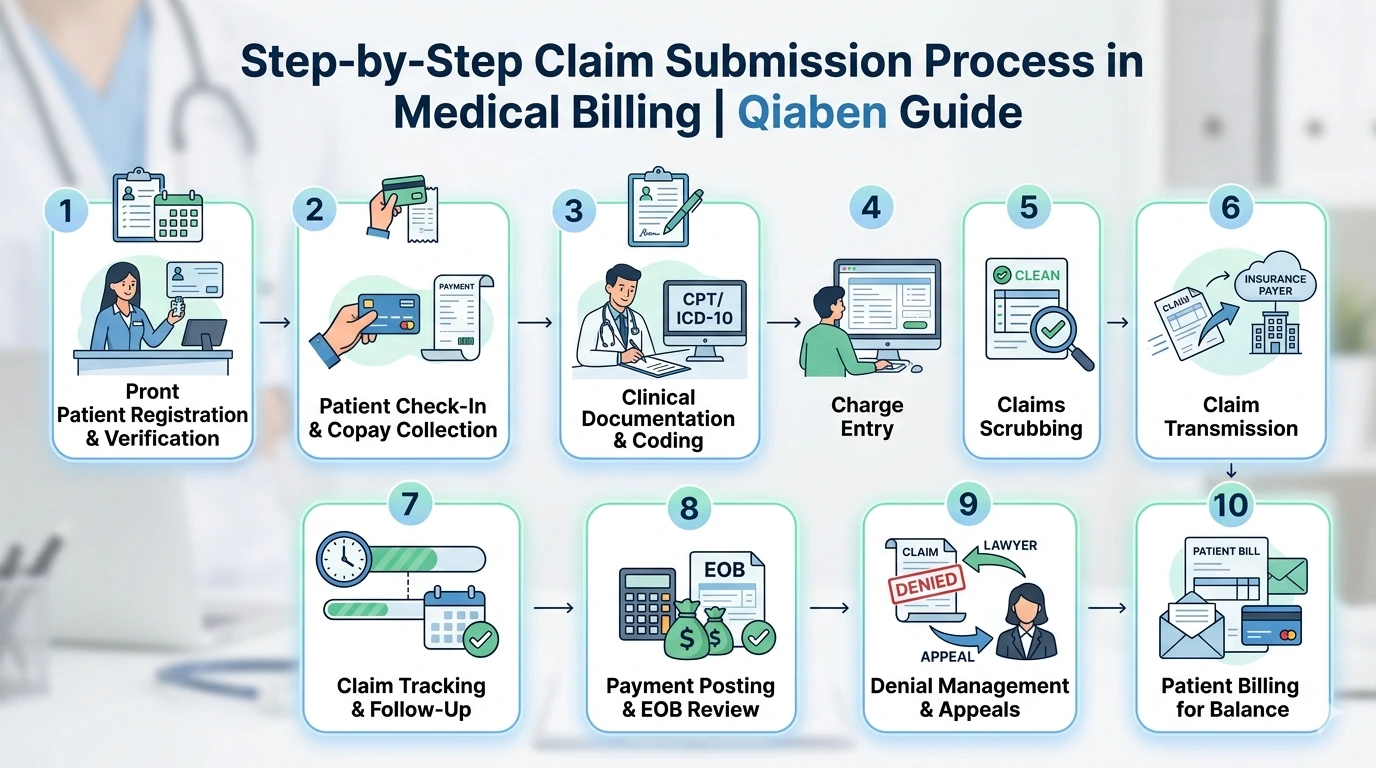
Interoperates with medical billing software to automate claim submission and minimize denials.
7. Data Safety
- Enforces HIPAA-compliant access and storage.
- Protects sensitive patient data.
Advantages & Disadvantages of EHR Systems
Advantages
Interoperable:
Share patient data among clinics, labs, and pharmacies.
Accessible Anywhere:
Access from remote sites with cloud-based systems.
Effective Documentation:
Time saved and less paper to process.
Improved Patient Safety:
Reminder notifications for allergies, medications, and lab tests.
Analytics Ready:
Monitor patient outcome and practice performance.
Related link: https://qiaben.com/customer-cabinet/
Link highlights: Security of patient data is aligned with customer portal.
Disadvantages
High Initial Cost:
EHR software is pricey to buy and implement.
Learning Curve:
Employees need acquired skills to work with the system efficiently.
Technical Issues:
Interruptions or failure of software place workflow on hold on a temporary basis.
Data Entry:
Must be updated often in order to stay current.
Limitations on Customization:
Some programs were not able to offer the special requirements of all specialties.
Choosing the Best Medical Software for Your Practice
1. Determine Your Practice Requirements
- Number of providers and personnel.
- Types of services offered.
- Number of patients and type of care delivered.
2. Prioritize the Must-Haves
- Secure messaging and patient portals.
- Appointment scheduling and reminders.
- Billing and insurance claim submission.
- Interoperability with other healthcare providers and laboratories.
3. Test Usability
- Simple, easy-to-use interface for providers and personnel.
- Remote and mobile access.
4. Test Compliance
- EHR systems certified as being HIPAA-compliant.
- Audit trails, encryption, and secure backups confirmed.
5. Consider Support & Training
- Vendor-trained staff.
- 24/7 technical support for customer problems.
- EHR systems of today’s technology
6. Value vs. Cost
- Cost at the start vs. future efficiency savings.
- Consider ROI as time saved and errors not made.
- Flat performance of today’s EHRs
- Common EHR System Purchase miscalculations to avoid.
- Making a sole-person decision costs vs. functionality.
- Failure to include employee training and adoption challenges.
- Selecting an interoperability-deficient system.
- Over-specifying for scalability in the future.
- Over-specifying for future patient engagement functionality.

FAQs on EHR Software
1. What is the difference between EHR and EMR?
EMR is just one practice in isolation; EHR is meant to be shared by a multitude of providers and health systems.
2. How can the effectiveness of dental practice be optimized using EHR software?
By automating scheduling, paperwork, and billing, prevent minimization of errors and staff time.
3. Are the EHR systems HIPAA compliant?
Good EHRs are typically HIPAA compliant, allowing for secure storage and sharing of patient records.
4. Can patient records be accessed by patients through EHR?
Yes, the patient portal offers patients the ability to view records, request appointments, and reach providers.
5. What are the primary benefits of the move from EMR to EHR?
More interoperability, more patient engagement, more analytics, and enhanced workflow efficiency.
6. Is EHR software costly for small practices?
There may be an enormous initial cost, but overall effectiveness, fewer errors, and improved patient care long term.
Conclusion
EHR software is no longer a choice but a necessity for today’s American medical and dental offices. As a revolution in patient data collection, sharing, and accessibility, EHR systems improve efficiency, quality of care, and patient safety.
When choosing an effective EHR, practices should consider usability, interoperability, compliance, and functional workflow that supports their own workflow. Successful EHR implementation is an investment that results in better patient outcomes, better operations, and a competitive edge in healthcare.