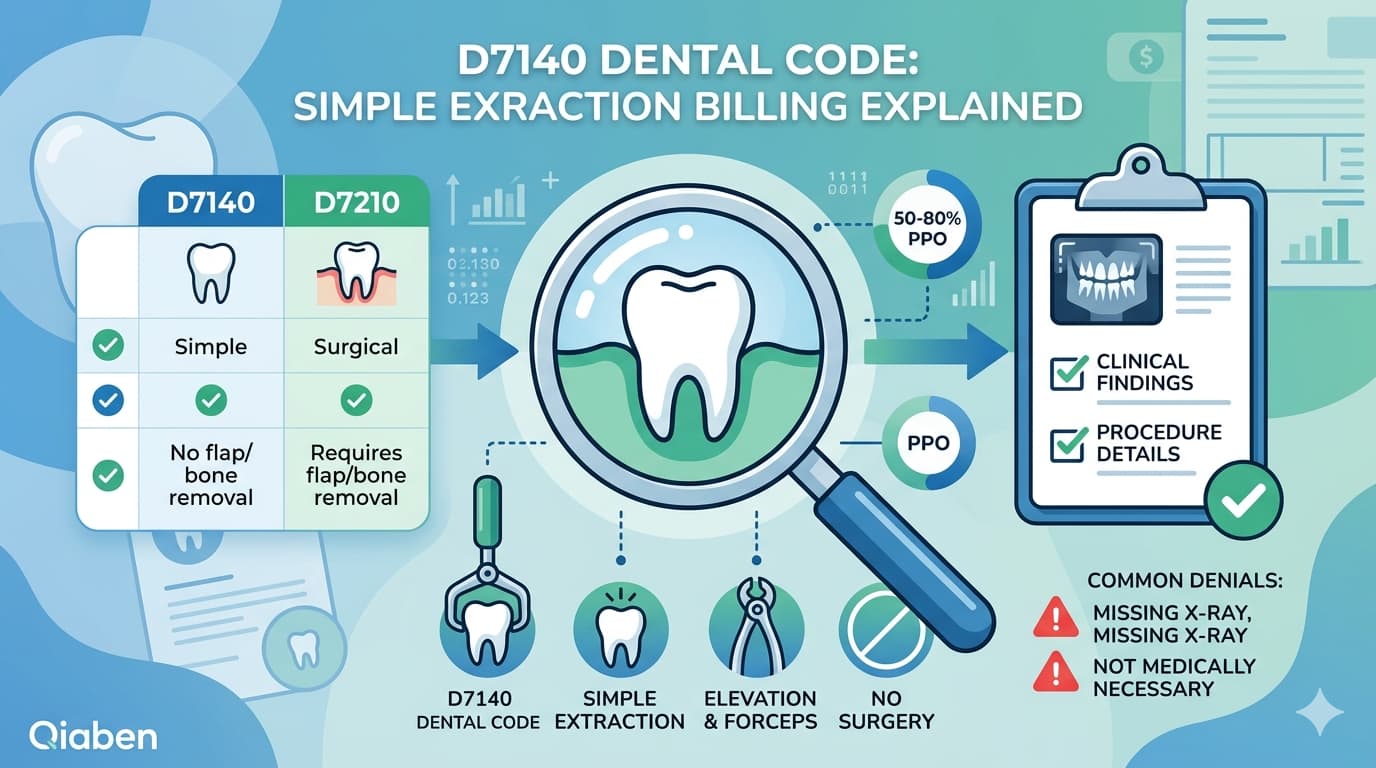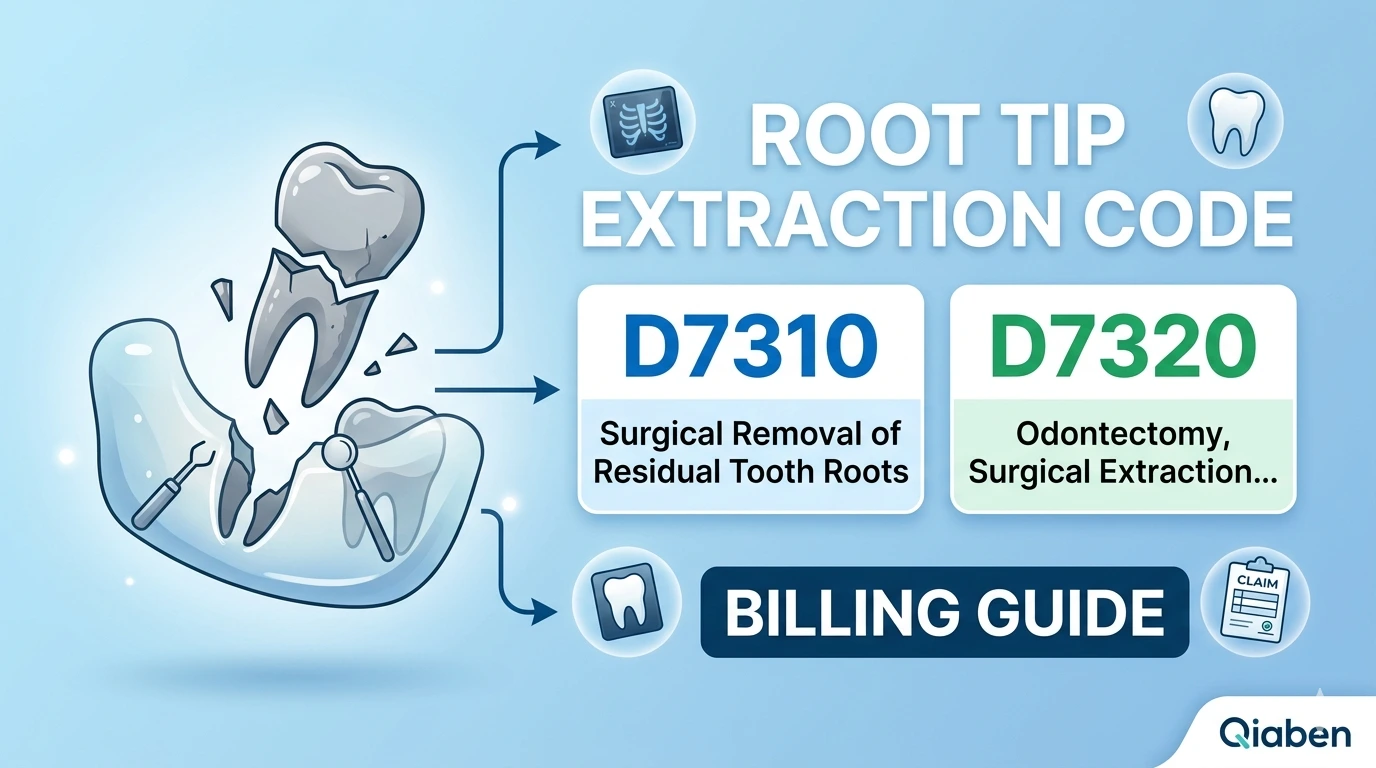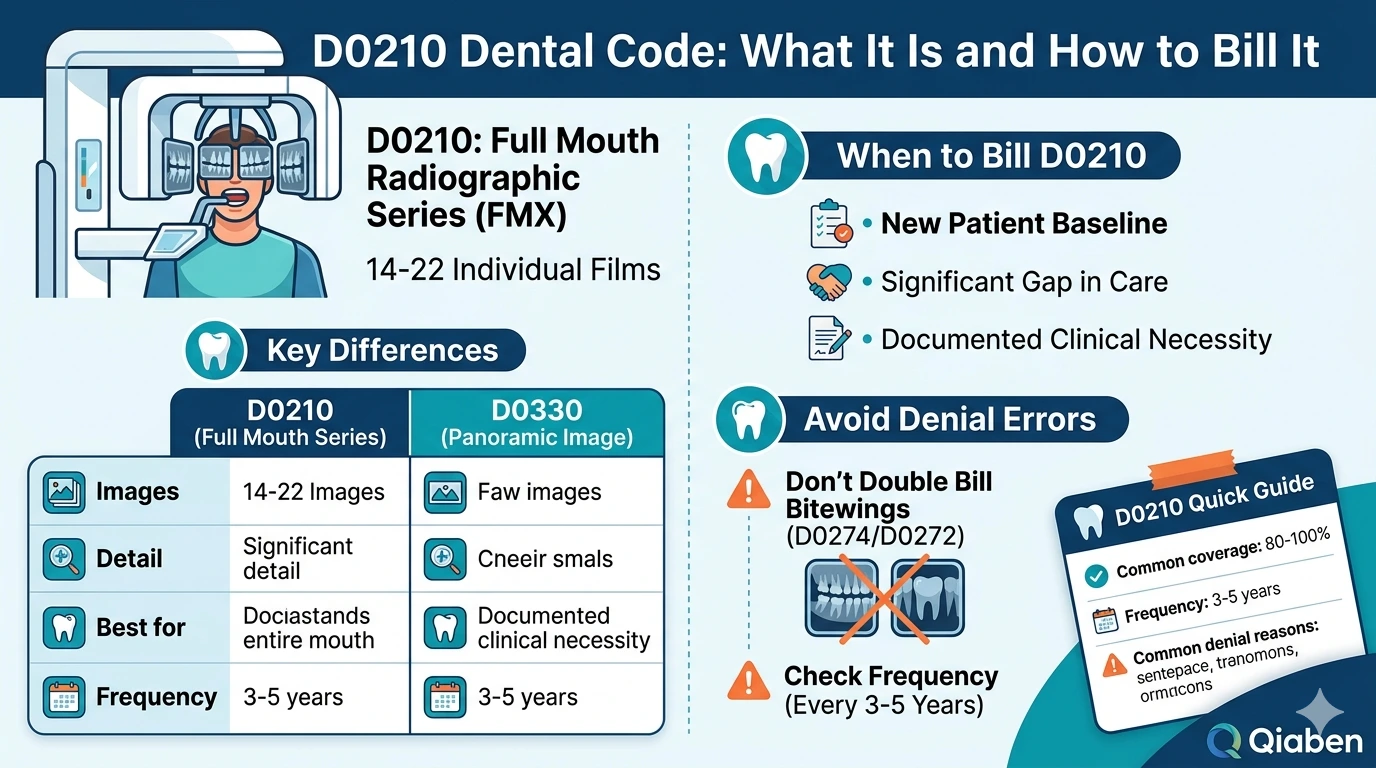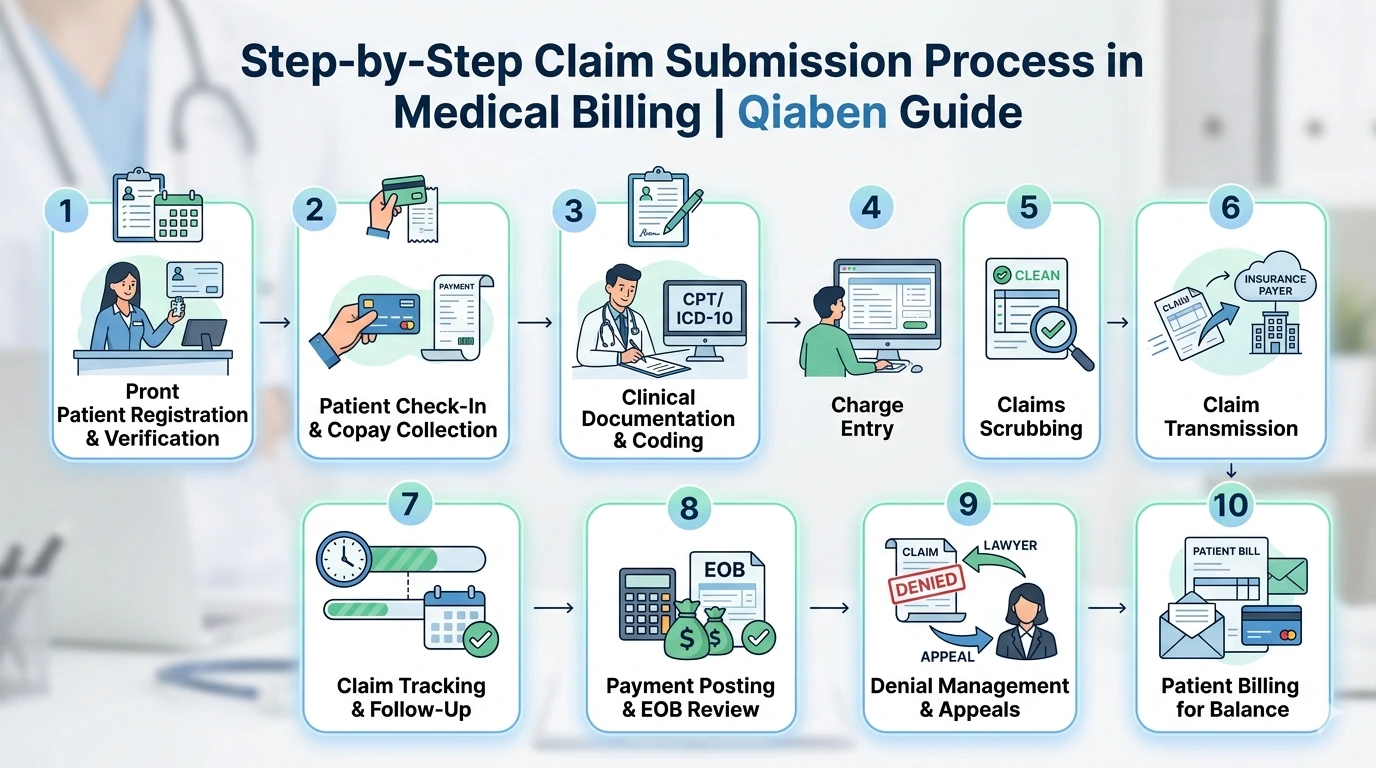
If you’ve ever faced a denied dental claim, you know how frustrating it can be. Sometimes, the problem isn’t the treatment itself it’s the way it was documented. Misunderstood terms, unclear notes, or missing information can lead to delays, repeated follow-ups, and even lost revenue. Understanding the terminologies helps you to fix the issue so in todays blog we discuss ANATOMICAL TERMINOLOGY FOR DENTAL BILLING. so before deep drive into deep lesson Fist let ask you a question
What is Dental billing ?
Dental billing is the process of submitting and following up on claims for payment of dental services provided to patients. Preparation and submission of claims to insurance companies, government programs, or directly to the patients, followed by follow-up of the status of those claims to ascertain payment, are all included here. The process of dental billing may require complex coding and documentation. The dental practices have to be very well aware of insurance plans, government programs, and billing regulations for receiving accurate and timely payment for their services. The ultimate goal of dental billing is to assure the practice’s revenue while complying with all applicable laws and regulations.

’Suppose A patient visits your clinic for a dental filling on tooth #14. You complete your job and The procedure is coded as D2392. Your office submits a claim to the patient’s dental insurance company with the correct CDT code and documentation. Then insurance company reviews the claim and pays $120 toward the procedure. And The remaining balance of $40 is billed directly send to the patient. Once the patient pays $40, the billing for that procedure is fully completed.’
Now Might understand Why need to know Terminology then lets deep dive into actual topic

WHAT IS THE STANDARD ANATOMICAL POSITION?
Anatomical position, or standard anatomical position, refers to the positioning of the body when it is standing upright and facing forward with each arm hanging on either side of the body, and the palms facing forward. It is generally segmented into 5 pats Upright posture, Face facing forward, Arms relaxed at the sides, Palms facing forward, Feet parallel or slightly apart
Upright Posture
Face facing forward
Palms facing forward
Upright posture, in dentistry, refers to the patient’s sitting or standing straight with the head positioned neutrally. This standardized posture enables dentists and billers to correctly identify the right versus left side of the mouth when documenting tooth numbers and procedures.
The patient’s face is oriented straight forward. This is important since dental anatomy is always described from the patient’s viewpoint-for example, tooth #8 is always anterior and midline when the face is oriented forward.
Palms forward may seem unrelated to dentistry, but it establishes left and right orientation in anatomy. The same principle is why dental documentation consistently uses the patient’s left/right when identifying quadrants: for example, upper left = Quadrant 2.
Feet parallel Forward
Feet should be set straight and parallel, keeping the body alignment neutral. In dentistry, this is considered the anatomical reference that textbooks, diagrams, and dental charting use so any clinician describes directions consistently: anterior, posterior, medial/mesial.
Let make it bit interactive
Imagine you’re the doctor, and a patient walks into your clinic for a posture assessment. You ask them to stand upright, face forward, arms relaxed at the sides, palms turned forward, and feet straight and parallel so you can accurately examine their body alignment. Without mentioning it directly, you’ve just placed the patient in the standard anatomical position, the universal reference used in medical anatomy.
Question Why do you, as the doctor, ask the patient to turn their palms forward during this assessment?
Because turning the palms forward keeps the forearm bones from crossing, allowing you to observe and describe the body in a clear, consistent way.
Basic Directional Terms in Dentistry ?
Feet positioned straight and parallel help maintain a neutral body alignment. In dentistry this serves as the anatomical reference used in textbooks, diagrams, and dental charting so every clinician describes directions Dentistry uses specific directional terms to correctly describe the location of teeth, tooth surfaces and oral structures. Being able to understand these terms promotes clear documentation and prevents billing or charting errors. (anterior, posterior, medial/mesial)
Anterior
Posterior
Medial
toward the front of the mouth
Toward the back of the mouth Dental Example: The posterior teeth are the
toward the midline of the dental arch
Lateral
Proximal
Distal
Away from the midline of the dental arch
surfaces where two adjacent teeth touch
surface of the tooth farthest from the midline
What Are Anatomical Body Planes?
Anatomical body planes are imaginary flat surfaces used in dentistry to divide either the head or body. These planes serve as references for the dentist, hygienist, and oral surgeon in describing the positions of teeth and jaws, along with facial structure, as taken from various X-rays, CBCT scans, orthodontic assessments, or surgical notes.
Sagittal Plane in Dental Use
A vertical plane that divides the head or body into left and right sections.
Midsagittal Plane in Dental Use
The precise midplane that divides the body into left and right portions of equal size.
Coronal Plane in Dental Use
A vertical plane that divides the body into front (anterior) and back (posterior) portions
Transverse Plane in Dental Use
A horizontal plane dividing the body into upper (superior) and lower (inferior) sections.
Now We come to conclusion
Anatomical dental terminology is much more than mere academic knowledge; it is a practical and revenue-saving tool. Proper dental terms strengthen your clinical documentation, support correct coding, and make sure that the actual provided treatment is described in the claim. Each accurate description, every correctly labeled structure, and every well-documented entry in the chart brings your practice one step closer to smooth, efficient, stress-free dental billing. And that’s what you deserve. Your expertise, your time, and patient care should not be devalued by denied claims or mistakes in documentation. Proper anatomical terminology helps protect your practice, improve reimbursement, and maintain a strong workflow within your dental team.
At QIABEN, we stand beside you in this journey.
Whether you’re overwhelmed by paperwork, struggling with claim denials, or simply tired of chasing payments, we are here to lift that burden.
- With QIABEN EMR & Telehealth, enjoy seamless digital tools for effortless patient management and flawless virtual care.
- Our Medical Billing & Coding support ensures every claim is accurate, compliant, and paid on time.
- With our Insurance Verification and Pre-authorization, we eliminate delays before they ever reach your schedule.
And yes, we help you cut operational costs by as much as 50% so that you can focus on what really matters: your patients.
For understating follow the YouTube channel
You care for smiles.
Let QIABEN take care of everything else.