 Free Consultation
Streamlined Billing.
Stronger Revenues.
Happier Practices.
Qiaben’s expert medical and dental billing solutions empower clinics to simplify workflows, boost claim accuracy, and get paid faster — while staying fully compliant.
5+
Years of healthcare industry experience
70+
Healthcare providers served
24/7
Dedicated support
50
Medical specialties covered
Who we are
Transforming Healthcare with Smart Billing & IT Solutions
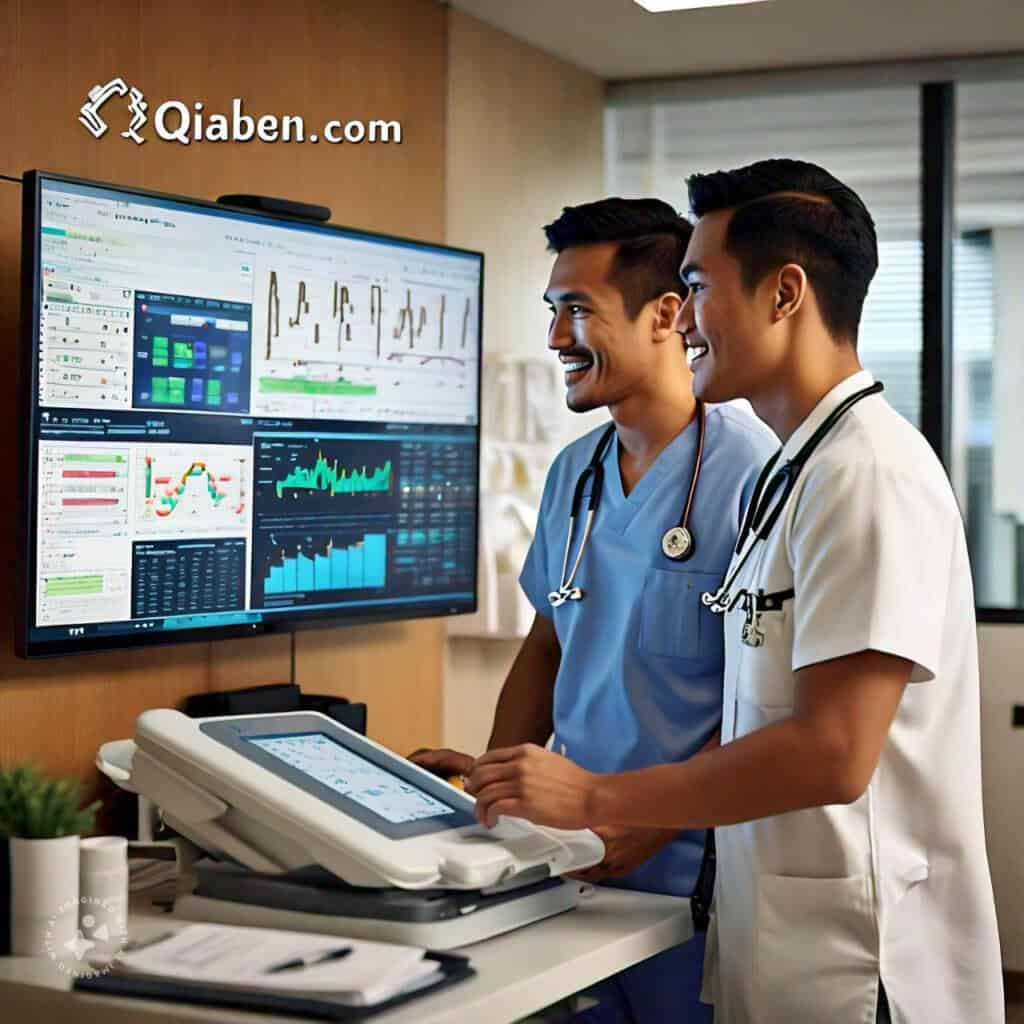
Qiaben empowers medical and dental practices with end-to-end billing, RCM, and EHR/EMR integration — simplifying workflows and driving revenue growth.
5+
Years of healthcare industry experience
70+
Healthcare providers served
24/7
Dedicated support
50
Medical specialties covered
Certified by


What we offer
Complete Solutions for Modern Healthcare
Comprehensive. Compliant. Connected. Qiaben provides end-to-end healthcare and technology services that optimize operations, reduce costs, and enhance patient experiences.
Medical & Dental Billing
AI-powered revenue cycle management with real-time claim tracking and denial prevention.

Credentialing & Enrollments
Streamlined provider credentialing and insurance enrollment processes.
EHR/EMR Integration
Seamless implementation and support for electronic health record systems.
Healthcare IT & Automation
Advanced technology solutions and workflow automation for healthcare operations.

Digital Marketing
Specialized marketing strategies to grow your healthcare practice online.

Telehealth Solutions
Virtual practice platforms and remote patient care technologies.
Specialties
Expertise Across 50+ Medical Disciplines
Qiaben adapts technology and billing workflows to your clinical specialty.
Cardiology
Dentistry
Dermatology
Gastroenterology
Orthopedics
Pediatrics
Psychiatry
Radiology
And many more: Internal Medicine, Neurology, Urology, Ophthalmology, Gynecology, Oncology, ENT, Physiotherapy, Pulmonology…
Your Competitive Edge in Healthcare Efficiency
Your Challenge: Billing delays & denials
Qiaben Solution: AI-assisted claim review & real-time tracking
Your Challenge: Revenue leakage
Qiaben Solution: Analytics-driven RCM improvements
Your Challenge: Fragmented EHR/EMR systems
Qiaben Solution: Seamless integration & staff training
Your Challenge: Lack of patient follow-up
Qiaben Solution: Integrated CRM + patient engagement tools
Your Challenge: Compliance & documentation issues
Qiaben Solution: HIPAA-ready, secure digital processes
Ready to solve these challenges?
Get your free process audit and see how we can help
Get Your Free Process Audit
What They Say About Us
“I signed up with Qiaben about 4 to 5 months ago. They have been great to work with! Siva and his team are very good about communication via text or email. They get all work done and claims paid in a very efficient manner. With denials, they are very good about gathering information and resubmitting it. If we have any questions or concerns, they are very prompt to respond via a call or zoom. This has been a much better option than having someone physically in the office. I highly recommend them.”
Jay Doshi
Doctor
Proven Results You Can Measure
42%
Claim Denial Reduction
Mid-size Hospital, Texas – Integrated billing + EHR system, reducing claim denials by 42%.
Healthcare System Integration30%
Cash Flow Improvement
Dental Chain, Florida – Improved cash flow by 30% and automated record updates.
Multi-Location Practice3x
Patient Growth
Multi-specialty Clinic, India – Implemented EHR + SEO strategy, achieving 3x patient growth.
Digital TransformationThe Qiaben Advantage
Seamless EHR/EMR Integration
AI-powered billing intelligence
HIPAA-compliant infrastructure
24/7 dedicated support
Let's Build the Future of Healthcare Together
Ready to Streamline and Scale Your Healthcare Operations? Let Qiaben handle your billing, technology, and EHR/EMR setup — while you focus on delivering better care.