Credentialing feels like paperwork until it becomes a revenue problem. One small oversight a missing signature, an outdated license number, or a failed recredentialing reminder can turn clean claims into denials, push revenue into aging AR, and eat up staff hours fixing avoidable errors. Below are the most common credentialing mistakes, why they happen now, and the practical fixes that actually work in today’s market.
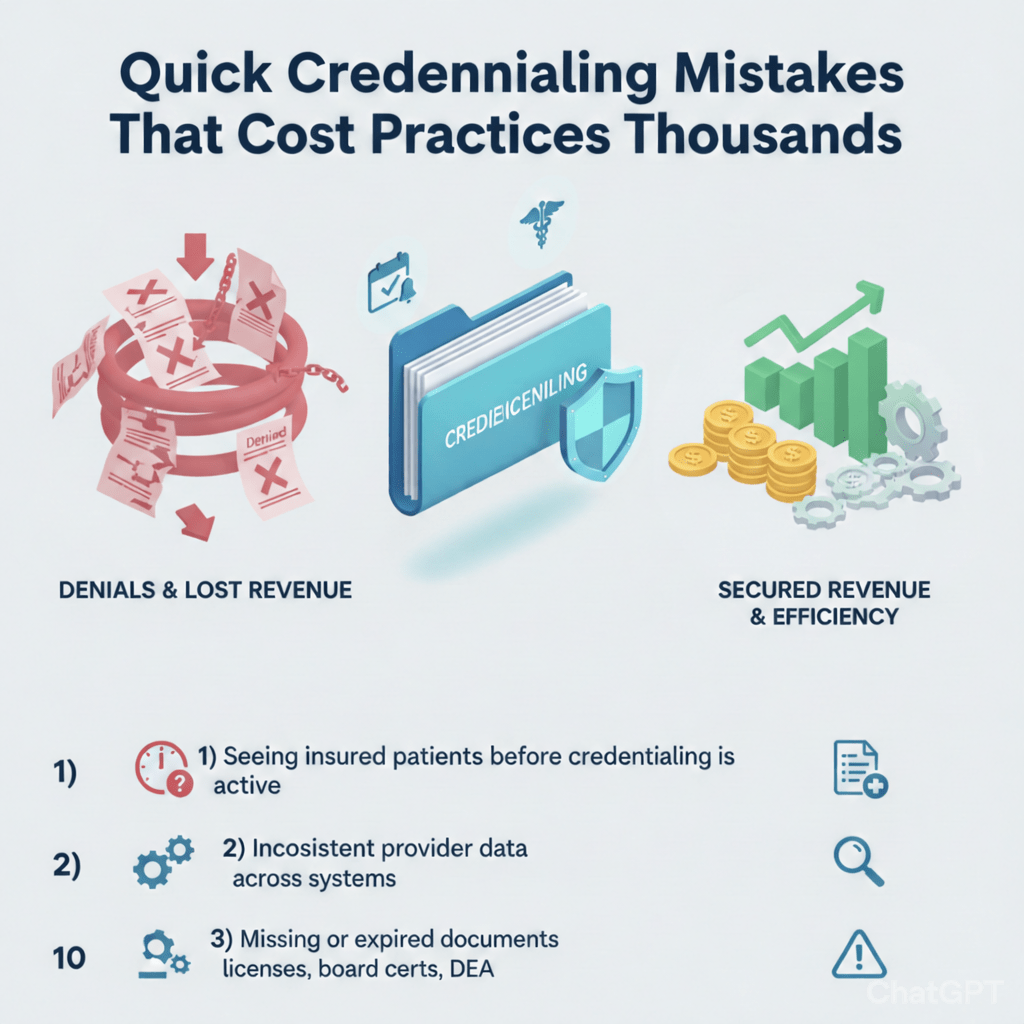
1) Seeing insured patients before credentialing is active
Why it happens: Practices assume “application submitted” means approval is imminent.
What it costs: Claims submitted while credentialing is pending often return as a credentialing denial in medical billing. That turns immediate revenue into drawn out appeals.
Fix: Don’t schedule insured visits as “in network” until you have payer confirmation. If you must see the patient, document it as an out of network or cash encounter and flag the claim for resubmission only after written approval.
2) Inconsistent provider data across systems
Why it happens: Provider info lives in too many places such as CAQH, NPI registry, practice management, payroll and updates aren’t synchronized.
What it costs: Payers reject or delay credentialing when names, addresses or tax IDs don’t match. These are common credential issues in medical billing.
Fix: Create a single “source of truth” master file for each provider and update CAQH first, then mirror changes to your practice management solution and billing partner.
3) Missing or expired documents licenses, board certs, DEA
Why it happens: Staff assume automated systems will catch expirations. They don’t always.
What it costs: Expired documents trigger recredentialing flags or denials.
Fix: Maintain a calendar with reminders set months ahead. Verify documents during onboarding and again 60 to 90 days before expiry.
4) Not tracking payer specific requirements
Why it happens: Each payer can have slightly different forms, addenda or credentialing portals.
What it costs: Generic applications get bounced or stalled, causing credentialing denial headaches.
Fix: Keep a payer checklist per insurer including required forms, submission channels and expected timelines. Use it when submitting and when following up.
5) Loose ownership of the credentialing process
Why it happens: Fragmented responsibility such as front desk starts it, clinical admin finishes it and billing follows up.
What it costs: Tasks fall through the cracks including missing signatures and incomplete forms.
Fix: Assign one clear owner for credentialing and recredentialing. Give that person authority and a checklist tied to your medical billing and credentialing workflow.
6) Ignoring recredentialing windows
Why it happens: Practices treat credentialing as one time setup. It’s not.
What it costs: Missed recredentialing can stop payments or force retroactive denials.
Fix: Automate reminders for recredentialing and confirm payer timelines. Integrate reminder tasks into daily office workflow or your practice management solutions.
7) Poor documentation of prior denials or appeals
Why it happens: Teams treat denials as one offs and don’t log root causes.
What it costs: The same credentialing denials happen again and again.
Fix: Track every denial by reason, payer and resolution. Use this log to update front desk scripts and chart templates.
8) Failing to test payer enrollment after approval
Why it happens: Staff assume approval equals system update at the payer’s end. Sometimes it doesn’t sync.
What it costs: Claims submitted to the payer still show the provider as uncredentialed.
Fix: After confirmation, submit a test claim or eligibility check and confirm the payer recognizes the provider.
9) No documented exit or migration path with vendors
Why it happens: Practices rely on the vendor without asking for data export terms.
What it costs: If you change billing partners or software, exporting provider files and attachments becomes painful and costly.
Fix: Require a documented export policy from any medical billing company or medical software company you work with.
10) Not leveraging partners with credentialing experience
Why it happens: Teams try to handle everything internally to save money. Credentialing is deceptively complex.
What it costs: Time, errors and denials that could have been prevented.
Fix: Consider working with an experienced medical billing company or a bundle that includes medical billing and credentialing. They understand payer quirks and can speed approvals.
Short FAQ every future doctor must know :
Q: What do I do when a credentialing denial appears?
A: Classify the denial (missing docs, mismatch, not enrolled), pull the source documents, correct the error, and resubmit with a concise cover letter. Log the denial reason so it doesn’t repeat.
Q: How long does credentialing take?
A: Times vary by payer. Expect weeks to months. Build contingency workflows so patient care continues while credentialing completes.
Q: Can a medical billing company help?
A: Yes. The right medical billing services partner can handle submissions, follow ups, and recredentialing reminders, reducing errors and freeing staff time.
How this ties into revenue and operations today
Credentialing mistakes increase denials and slow collections. In the current market, where payer rules shift and administrative bandwidth is tight, credentialing has become a core part of revenue hygiene. Pairing credentialing discipline with proven tech such as medical claims processing software, robust medical billing software, and clear practice management solutions reduces denials and keeps your cashflow predictable.
If you’re thinking beyond fixes, training your billing team with revenue cycle management training and working with trusted billing and coding companies or a medical software company can make the process routine instead of risky.
Ready to stop leaking revenue?
Request a Free credentialing audit. We’ll review your provider files, CAQH alignment, recredentialing calendar, and payer specific gaps. You’ll get a concise action plan you can implement this week, with recommended improvements to your credentialing process in medical billing and suggested partner checklists including medical billing company, healthcare billing services, insurance billing programs, and more.