What is dental billing? A Cracking Down on the Basics
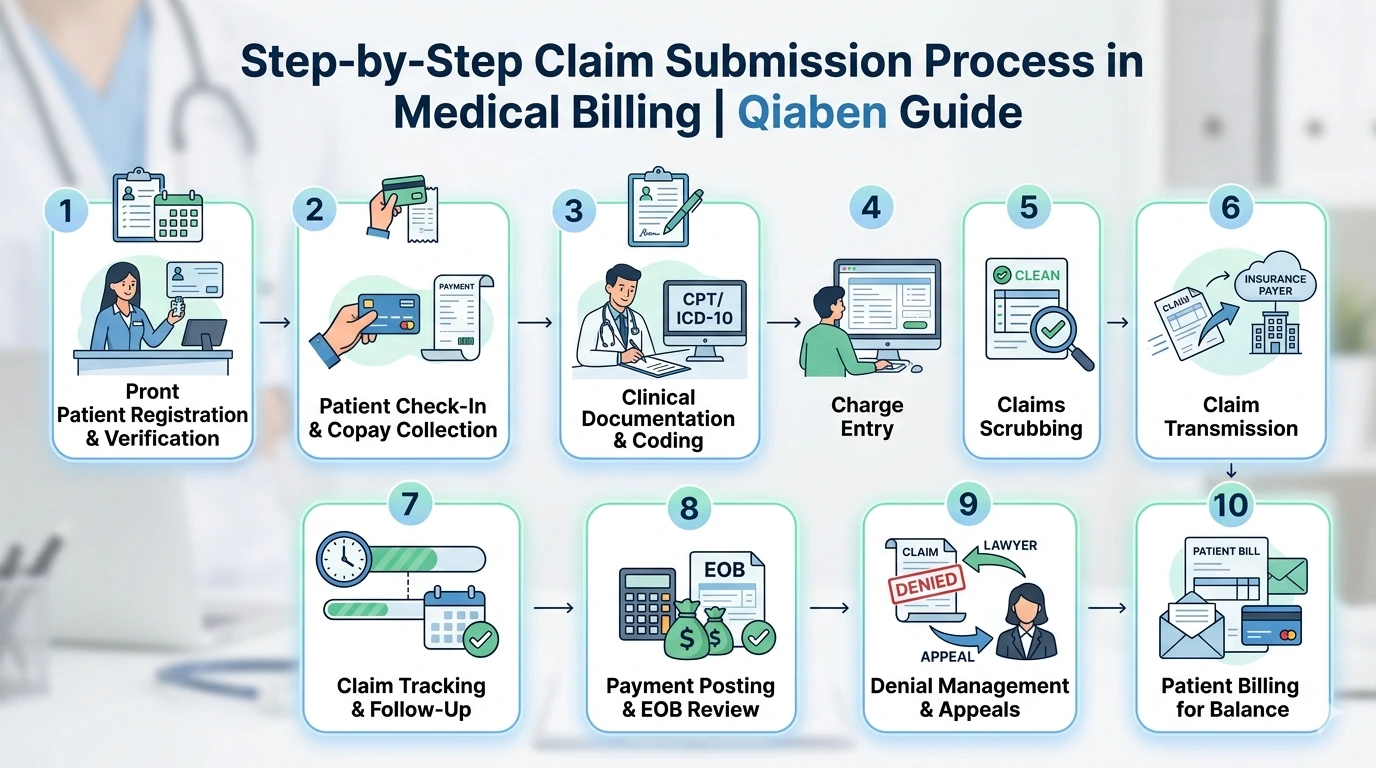
Dental billing is how dental offices bill, follow up, and collect for patient care from patients and payers. The process includes anything from patient scheduling and insurance verification to claims submission, collections, denials management, and financial reporting. Good dental billing is more than a paper chase; it keeps a practice’s cash flow and reputation and has direct consequences regarding patient trust and delivery of care.
2025 Dental Billing Optimization is crucial to any dental practice since insurance, coding, and patient payment expectations continue to become more complicated. Progressive technology, best practice innovation, and the capacity for workflow simplification result in practices having to move fast to safeguard revenue and provide an exceptional patient experience. This definitive blog offers the best practices, trends, and solutions to optimize dental billing to be faster, more accurate, and profitable.
Dental Billing Process Enhancement Tactics
Automation and Integration of Technology
Streamlining tasks like insurance verification, coding, and claim submission can largely alleviate administrative burden and regulatory risk, as well as accelerate payments. Sophisticated dental billing software can:
•Real-time insurance eligibility checks—preventing eligibility denials.
•Automated claims submissions and electronic attachments—preventing manual entry and error.
•Prevent missing or incorrect information before submission—preventing unnecessary delays.
• Digitally reporting patient quotes and payment links—increasing when and how patients pay.
• Artificial intelligence-driven claim monitoring—which notifies workers of denied claims and eradicates resubmission steps.
Faster Claims Processing and Error Prevention
Reducing denials and expediting reimbursements:
• Process claims carefully for precision and completeness prior to submission.
• Be informed about CDT (Current Dental Terminology) updates, since out-of-date codes are most frequently causing rejections.
• Utilize validation coding software cross-checking for errors before submitting claims.
• Utilize a final cycle or batch-processing cycle for error detection in high-volume offices.
Staff Training and Empowerment
Without trained staff, technology is useless. Invest in:
• Formal staff training regarding new software, updated coding needs, and insurer policy changes.
• Workshops or webinars for ongoing training—required with yearly code, law, and insurance changes.
Data-Driven Workflow Enhancements
Implement audits and analytics:
•Periodically examine your billing processes to look for bottlenecks or systemic disparities.
•Monitor denial patterns to record recurring issues, which, once corrected, can substantially enhance cash flow.
•Tickler aging reports in order to timely follow through on delinquent accounts.
Industry Trends and Innovations
The Evolution of Artificial Intelligence and Machine Learning
The standard for precision and effectiveness is being raised by AI-powered analytics and claims management programs:
• AI platforms are now able to detect potential coding errors or missing documentation before submitting complex claims, automating the process.
• Beyond claims, workflow automation encompasses digital payments, scheduling, reminders, and even predictive analytics for financial forecasting. Because fewer claims are lost or delayed, practices that use automated follow-ups and intelligent denial tracking can increase collections by 15–30%.
Cloud-Based and Integrated Billing Solutions
The increasing cloud-based nature of contemporary dental software suites enables improved integration with practice management systems and electronic health records. Among the advantages are
• Automatic software updates, which include coding modifications.
• Easy payment posting and insurance verification.
• Support for multiple locations to accommodate expanding procedures and remote work options.
Prioritizing Patient Experience and Transparency
The increasing cloud-based nature of contemporary dental software suites enables improved integration with practice management systems and electronic health records. Among the advantages are
• Automatic software updates, which include coding modifications.
• Easy payment posting and insurance verification.
• Support for multiple locations to accommodate expanding procedures and remote work options.
Insurance Verification and Claims Management
The Critical Role of Accurate Insurance Verification
• Treatment surprises are avoided with real-time eligibility checks prior to appointments.
• Direct extraction of co-pays, deductibles, and coverage limits from payer databases is accomplished by automated systems.
• This step is crucial because inaccurate verification is one of the main reasons for downstream denials and billing disputes.
Optimizing Claims Submission and Tracking
• Establish uniform procedures for gathering and entering clinical, provider, and patient data at the beginning.
• To expedite payer responses, use electronic claim submission platforms.
• Keep an eye on denied claims and take swift action—AI tools now automatically notify teams and restart claim cycles when problems are found.
Outsourcing Dental Billing—Pros, Cons, and Considerations
Why Outsource?
Dental billing outsourcing to specialized companies is becoming more popular, particularly for expanding or multi-site practices dealing with high denial rates, rapid regulatory changes, or staffing pressure:
• The ability to access knowledgeable claim specialists and coders without having to hire them internally.
• Higher collection rates (surveys show up to 30% in the first six months).
• Relief from the difficulties associated with hiring, training, and turnover in billing positions.
Possible Hazards
• HIPAA compliance and data security need to be discussed and tracked.
• To preserve quality and resolve challenging coding problems, communication with the outsourced team is crucial.
• Better collections and employee productivity must be weighed against upfront expenses.
The Effects of Patient Experience on Care
How Billing Impacts Patient Satisfaction Patients frequently cite simplicity and clarity in billing as important components of satisfaction.
• There are fewer disputes and bad debts when automated reminders, online payment options, and upfront financial counseling are implemented.
• Staff members can devote more time to patient care rather than administrative duties when billing procedures are run efficiently, which enhances the overall experience.
Pricing, Cost Comparisons, and Financial Planning
Approach | Cost Structure | Staffing Need | Typical Pros | Typical Cons |
In-house | Salaries, software, training | High | Total control, staff | Overhead, turnover |
Outsourced | Percentage of collections/flat | Low | Expert team, speed | Less immediate control, |
fee, software included | fewer errors | requires careful vendor |
In-House vs. Outsourced Billing—Financial Trade-Offs
Both strategies should be examined by practices for the following reasons:
• Direct savings on salaries and training.
• A possible rise in income and a decrease in rejections.
• Effect on patient care resources and workload.
Modifying Patient Pricing Structures
• In 2025, financing, instant-pay discounts, and digital payment plans will be commonplace to reduce bad debts.
• Options for mobile payments are thought to be crucial for timely collections and patient satisfaction.
Revenue Cycle Management (RCM) Essentials
The foundation of dental practices’ financial stability is a strong RCM system:
Real-time visibility into cash flow, outstanding accounts, and the profitability of the practice is made possible by managing scheduling, eligibility, claims, receivables, and post-payment reconciliation.
• Assists in locating hidden revenue leaks for ongoing improvement, such as missed codes, underbilling, and collections delays.
Team Collaboration, Support, and Training
Fostering Collaboration
• Billing works best when it is combined with front office and clinical workflows rather than being done separately.
• Modifications to codes, insurance regulations, and clinical procedures must be communicated by providers and billing/administrative teams.
• Offer assistance and ongoing training to all employees who handle patient intake, insurance verification, coding, and collections
Testimonials and Case Studies
Real-World Success
• Measurable improvements have been observed in practices that use outsourcing and sophisticated billing technology, including faster collections, fewer rejections, and higher patient satisfaction ratings.
• After implementing AI-based claim management, one multi-location clinic reported a 22% decrease in claim denials.
• After implementing digital billing and reminder systems, another practice saw a 35% decrease in patient AR (accounts receivable), with patients citing transparency and ease of use as important factors.
Key Takeaways and 2025 Outlook
• Three key benefits for dental offices in 2025 are automation, employee training, and patient-centered technology.
• Better revenue, fewer denials, and higher patient satisfaction are observed by practices that focus on transparent patient communications, utilize industry innovations, and routinely review their billing procedures.
• Outsourcing is a good choice for businesses that are having trouble with complexity, but it needs to be handled carefully.
Concluding remarks
The reputation, patient care, and profitability of your dental practice are all intertwined with dental billing optimization, which is more than just an accounting function. Continue making investments in staff training, technology, and open patient communication to stay successful, competitive, and compliant in a constantly changing environment.