What Are CDT Dental Codes?
CDT codes are five-character alphanumeric codes that always begin with the letter “D.” Each CDT code represents a specific dental procedure or service.
Examples of Common CDT Codes
D1110 – Prophylaxis, adult (dental cleaning)
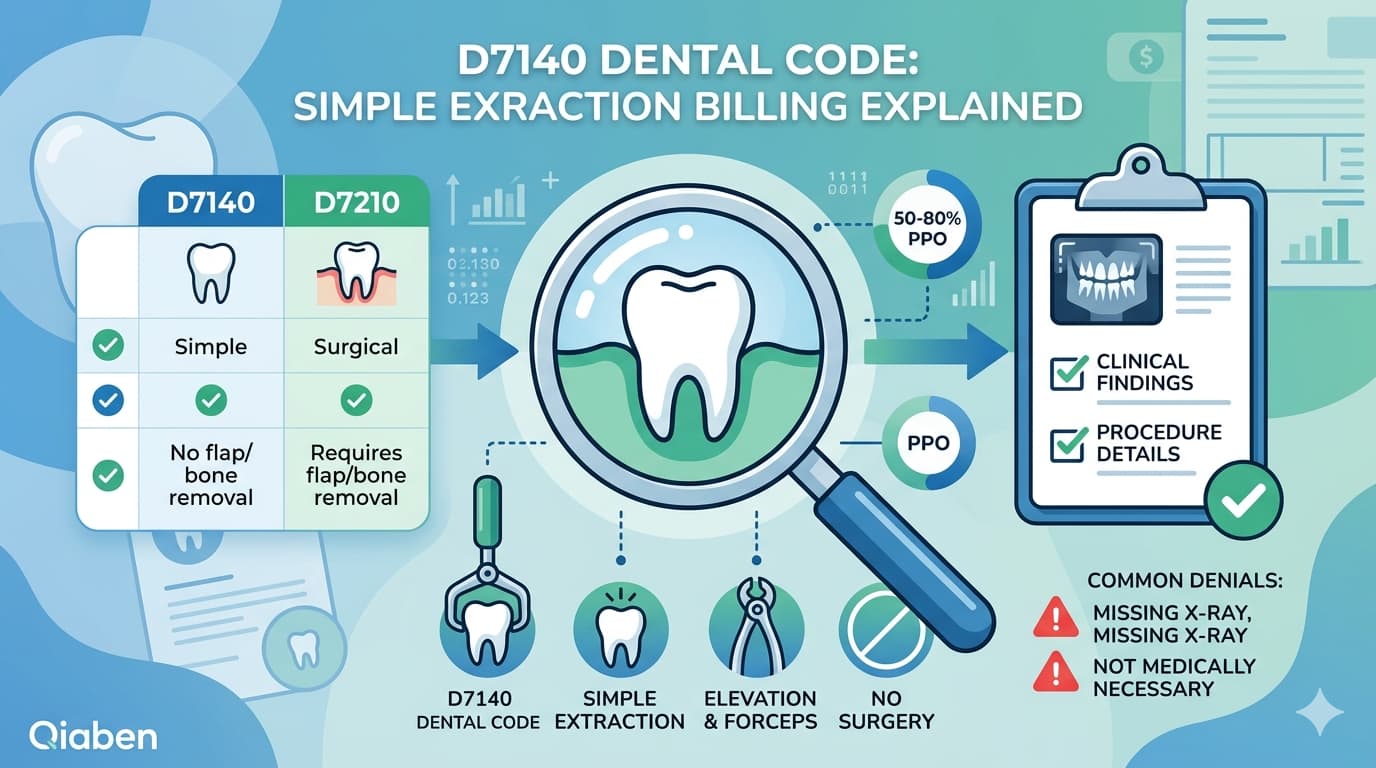
D7140 – Simple extraction of an erupted tooth
D4341 – Periodontal scaling and root planing (per quadrant)
Why CDT Codes Matter
CDT dental codes serve three important purposes:
Standardization – Dentists across the U.S. use the same codes
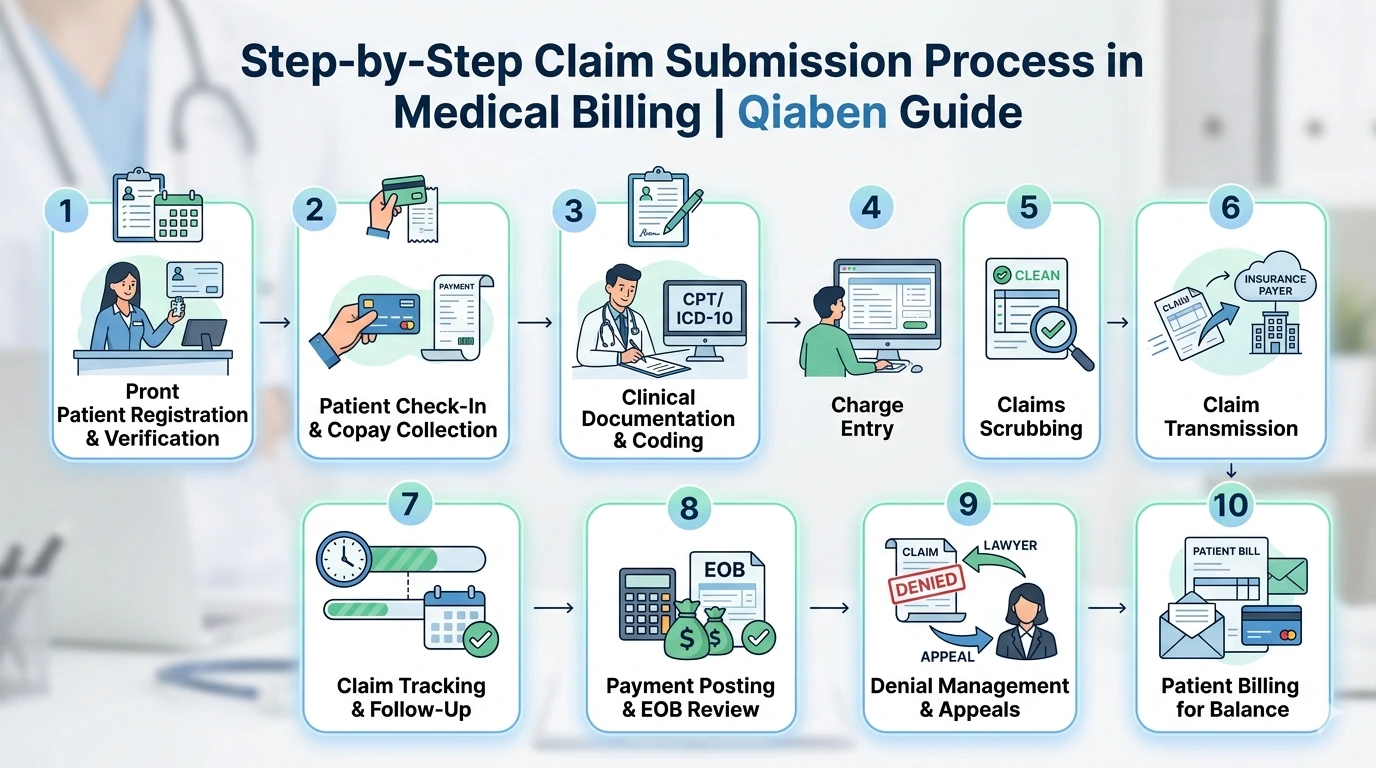
Insurance billing – Insurers rely on CDT codes to process claims
Patient clarity – Patients can understand exactly what treatment was performed
As a result, CDT codes ensure consistency between providers, insurers, and patients.
Why the 2025 Updates are Important
Each year, the ADA Code Maintenance Committee reviews requests from dentists, insurers, and manufacturers. Consequently, they update CDT codes to reflect modern dental care.
Key Reasons the 2025 Updates Matter
New codes now reflect digital dentistry and minimally invasive procedures
Certain periodontal and surgical codes were clarified
Some outdated codes were removed or revised
Insurance carriers will only accept 2025 CDT codes starting January 1, 2025
Therefore, dental practices and billing teams must update their software and workflows. Otherwise, incorrect coding may lead to claim denials or delayed reimbursements.
Full List of Dental Procedure Codes for 2025
Following is a summary of the main CDT code categories used in dental billing. (Hint: The following is a condensed list for patient purposes; dental professionals always should consult the official ADA CDT manual for full descriptions of codes.)
1. Diagnostic (D0100–D0999)
Covers exams, evaluations, and imaging.
- D0120 – Periodic oral evaluation
- D0140 – Limited, problem-focused evaluation
- D0150 – Comprehensive oral evaluation (new or established patient)
- D0180 – Comprehensive periodontal evaluation
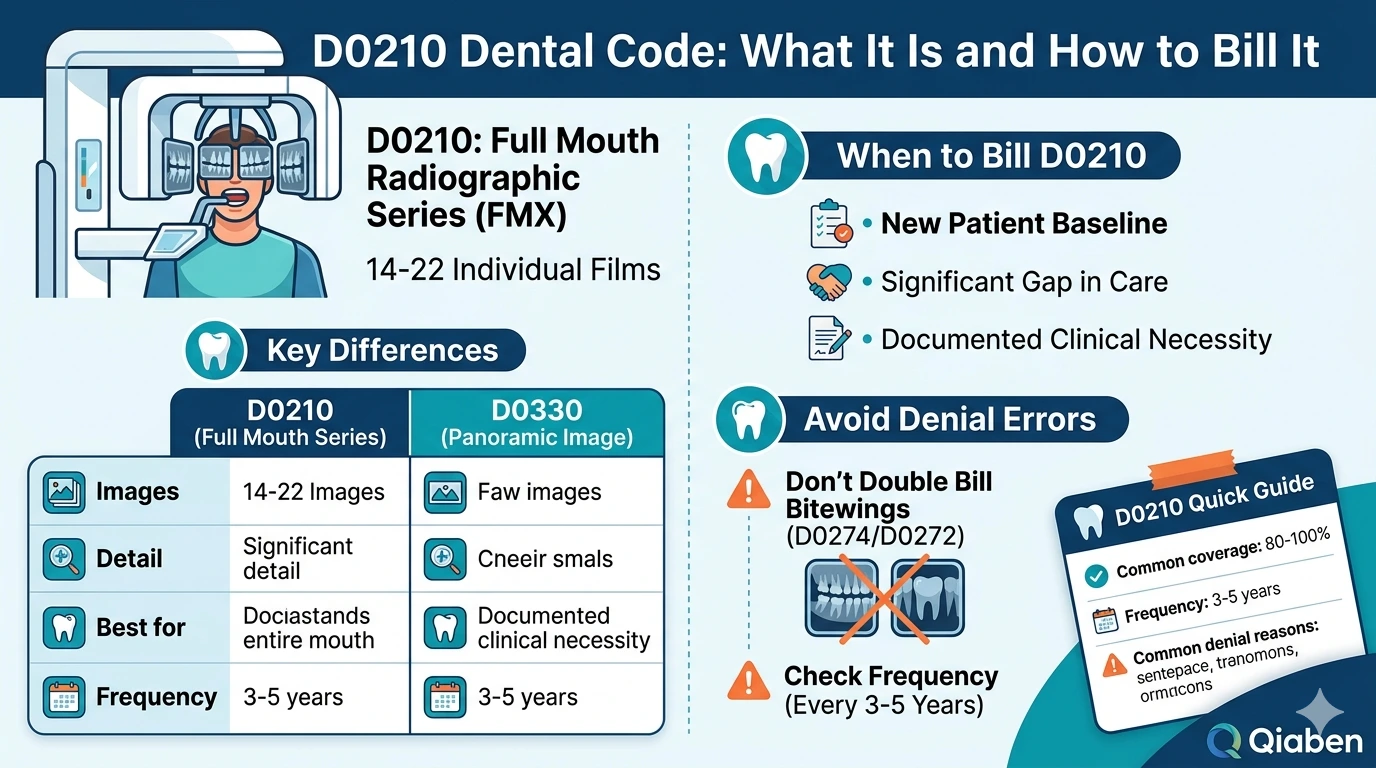
- D0210 – Intraoral complete series (FMX) including bitewings
- D0330 – Panoramic radiographic image
2. Preventive (D1000–D1999)
Focuses on cleanings, sealants, and fluoride.
- D1110 – Adult prophylaxis (cleaning)
- D1120 – Child prophylaxis
- D1206 – Topical fluoride varnish
- D1351 – Sealant, per tooth
- D1510 – Space maintainer, fixed, unilateral
3. Restorative (D2000–D2999)
Includes fillings and crowns.
- D2140 – Amalgam, one surface, primary/permanent
- D2330 – Resin-based composite, one surface, anterior
- D2391 – Resin-based composite, one surface, posterior
- D2740 – Crown, porcelain/ceramic
- D2950 – Core buildup, including any pins
4. Endodontics (D3000–D3999)
Covers root canal treatments.
- D3310 – Root canal, anterior tooth
- D3320 – Root canal, premolar tooth
- D3330 – Root canal, molar tooth
- D3346 – Retreatment, anterior tooth
5. Periodontics (D4000–D4999)
Procedures involving gums and bone.
- D4341 – Scaling and root planing, per quadrant (4+ teeth)
- D4342 – Scaling and root planing, per quadrant (1–3 teeth)
- D4381 – Localized delivery of antimicrobial agents
- D4910 – Periodontal maintenance
6. Prosthodontics – Removable (D5000–D5899)
- D5110 – Complete denture, maxillary
- D5120 – Complete denture, mandibular
- D5211 – Partial denture, resin base, maxillary
- D5282 – Removable unilateral partial denture, one piece
7. Prosthodontics – Fixed (D6200–D6999)
Bridges and fixed prosthetics.
- D6240 – Pontic, porcelain/ceramic
- D6750 – Crown, porcelain fused to high noble metal
- D6930 – Recement bridge
8. Oral & Maxillofacial Surgery (D7000–D7999)
Extractions and surgical procedures.
- D7140 – Simple extraction, erupted tooth
- D7210 – Surgical extraction, erupted tooth
- D7220 – Removal of impacted tooth, soft tissue
- D7240 – Removal of impacted tooth, completely bony
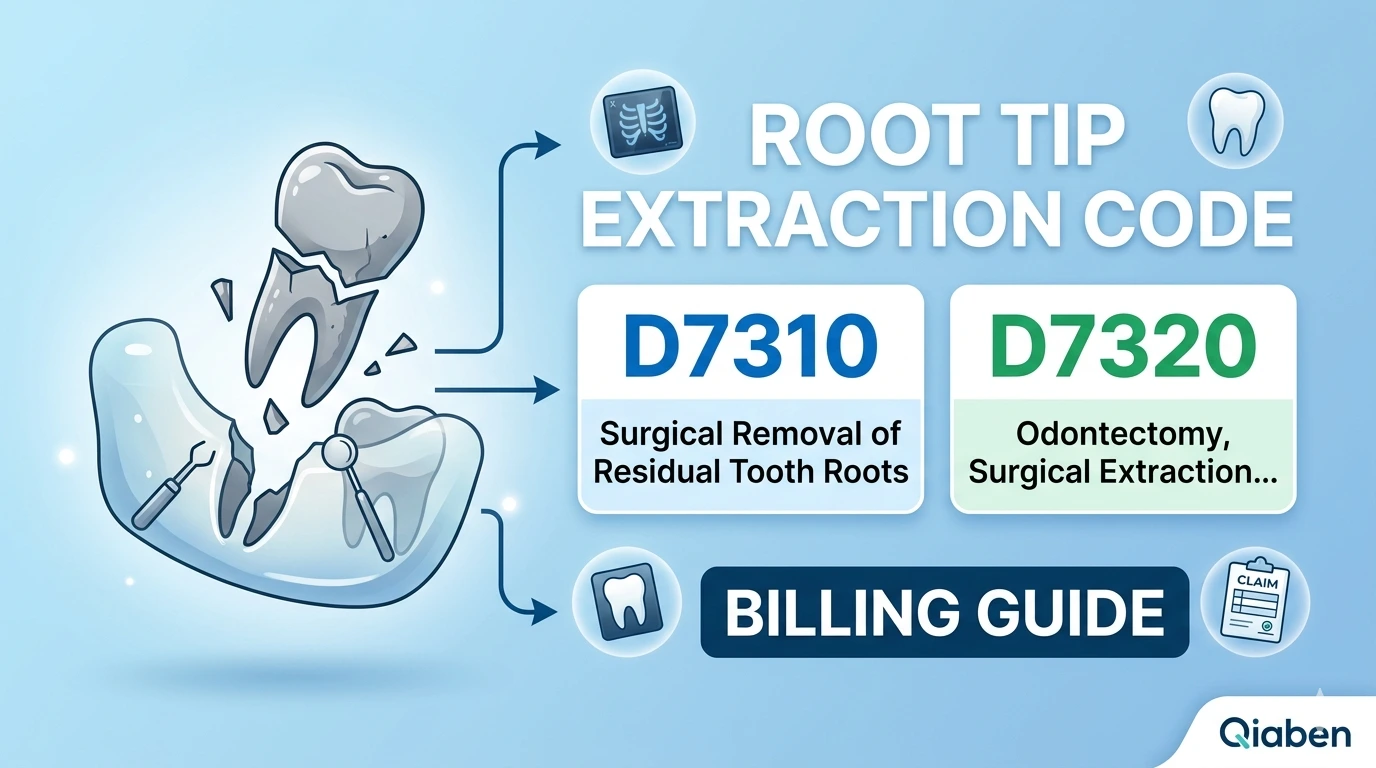
- D7250 – Surgical removal of residual tooth roots (root tip)
9. Orthodontics (D8000–D8999)
Braces and orthodontic appliances.
- D8010 – Limited orthodontic treatment, primary dentition
- D8080 – Comprehensive orthodontic treatment, adolescent dentition
- D8090 – Comprehensive orthodontic treatment, adult dentition
- D8680 – Orthodontic retention (removal of appliances and construction of retainers)
10. Adjunctive Services (D9000–D9999)
Miscellaneous services and anesthesia.
- D9110 – Palliative treatment of dental pain
- D9222 – Deep sedation/general anesthesia, first 15 minutes
- D9230 – Inhalation of nitrous oxide/analgesia
- D9992 – Dental case management, care coordination
Key Updates in CDT 2025
The ADA announced several updates for 2025, including:
- New diagnostic imaging codes for digital workflows.
- Clarifications in periodontal maintenance coding for more accurate coverage.
- Deleted outdated surgical codes replaced with updated descriptions.
These changes are especially important for dental billing teams to prevent claim delays.
Best Practices for Using CDT Codes
- Always use the most recent CDT manual (2025 edition).
- Submit supporting documentation (X-rays, perio charts, narratives) when needed.
- Pre-authorize major procedures to confirm patient benefits.
- Train billing staff regularly—ADA updates codes every year.
- Educate patients—explaining codes can build trust and reduce billing confusion.
Patient Tip: How to Read Your Bill
If you’re a patient, here’s how to make sense of CDT codes on your bill:
- Look for the “D” number. That’s the official CDT code.
- Match it to the procedure description. For example, D1110 = adult cleaning.
- Ask your dentist or insurer if something is unclear. They are required to explain your benefits.
Final Thoughts
The 2025 CDT code set is the backbone of dental billing and insurance claims. For providers, using the right code means smoother reimbursement. For patients, understanding codes brings clarity to your bill and helps avoid surprises.
Whether it’s a routine cleaning (D1110), a root canal (D3330), or an oral surgery extraction (D7250), every dental service has a code. Staying updated ensures everyone—dentist, patient, and insurer—is on the same page.