
Why First-Pass Claim Acceptance Matters
09/03/2026 6 min read
In healthcare and dental billing, getting a claim accepted the first time it is submitted is one of the most important factors for maintaining a healthy revenue cycle. This is known as first-pass claim acceptance. When a claim is accepted on the first submission without requiring corrections, additional documentation, or resubmission, providers receive payments faster and spend less time dealing with administrative work.
Unfortunately, many practices face challenges with claim rejections and denials due to coding errors, missing information, eligibility issues, or incomplete documentation. These problems can delay payments, increase staff workload, and negatively impact cash flow.
What Is First-Pass Claim Acceptance?
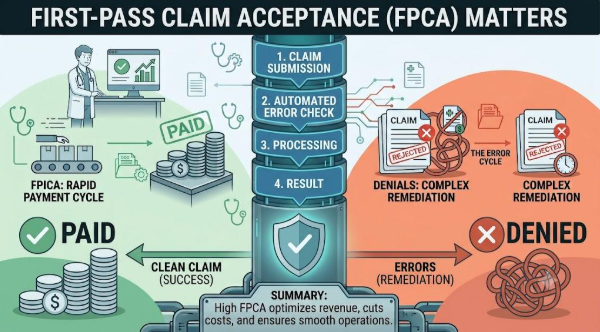
First-pass claim acceptance refers to the percentage of claims that are accepted by the payer the first time they are submitted. An accepted claim passes the payer's initial review and moves forward in the payment process without being rejected for errors.
For example, if a practice submits 100 claims and 95 of them are accepted on the first submission, the first-pass claim acceptance rate is 95%. A high acceptance rate is often a sign of an efficient billing process, while a low rate may indicate issues that need attention.
Why First-Pass Claim Acceptance Is Important
Faster Payments
When claims are accepted on the first attempt, providers receive reimbursements more quickly. There is no need to spend additional time correcting errors or resubmitting claims.
Faster payments improve cash flow and help practices cover operating expenses, staff salaries, equipment costs, and other business needs.
Reduced Administrative Work
Every rejected claim requires staff members to investigate the issue, make corrections, gather missing information, and resubmit the claim. This process takes valuable time away from other important tasks.
Improving first-pass claim acceptance reduces the amount of rework required and allows billing teams to focus on more productive activities.
Lower Claim Denial Rates
Many denials begin with preventable errors during claim submission. By increasing claim accuracy before submission, practices can significantly reduce denials and avoid delays in reimbursement. A strong focus on claim quality helps create a smoother billing process from start to finish.
Improved Revenue Cycle Performance
The revenue cycle depends on timely claim submission and payment collection. Claims that move through the system without interruptions contribute to better financial performance.
High first-pass acceptance rates often lead to improved collections, fewer outstanding balances, and stronger revenue cycle management results.
Better Patient Experience
Billing problems can sometimes affect patients as well. Delayed claims may result in billing confusion, unexpected statements, or additional follow-up requests.
Accurate claim submission helps create a more positive experience for patients and reduces billing-related concerns.
Common Reasons Claims Are Rejected
Understanding the causes of claim rejections is the first step toward improving acceptance rates.
Incorrect Patient Information
Simple mistakes such as misspelled names, incorrect insurance IDs, or outdated demographic information can lead to claim rejections.
Verifying patient information before services are provided can help prevent these errors.
Insurance Eligibility Issues
Claims may be rejected if a patient's coverage is inactive or if benefits have changed.
Regular eligibility verification ensures that insurance information is accurate before treatment begins.
Coding Errors
Using incorrect procedure codes, diagnosis codes, or modifiers can cause claims to be rejected.
Proper coding practices and ongoing staff training help reduce coding-related issues.
Missing Documentation
Many claims require supporting documentation to justify services provided. Missing records or incomplete documentation can delay claim processing.
Maintaining complete and accurate records is essential for successful claim submission.
Authorization Problems
Claims submitted without the required authorization may be rejected or denied. Confirming authorization requirements before treatment can help avoid unnecessary payment delays.
How to Improve First-Pass Claim Acceptance
Verify Patient Information Early
Front-desk staff should confirm patient demographics and insurance details during scheduling and check-in.
Accurate information at the beginning of the process reduces the likelihood of claim errors later.
Perform Eligibility Verification
Checking insurance eligibility before appointments helps identify coverage issues before claims are submitted.
This simple step can prevent many common claim rejections.
Strengthen Coding Accuracy
Accurate coding is critical for claim acceptance. Practices should provide ongoing education for coding and billing teams and stay updated on coding changes.
Regular coding audits can also help identify areas for improvement.
Use Claim Scrubbing Tools
Claim scrubbing technology reviews claims before submission and identifies potential errors that could cause rejections. For practices handling a high volume of claims, professional medical billing services can also help strengthen this process by reviewing claims, identifying potential errors, and supporting timely submissions.
Many organizations use automated tools to catch issues such as missing information, coding conflicts, and eligibility problems before claims reach the payer. Practices looking to strengthen their denial prevention process can benefit from strategies focused on reducing dental claim denials through proactive claim review and error detection.
Monitor Key Billing Metrics
Tracking claim acceptance rates, denial rates, and reimbursement trends helps practices identify weaknesses in their billing workflow. Regular reporting allows teams to make data-driven improvements and maintain strong performance.
Improve Documentation Processes
Providers and clinical staff should ensure that documentation is complete, accurate, and submitted on time.
Clear documentation supports claim accuracy and reduces the risk of payer questions or claim rejections.
Measuring First-Pass Claim Acceptance
Monitoring first-pass claim acceptance should be a regular part of revenue cycle management. A strong acceptance rate generally indicates that billing processes are working effectively. Practices should review trends regularly and investigate any sudden changes in performance.
By identifying patterns and recurring issues, organizations can take corrective action before problems become larger and more costly.
Conclusion
First-pass claim acceptance is more than just a billing metric, it is a key indicator of revenue cycle efficiency. Claims that are accepted the first time lead to faster payments, lower administrative costs, fewer denials, and improved financial performance.
Healthcare and dental practices that focus on accurate patient information, eligibility verification, proper coding, complete documentation, and proactive claim review can significantly improve their acceptance rates. By making first-pass claim acceptance a priority, organizations can create a smoother billing process, strengthen cash flow, and support long-term success.
At Qiaben, we're committed to helping healthcare providers simplify medical billing and revenue cycle management. Explore more expert insights on our blog, and if you have questions or need support with your billing processes, get in touch with our team.