
Top Reasons Healthcare Claims Get Denied
08/31/2026 4 min read
Healthcare claim denials are a common challenge for medical practices, hospitals, and billing teams. Every denied claim means additional work, delayed reimbursements, and potential revenue loss. While some denials may be unavoidable, many happen because of simple mistakes that can be identified and corrected before a claim is submitted.
By understanding the common reasons behind denied claims and improving your billing process, you can increase claim approval rates, improve cash flow, and reduce administrative burden.
In this article, we'll look at the top reasons healthcare claims get denied and share practical tips to help prevent them.
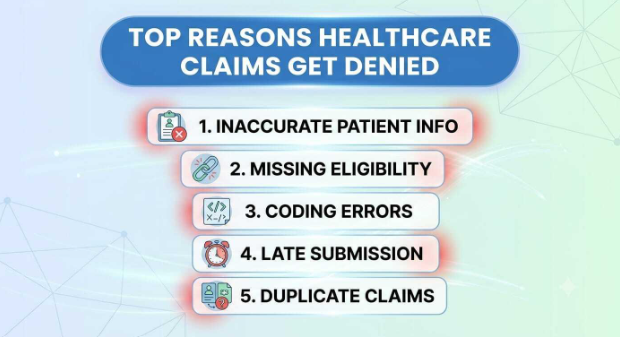
Why Do Healthcare Claims Get Denied?
Insurance companies review every claim to ensure it meets their billing and coverage requirements. If important information is missing or incorrect, the claim may be denied.
Some of the most common causes include:
- Incorrect patient information
- Insurance eligibility issues
- Medical coding errors
- Missing documentation
- Late claim submission
- Missing prior authorization
- Duplicate claims
Understanding these issues is the first step toward reducing denials.
1. Incorrect Patient Information
Even a small mistake in patient details can cause a claim to be denied.
Common errors include incorrect names, dates of birth, insurance identification numbers, or outdated contact information.
How to Prevent It
Always verify patient information before every appointment and update records whenever changes occur.
2. Insurance Eligibility Not Verified
Submitting claims without confirming active insurance coverage is one of the leading causes of denied claims.
Checking insurance eligibility before treatment helps identify coverage limitations, inactive policies, or incorrect policy information before a claim is submitted.
If you want to strengthen your verification process, explore our guide on Reduce Claim Denials with Insurance Verification Services to learn how proactive insurance verification can improve claim approval rates and reduce billing delays.
3. Medical Coding Errors
Medical coding is essential for accurate claim processing. Incorrect diagnosis or procedure codes may cause insurance companies to reject or deny claims.
Keeping coding staff updated on the latest coding guidelines and reviewing claims carefully before submission can significantly reduce coding-related denials.
4. Missing or Incomplete Documentation
Insurance providers require complete documentation to support every claim.
Missing physician notes, treatment records, signatures, or supporting documents can delay claim processing or lead to denials.
Always review documentation carefully before submitting claims.
5. Late Claim Submission
Most insurance providers have deadlines for submitting claims.
Missing these deadlines may result in automatic claim denial, even when the services provided were covered.
Creating a clear billing schedule and monitoring submission deadlines can help avoid unnecessary delays.
6. Missing Prior Authorization
Certain procedures, treatments, or medications require approval before services are provided.
If prior authorization is not obtained, insurance companies may deny payment.
Checking authorization requirements before treatment helps prevent this issue.
7. Duplicate Claim Submission
Submitting the same claim multiple times can confuse insurance providers and delay reimbursement.
Before resubmitting a claim, always check its status to avoid duplicate submissions.
8. Non-Covered Services
Some healthcare services are not included under a patient's insurance plan.
Understanding coverage before treatment allows healthcare providers to inform patients about potential out-of-pocket expenses and avoid billing complications.
9. Provider Information Errors
Incorrect provider details can prevent claims from being processed correctly.
Examples include:
- Incorrect provider identification numbers
- Expired provider credentials
- Incorrect practice information
Keeping provider records updated helps reduce these errors.
10. Lack of Claim Review Before Submission
Submitting claims without a final review increases the risk of avoidable mistakes.
A simple review can identify missing information, coding issues, or documentation errors before claims are sent to insurance providers.
Taking a few extra minutes to review claims can save significant time later.
Best Practices to Reduce Claim Denials
Building a consistent billing process can significantly improve claim approval rates.
Some simple practices include:
- Verify patient information before every visit.
- Confirm insurance eligibility before treatment.
- Use accurate medical coding.
- Submit complete documentation.
- Obtain prior authorizations when required.
- Review claims before submission.
- Submit claims within payer deadlines.
- Monitor denial trends regularly.
- Train billing staff on updated guidelines.
- Use technology to improve billing accuracy.
Conclusion
Fortunately, many of the most common causes - such as incorrect patient information, insurance eligibility issues, coding errors, and incomplete documentation - can be prevented with consistent billing practices and regular claim reviews. By focusing on accuracy, improving internal processes, and verifying information before claims are submitted, healthcare organizations can reduce claim denials and create a more efficient revenue cycle.
At Qiaben, we're committed to helping healthcare providers simplify medical billing and revenue cycle management. Explore more expert insights on our blog, and if you have questions or need support with your billing processes, get in touch with our team.