29 posts tagged with "medical-and-dental-billing-services"

View All Tags

Unlocking the Secrets of Dental Billing: Simplify, Save, and Succeed

· 5 min read
Qiaben Health

At first, dental billing can be overpowering and difficult. If we understand the proper tactics and knowledge about billing, it seems more flexible to work on that. In this blog we are going to see about how to use dental billing in a successful way:

1. Understanding the basics of dental billing

The first step to simplifying dental billing is understanding the core components. Coding, submitting claims, processing payments, and communicating with insurance companies are all parts of dental billing. The three key areas to focus on include

Procedure codes: The codes that are used to identify the dental services that are provided are known as procedure codes. The ADA (American Dental Association) assigns unique codes for every procedure.

Insurance Claims: Submitting accurate claims to insurance companies is crucial to get reimbursed on time and without errors.

Patient Statements: After insurance reimbursement, patients receive statements for any outstanding balances.

2. The Effectiveness of Accurate Coding

Accurate dental codes are essential for getting reimbursed without delays or rejections. Using the correct codes ensures that the insurance companies understand the procedures being done and can process claims without confusion.
For instance, understanding the distinction between the D1000 and D2000 codes for restorative procedures and preventive services can significantly improve billing accuracy. Ensuring that each procedure has its appropriate code will help avoid costly billing mistakes

Unlocking the Secrets of Dental Billing: Simplify, Save, and Succeed

3. Getting the Most Out of Insurance Payments

Dental practices can often face challenges with insurance claim reimbursements. To simplify this process:

Verify Insurance Information: Always verify the patient's insurance details before the appointment. This includes confirming eligibility, benefits, and coverage.

Understand the Insurance Policies: Each insurance provider has its own set of rules, limitations, and exclusions. Familiarize yourself with these policies to avoid claim denials.

Timely Submission: Submitting claims quickly helps ensure that your practice gets paid sooner. Most insurance providers have time-sensitive claim periods, and missing these deadlines could lead to denials.

4. Implementing an Efficient Workflow

A streamlined billing workflow can save your team time and effort.

To streamline the dental billing process, consider the following suggestions: Make use of dental billing software to speed up the billing process and reduce the likelihood of human error by automating numerous tasks. Look for software that works with your practice management system seamlessly.

Track Claims Progress: Keep track of the status of each claim and ensure follow-ups are done promptly if necessary. This expedites the management of denied or pending claims.

Train Your Team: Having a well-trained billing team ensures that the billing process runs smoothly. Regular training on coding, claims processing, and insurance rules will improve accuracy and efficiency.

Click here

5. Avoiding Common Billing Mistakes

Certain errors can slow down the billing process or result in rejected claims. Here’s how you can avoid common mistakes:

Incorrect Coding: As mentioned earlier, using the wrong codes can lead to claim denials. Double-check each code to ensure it matches the procedure performed.

Missing or Inaccurate Patient Information: Ensure that the patient’s details, such as name, date of birth, and insurance number, are accurate. Inaccurate information can delay or reject claims.

Not Responding: Even if a claim is initially accepted, additional steps may be necessary to receive full payment. Follow up on claims until the payment is received rather than putting them in limbo.

6. How Easing Billing Can Cut Costs

A simplified billing process can save your dental practice a significant amount of money. Here’s how:

Reduced Errors: Fewer mistakes lead to fewer claim denials, which means less time spent correcting errors.

Faster Payments: An efficient billing system helps ensure that you get paid more quickly, improving your cash flow.

Lower Overhead Costs: By automating aspects of the billing process, you can reduce the need for a large billing department, cutting overhead costs.

7. How to Get the Most Out of Your Dental Billing 

To truly succeed in dental billing, follow these best practices:

Maintain Current Documentation: Continuously update all necessary documentation, including X-rays, treatment plans, and patient notes. This supports your claims and reduces the risk of denials.

Review Policies : Changes to insurance policies should be reviewed on a regular basis, and your billing procedures should be adjusted accordingly.

Communicate with Patients: Clear communication with patients about their financial responsibilities can prevent misunderstandings and ensure timely payments.

When necessary, outsource: If managing dental billing internally takes too much time, you might want to outsource it to a reputable billing service. This can help reduce your workload while ensuring claims are processed accurately and promptly.

Conclusion

A crucial step toward maximizing your practice's efficiency and profitability is to simplify your dental billing procedure. By implementing accurate coding, automating workflows, avoiding common mistakes, and following best practices, you can save time, reduce errors, and increase your reimbursement rates. With the right approach, dental billing can become less of a burden and more of a strategic asset to your practice.
Remember, staying organized, keeping up with insurance policies, and investing in the right tools and training are the keys to unlocking the secrets of dental billing success. Simplify, save, and succeed—your practice will thank you for it.

Win at Medical Billing: Optimize DRG Payments for Growth

· 6 min read
Qiaben Health

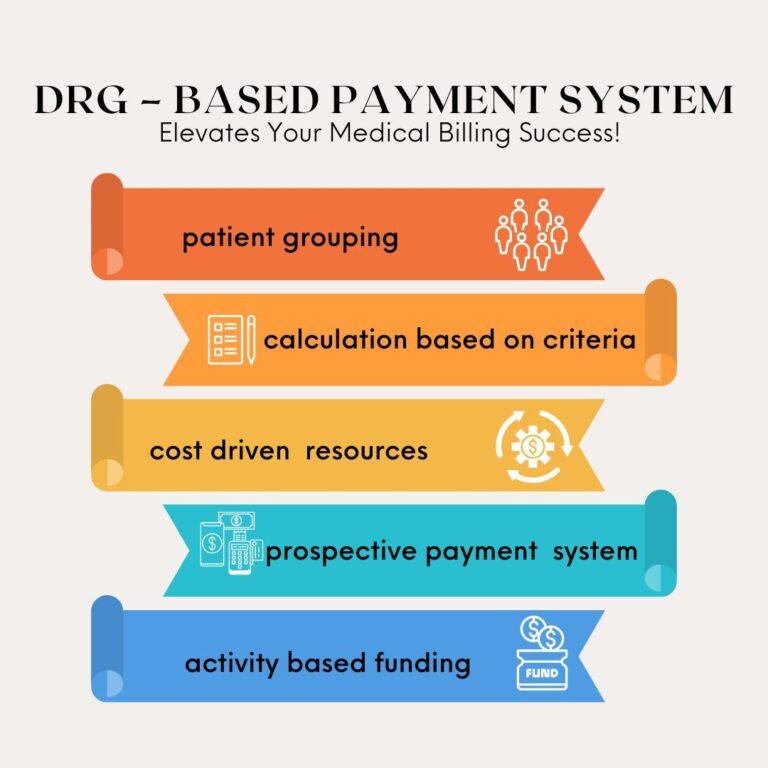
DRG based payments

Introduction

Medical billing is a complex process, and DRG-based payments play a vital role in ensuring fair reimbursements. Hospitals and healthcare providers must understand Diagnosis-Related Groups (DRGs) to maximize revenue while maintaining compliance. Optimizing DRG payments can significantly improve cash flow and boost financial stability.

In this blog, we’ll explore how DRG-based payments work, the challenges they pose, and strategies to optimize medical billing services for growth.

DRG Payment System: An Overview

The Diagnosis-Related Group (DRG) payment system was created at Yale University in the 1970s to improve hospital efficiency and control costs. In 1983, it became the foundation of the Medicare DRG system, transforming the U.S. inpatient payment model from fee-for-service to case-based reimbursement.

The core idea of the DRG hospital reimbursement model is simple: hospitals are paid based on disease categories rather than individual services. This approach helps reduce costs, shorten hospital stays, and optimize resource use, though its impact on care quality is still being studied.

Globally, DRGs have been adopted in many countries. Germany implemented them in 2003 with continuous refinements for complex cases, while Australia expanded DRGs in the early 2000s to include emergency and outpatient care. Other nations, like France, also use DRGs to manage healthcare spending.

Today, the DRG payment system remains a vital tool in revenue cycle management, balancing cost control with efficient, high-quality patient care.

What Are DRG-Based Payments?

DRG-based payments categorize hospital stays based on diagnoses, procedures, and patient characteristics. This system, used by Medicare and other insurers, assigns a fixed reimbursement amount for each patient case, regardless of the actual cost of care.

How Do DRGs Impact Reimbursement?

  1. Fixed Payment Structure – Hospitals receive a predetermined amount based on the DRG category.
  2. Efficiency Incentive – Providers are encouraged to deliver cost-effective care within the reimbursement limit.
  3. Bundled Services – Payments cover the entire patient stay, including tests, procedures, and nursing care.

Since hospitals must work within these fixed rates, accurate coding and proper documentation are essential for maximizing reimbursements.

Challenges in DRG-Based Billing

While DRG payments simplify the reimbursement process, they also bring unique challenges:

1. Coding Errors and DRG Misclassification

Incorrect medical coding can lead to claim denials or underpayments. Assigning the wrong DRG category affects reimbursement rates, making it crucial to have skilled coders and best medical billing services in place.

2. Incomplete Documentation

If medical records lack important details, claims may be downcoded, reducing payments. Providers must ensure thorough documentation to support the assigned DRG and justify reimbursement.

3. DRG Audits and Compliance Risks

Insurers regularly audit claims to detect overbilling or fraud. Inaccurate DRG assignments can lead to penalties or repayment demands. To avoid issues, hospitals must follow strict compliance measures.

4. Length of Stay vs. Fixed Payments

Hospitals receive a set payment per DRG, no matter how long the patient stays. If the length of stay exceeds expectations, costs may surpass reimbursement, impacting profitability.

To overcome these challenges, healthcare providers must adopt efficient billing practices and work with experienced medical billing services.

Click here

Strategies to Optimize DRG Payments in Medical Billing

Optimizing DRG payments requires a combination of accurate coding, detailed documentation, and strategic revenue cycle management. Below are key strategies:

1. Improve Medical Coding Accuracy

Accurate coding ensures the correct DRG assignment, leading to higher reimbursements. Implementing the following measures can reduce errors:

1 Train coders regularly on ICD-10 and CPT updates.
2Use AI-driven coding software to detect inconsistencies.
3Conduct frequent coding audits to identify and fix mistakes.

2. Strengthen Documentation Practices

Comprehensive documentation supports the medical necessity and severity of illness, justifying DRG assignments. Best practices include:

1 Educate physicians on clinical documentation improvement (CDI).
2 Ensure all procedures, co-morbidities, and complications are documented.
3 Implement EHR templates to standardize data entry.

3. Conduct Pre-Bill Audits

Pre-bill audits help catch coding errors and inconsistencies before claim submission. This process minimizes denials and maximizes revenue by:

1 Verifying DRG classifications match clinical documentation.
2 Checking for upcoding or downcoding risks.
3 Ensuring all treatments and diagnoses are properly coded.

4. Leverage the Best Medical Billing Services

Outsourcing to the best medical billing services can streamline the DRG payment process. Expert billing teams help with:

1Claim accuracy, reducing denials and rework.
2Appealing underpaid claims, ensuring proper reimbursements.
3 Monitoring compliance, preventing audit risks.

5. Optimize Case Management for Shorter Length of Stay

Since DRG payments are fixed, managing patient stays efficiently is crucial. Hospitals should:

1Use data analytics to identify optimal discharge timelines.
2Improve care coordination between departments.
3 Implement early discharge planning to reduce unnecessary expenses.

6. Utilize Revenue Cycle Analytics

Advanced analytics tools can help track DRG payment trends and improve financial performance. Key insights include:

1.Identifying denial patterns and addressing root causes.

2.Predicting reimbursement fluctuations based on DRG trends.

3.Enhancing coding and billing efficiency through AI-driven insights.

drg based payment

Benefits of Optimizing DRG-Based Billing

When hospitals refine their DRG billing processes, they experience multiple benefits, including:

Higher Reimbursement Rates – Accurate coding and documentation prevent underpayments.
Fewer Claim Denials – Compliance with DRG guidelines reduces rejection risks.
Improved Cash Flow – Faster claim approvals enhance financial stability.
Better Operational Efficiency – Optimized workflows lead to reduced administrative burden.

By leveraging the best medical billing services and adopting proactive revenue cycle strategies, healthcare providers can maximize DRG reimbursements while maintaining compliance.

Final Thoughts

Winning at medical billing requires a deep understanding of DRG-based payments. By implementing accurate coding, strong documentation, and strategic case management, healthcare providers can optimize reimbursements and drive financial growth.

Partnering with top-tier medical billing services can further enhance efficiency and revenue recovery. As the healthcare landscape evolves, staying ahead in DRG billing best practices ensures sustainable success.

 Need expert guidance in medical billing? Connect with the best medical billing services today and take control of your DRG reimbursements!

HIPAA-Proof Your Practice: Privacy, Security & Compliance Simplified

· 4 min read
Qiaben Health

HIPAA-Proof Your Practice: Privacy, Security & Compliance Simplified:

In today's digital healthcare perspective, secure patient details are more important than ever, with more cyber issues and strict control. Make sure your practice with HIPAA compliance is more important. Still tracking the difficulty of privacy, security, and compliance can be complex. Luckily, with the proper strategies you can secure your details and maintain privacy.

HIPAA-Proof Your Practice: Privacy, Security & Compliance Simplified:

What is HIPAA, and why does it matter?

The Health Insurance Portability and Accountability Act (HIPAA) was enacted in 1996 to protect sensitive patient information. It sets standards for how healthcare providers, insurers, and their business associates handle and share protected health information (PHI). Failing to comply with HIPAA can lead to hefty fines, legal repercussions, and a damaged reputation.But compliance isn’t just about avoiding penalties; it’s about building trust. When patients know their data is safe, they feel more confident in your care.

Key Components of HIPAA Compliance

To make your practice HIPAA-proof, you need to address three core areas: privacy, security, and compliance. Let’s break them down.

1. Privacy: Protecting Patient Information

Privacy rules under HIPAA regulate how PHI is used and disclosed. This includes patient names, addresses, social security numbers, medical records, and financial information.
To strengthen privacy:

Limit PHI access: Only authorized staff should handle sensitive information. Implement strict access controls.

Use consent forms: Always obtain written patient consent before sharing their data with third parties.

Secure communication channels: PHI exchanges should not take place via unencrypted email or text message. Instead, use HIPAA-compliant messaging platforms.

Tip: Train your staff regularly on privacy policies to prevent accidental breaches.

Click here

2.Security: Safeguarding Electronic Data

HIPAA’s Security Rule focuses on protecting electronic protected health information (ePHI) through administrative, physical, and technical safeguards.
To enhance security:

Encrypt all data: Use end-to-end encryption to protect patient information during transmission.

Enable multi-factor authentication (MFA): Adding an extra layer of security reduces unauthorised access risks.

Regularly update software: Outdated systems are more vulnerable to breaches. Keep your EMR and practice management software updated.

Conduct security risk assessments: Identify and fix vulnerabilities before they become threats.

Pro Tip: Using OpenEMR or other HIPAA-compliant EMR systems can significantly improve data security and streamline compliance.

3. Compliance: Staying Audit-Ready

HIPAA compliance isn’t a one-time task—it’s an ongoing process. Being audit-ready requires consistent monitoring and documentation.
To ensure compliance:

Document everything: Maintain detailed records of policies, procedures, and staff training.

Conduct internal audits: Check your practice's HIPAA policies and procedures on a regular basis to find any holes. Partner with compliance experts: If needed, work with HIPAA consultants to ensure your practice meets all standards.

Tip: Use compliance checklists to stay organised and prepared for potential audits.

Simplifying HIPAA Compliance with Technology

Technology can significantly streamline HIPAA compliance efforts. This is how:

Automate data backups: Cloud-based solutions ensure that PHI is securely backed up and easily retrievable.

Use HIPAA-compliant tele-health platforms: If your practice offers virtual care, ensure the platform meets HIPAA standards.

Leverage access controls: Implement role-based access to restrict PHI visibility to only authorised personnel.

Common HIPAA Pitfalls to Avoid

Even with the best intentions, practices can sometimes overlook key compliance areas. Here are common mistakes to avoid:

Inadequate staff training: Employees unaware of HIPAA rules are more likely to cause accidental breaches.

Weak passwords and lack of MFA: Weak authentication measures increase the risk of data theft.

Improper data disposal: Failing to properly destroy outdated records can lead to data leaks.

Final Thoughts: Prioritise Patient Privacy with Confidence:

Achieving and maintaining HIPAA compliance doesn’t have to be overwhelming. By understanding the core principles of privacy, security, and compliance and leveraging technology, you can simplify the process. Ultimately, a HIPAA-proof practice not only protects sensitive data but also fosters trust with your patients, boosting your reputation and reliability.

Boost Your Bottom Line: Little-Known Secrets to Dental Billing Profitability

· 6 min read
Qiaben Health

Boost Your Bottom Line: 15 Little-Known Secrets to Dental Billing Profitability

Most dental professionals get into the field to provide outstanding patient care—not to chase down payments or interpret insurance codes. But here’s the truth: if your billing processes aren’t tight, you’re silently bleeding money. Proper dental billing isn’t just an operational function. It’s a direct lever to increase revenue, patient satisfaction, and long-term business growth. This blog delves into 15 under-the-radar and little-known strategies that can assist you in unlocking hidden profits in your dental billing processes. As a practice owner, office manager, or biller, these tips will assist you in transforming your back-office into a machine that produces revenue.

  Boost Your Bottom Line: Little-Known Secrets to Dental Billing Profitability

1. Confirm Insurance Eligibility Before Each Appointment.

Yes, even return patients. Insurance policies frequently change, and patients might not remember to inform you. Utilize real-time verification tools to prevent treating uninsured services and claim denials.

Tip: Automate eligibility verification 48 hours prior to every appointment.

2. Master CDT Codes  Nuances 

CDT codes are tricky, particularly with combination treatments. For instance, not coding for both scaling and root planing (SRP) as separate procedures if performed on differing quadrants may lead to partial reimbursement.

Pro Tip: Keep current on ADA's yearly CDT updates and code webinars.

Click here

3. Document Everything—Then Some

Insurance companies adore documentation. The more that you offer (X-rays, perio charts, SOAP notes), the less likelihood of denials.

Example: For crown procedures, document before-and-after photos, diagnosis information, and decay history.

4. Don't Wait to Submit Claims

Claim-submission time limits differ from payer to payer—some only 90 days. Waiting can cost you actual money.

Workflow Tip: Submit electronic claims at the close of business each day. Batch claims can be a help.

Actionable steps:

Review fee schedules annually to ensure they reflect current market rates.
Minimise unnecessary write-offs by carefully reviewing adjustments before approving them.
The effect: Optimising fees ensures you’re charging what your services are truly worth, increasing your overall profitability.

5. Track Every Claim Like It's Money—Because It Is

Create a dashboard or tracker that displays all pending, denied, and resubmitted claims. If a claim is held up more than 14 days, investigate.

Tool to Try: Dental billing software such as Dentrix or Open Dental with claim tracking features.

6. Strategically Appeal Denied Claims

Don't battle every denial. Appeal with good documentation. An well-composed appeal letter with a clinical rationale can reverse many denials.

Bonus: Store templates for various denial reasons to save time.

7. Review Your Denial Patterns

Is the same code being denied by a single insurer over and over? Are there specific procedures causing problems?

Data Action: Review monthly reports and watch for red flags. Change coding or workflows based on trends.

8. Educate Your Staff—Ongoing

Coding changes, policy changes, and employees turn over. Provide quarterly training for your front desk and billing staff.

Agenda Items: CDT updates, documentation reminders, insurer-specific rules. 

9. Have a Pre-Authorization System in Place

For more expensive treatments such as implants, ortho care, or full-mouth restorations, always get pre-authorization.Added Benefit: It establishes appropriate cost expectation with patients and decreases payment friction.

10. Use Built-In Billing Software Alerts

New practice management systems come equipped with intelligent features that alert you to missing codes, incomplete records, or duplicate postings.Smart Alert Example: A warning pop-up when a periodontal treatment is billed without supporting diagnosis codes. 

11. Package Non-Covered Services Into Patient Payment Plans

Some procedures—such as cosmetics—are not covered. Don't lose that revenue. Provide clear, interest-free payment plans to facilitate acceptance.Marketing Edge: Present these options at consultation to enhance case acceptance. 

12. Conduct a Monthly Billing Audit

Mini-audits conducted monthly can detect small leaks before they become waterfalls. Check random claims and reconcile posted charges with actual payment received.Checklist: Identify underbilling, overbilling, and coding discrepancies. 

13. Develop In-House SOPs for Billing

Having SOPs documented saves training time, increases compliance, and guarantees consistency.n Your SOP: Cover workflows for eligibility, coding, documentation, appeals, and follow-ups. 

14. Adopt Automation Without Forgetting Human Touch

 Automate to accelerate claim submission, eligibility verifications, and reminders. Yet retain a human check before submitting.Automate: Routine processes, recall reminders, past-due claim flags.Humanize: Last review, patient communication, appeal letters.  

Billing problems can damage patient trust. Make billing communication friendly, timely, and clear.Pro Tip: Educate your staff to explain EOBs and cost splits. Use plain language.Real-World Case Study: From Revenue Loss to a 40% Profit Boost. A California multi-location dental group was seeing rising AR days and escalating patient frustration. By doing the following:

  • Weekly billing team huddles.
  • Smart claim software with AI-driven alerts.
  • Patient financing for non-covered services

 They accomplished the following within six months: 

  • Shortened AR days from 45 to 18.
  • Denial rate fell from 23% to 9%.
  • Net profits rose by 40% YoY

 Moral of the story? Operational adjustments = huge financial gains. Internal Linking to Enhance Site Authority This page is an ideal hub for additional billing material. Use it as a pillar page and link to: 

  • Dental Billing Secrets Every Practice Ought to Know.
  • Top 5 Dental Billing Errors and How to Correct Them.
  • How to Prepare Your Staff for Effective Claim Handling

 Utilize anchor text such as: 

  • "Preventing most CDT mistakes".
  • "Dental billing process lifecycle".
  • "Developing a dental billing SOP".

FAQs

Which CDT codes are most frequently denied?

Codes such as D2950 (core build-up) and D4341 (periodontal scaling-deep) are frequently denied based on insufficient documentation. 

Do I outsource dental billing?

Outsourcing can save small practices money but can also restrict control. Hybrid models are the best of both worlds. 

How do I handle patients who don't pay?

Use written financial contracts, send consistent reminders, and have a gentle collections agency available only as a last resort. 

May copays be waived?

In most states, it is insurance fraud to regularly waive copays. Always seek advice from your legal team. 

Bonus Downloadables to Skyrocket Your Success

Provide these as lead magnets:

  • "Top 20 CDT Codes and When to Use Them" [PDF]
  • "Dental Billing Appeal Templates" [Word Doc]
  • "Monthly Audit Checklist" [Google Sheets]

Gate these with an email opt-in for list building. 

Stay Updated with Industry Shifts

Always be on the lookout for:

  • Annual CDT revisions.
  • New HIPAA compliance requirements.
  • Payer policy updates (particularly Medicaid)

Insert a "Last Updated" subsection to maintain fresh content. Try to update quarterly. 

Final Thoughts

Dental billing may not be the most exciting aspect of your practice, but it's incredibly powerful. With some clever adjustments, a robust SOP, and dedication to training and technology, you can significantly boost your bottom line.The secret isn't working harder—it's working smarter.Ready to increase your profits? Begin putting at least 3 of these tips into action this week—and see your revenue grow.  

Dental Billing Secrets Every Practice Should Know

· 5 min read
Qiaben Health

Dental Billing Secrets Every Practice Should Know: Simplify, Save, and Succeed

Introduction:

Why Dental Billing Deserves Its Due

If you're in the dental practice business, you may already understand that patient seeing is just half the fight. On the back-end side of things, your billing cycle can be driving your practice to profitability or taking it down the wrong paths with costly missteps and delays. Dental billing is not administrative work; it is a strategic corner that has the power to shatter or solidify the success of your practice. In the course of this guidebook, we will reveal the best practices, on-the-field knowledge, and efficiency-winning tools you need to accelerate your workflow, boost reimbursement rates, and avoid revenue loss. 

Dental Billing Secrets Every Practice Should Know:

 1.Understanding the Dental Billing Workflow:

Dental billing is more than sending bills in the mail—it's a process of patient information, coding treatment, insurance coordination, and follow-up. Let's break down the overall process:

  • Patient Intake & Verification: Check eligibility in real time. Collect and maintain current patient information.
  • Procedure Coding: Assert proper CDT codes (e.g., D0140 for limited oral
    examination). Test codes as insurance plan compatible.
  • Claim Submission: Submit electronically for speedy processing. Include required forms (X-rays, charts). Reimbursement & Payment Posting Monitor claim status on a regular basis. Pay accounts in a timely manner.
  • Denials & Appeals: Act on denials promptly with good documentation. Refile clean claims as appropriate.

Click here

2. 5 costly Dental Billing Blunders- and How to Avoid Them. 

Despite best practices, still there is billing issue. Following are the five most common five blunders and alternatives to making them:

  1. Incorrect CDT Codes: Blunder: D2140 (1-surface) and D2150 (2-surface) composite restorations confused. Solution: Utilize a CDT code guide or EHR with integrated validation aids. Omitting Insurance Verification. 

  2. Late Claim Submission: Error: Submitting claims past payer deadline. Correction: Provide claim time-of-day reminders.

  3. Inadequate Documentation: Error: Failing to attach support documents like clinical
    notes. Correction: Create standard checklists per procedure.

  4. Neglecting Denials: Error: Failing to act on denied claims or declining
    resubmission. Correction: Assign a staff member for denial processing and
    reprocessing.

 3. Real-World Success  Story: How One Clinic Boosted Revenue 30%

One Phoenix practice was experiencing revenue loss and delayed reimbursement. Through the use of automated billing software and a single staff person to track down claims, they achieved:

30% fewer denials in 90 days. Claim processing time decreased from 18 days to 7. Revenue was boosted 22% during the first quarter month-to-month. The solution? Smooth process and technology that simplified billing.

4. Key Tools and Technology Streamlining Billing 

Good billing requires good tools. Some of those key ones are:

  1. Practice Management Software (PMS): Simplifies claim submission, handles payments, and reminds on errors.
  2. Insurance Verification Systems: Reduces front-desk time by checking patient coverage in real-time.
  3. AI-Powered Coding Assistants: Offers the best suitable CDT codes to fit based on treatment data.
  4. Cloud-Based Billing Platforms: Provide remote access and real-time updates.

 5. Internal Linking Strategy to Gain Maximum Visibility

 Your dental billing page doesn't have to be alone. Give it context and link back to this pillar page:Backlink of the blog "5 Dental Billing Mistakes" and "How to Max Out Insurance Reimbursements."

Natural anchor text such as "understanding billing workflows" or "common CDT coding errors."

This makes it easier for users to do but also easier for the search engines to comprehend in relation to the topicality of your site.


FAQs

How much time is covered by dental insurance?

Generally, claims take 7–14 business days when sent electronically. 

Are dental procedures medically billable?

Occasionally, yes. TMJ treatment or oral surgery can be
medically reimbursed. Proper documentation must be made.

How does a rejection differ from a denial of a claim?

Denial informs that it was received, processed, but not accepted; a rejection informs it wasn't processed as it contained flaws.

Downloadable Assets and Lead Magnets 

Share value with your audience and grow your contact list by
providing:

  • "Quick Guide to CDT Codes for Routine Procedures"
    (PDF)
  • "Dental Billing Workflow Checklist"
  • "Claim Denial Appeal Template Pack"

 Make them download them in return for an opt-in email. It's
a two-way street.

Codes and rules do change. Bring your content up-to-date
with the latest:

  •  New editions of ADA CDT codes.
  • Latest insurance policy changes from CMS or Medicaid.
  • HIPAA-compliant changes to billing practice.

 Add a "Last Updated" datestamp and refresh this
page every quarter.

Conclusion:

Simplify Your Practice and Maximize Your Income

Dental billing isn't an after-hours task—it's a cash machine that requires strategy, technology, and expertise. With attention to the recommendations within these pages, maximal use of smart tools, and content strategy optimization, your practice can avoid billing mistakes, accelerate cash flow, and above all, deliver improved patient care.

HIPAA Compliance Uncovered: The Ultimate Guide to Secure Medical Billing

· 3 min read
Qiaben Health

HIPAA Compliance Uncovered: The Ultimate Guide to Secure Medical Billing:

Introduction

In today’s digital era, securing patient data in medical billing is more critical than ever. The Health Insurance Portability and Accountability Act (HIPAA) establishes strict guidelines for handling protected health information (PHI). There is a risk of severe penalties, damage to one's reputation, and legal action if you don't follow the rules. This guide explores the essentials of HIPAA compliance in medical billing and how healthcare providers can ensure the security of patient information.

HIPAA Compliance Uncovered: The Ultimate Guide to Secure Medical Billing:

Understanding Medical Billing under HIPAA:

There are a few key rules in HIPAA that have an effect on medical billing practices:

Privacy Rule: Regulates the use and disclosure of PHI.
Security Rule: Establishes safeguards for electronic PHI (ePHI).
Enforcement Rule: Governs investigations and penalties for violations.
Breach Notification Rule: Mandates reporting of data breaches to affected parties and authorities.

Click here

Common HIPAA Compliance Challenges in Medical Billing:

Inadequate Data Security Measures: Many healthcare organisations lack secure storage for patient data, strong encryption, and firewall protections.
Lack of Employee Training: Staff unfamiliar with HIPAA regulations can unintentionally expose sensitive information.
Improper Data Sharing: Unauthorised sharing of PHI, whether intentional or accidental, is a major compliance risk.
Failure to Conduct Risk Assessments: Regular security assessments are necessary to identify and fix vulnerabilities.
Third-Party Vendor Risks: Billing service providers must also comply with HIPAA regulations to avoid indirect liability.

Best Practices for HIPAA-Compliant Medical Billing:

1.  Implement Strong Security Measures
  •      Encrypt all stored and  transmitted patient data.
  •     Use multi-factor authentication for system access.
  •     Regularly update software and security patches.
2.  Conduct Employee Training
  •   Staff should be taught about security procedures and HIPAA regulations.
  •   Educate  employees on recognising phishing and cyber threats.
  •   Limit PHI access based on job roles.
3.  Utilise Secure Billing Software
  •   Select billing platforms that comply with HIPAA and incorporate encryption.
  •   Ensure software vendors sign Business Associate Agreements (BAAs).
  •   Conduct periodic audits of billing system security.
4.  Regular Risk Assessments
  •   Perform HIPAA security risk assessments annually.
  •   Identify and address potential vulnerabilities.
  • Develop an incident response plan for data breaches.
5.  Clearly define data handling procedures
  •  Restrict PHI access to authorised personnel only.
  •  Avoid using personal devices to access patient data.
  • Implement strict data disposal procedures for old records.

Consequences of violating HIPAA Failure to adhere to HIPAA can result in:

  • Financial Penalties: Fines range from $100 to $50,000 per violation, with a maximum annual penalty of $1.5 million.
  • Repercussions from the law include lawsuits and criminal charges for willful neglect.
  • Patient dissatisfaction as a result of lost confidence in the healthcare provider.

Conclusion:

         HIPAA compliance in medical billing is unchangeable. To execute proper authentication and train the employee,  using HIPAA software to maintain proper exams and secure the patient information to neglect the rejections. Giving more  importance to compliance not only for maintaining patient information but also to boost the medical billing.

How to Secure Medical Billing Systems from Cyberattacks

· 6 min read
Qiaben Health

cyber hacking

Introduction

Medical billing systems are the financial heartbeat of healthcare—powering claim submission, reimbursements, patient eligibility checks, and more. But their critical role also makes them prime targets for cyberattacks. Securing revenue cycle management (RCM) is no longer optional; it's essential for financial health, patient trust, and operational continuity.

Why Cybersecurity Matters in Medical Billing

Medical billing is an essential part of healthcare operations. It involves handling patient records, insurance claims, and financial transactions. A cyberattack can disrupt these processes, leading to serious consequences.

Key Reasons to Strengthen Cyber Defence:

Protect Patient Data: Billing systems store personal and financial details. A breach can expose sensitive Information.

Ensure Regulatory Compliance: Healthcare providers must follow HIPAA and other security regulations.
 Prevent Financial Losses: Cyberattacks can lead to fraudulent claims, lost revenue, and penalties.

 Maintain Trust: Patients expect their data to be secure. A breach can harm a provider’s reputation.

With increasing cyber threats, healthcare organizations must take proactive security measures.

Click here

Common Cyber Threats in Medical Billing

Medical billing systems face several cybersecurity risks. Understanding these threats helps providers implement better defences.

  1. Phishing Attacks

Hackers send fraudulent emails or messages to steal login credentials. Employees may unknowingly click on malicious links, giving hackers access to billing systems.

  1. Ransomware

This type of malware encrypts data and demands payment for its release. If a billing system is affected, it can disrupt operations and lead to financial losses.

  1. Data Breaches

Unauthorized access to patient records can occur due to weak security controls. Stolen data may be sold on the dark web or used for fraudulent activities.

  1. Insider Threats

Employees or third-party vendors with access to billing systems may intentionally or unintentionally compromise data security.

  1. Outdated Software & Systems

Unpatched software can have security vulnerabilities that hackers exploit. Keeping systems updated is crucial for cybersecurity.

  1. Lack of Multi-Factor Authentication (MFA)

Weak or reused passwords make it easier for hackers to access billing accounts. MFA adds an extra layer of protection.

Core Principles for Defending Medical Billing Systems

1. Adopt a Defense-in-Depth Security Strategy

Leverage layers like network segmentation, intrusion detection, firewalls, and endpoint protection to prevent lateral movement and contain breaches.

2. Strict Access Control & Identity Management

Implement least privilege access and enforce multi-factor authentication (MFA) to neutralize unauthorized access—even from compromised credentials. 

3. Encrypt Data at Rest and in Transit

Ensure all billing data is encrypted, both in storage and during transmission, to render stolen data unreadable and mitigate breach damage.

4. Reliable, Immutable Backups

Maintain immutable (tamper-proof) backups.To counter ransomware, ensure backups are offline and recoverable even if primary systems are compromised. 

5. Rigorous Vendor Risk Management

Since many organizations outsource RCM, it's vital to vet third-party vendors for cybersecurity maturity—HIPAA compliance, SOC 2/ISO 27001 certifications, BAAs, audits, and incident response plans are non-negotiable. 

6. Keep Systems Patched & Up-to-Date

Unpatched systems are open invitations to attackers. Automate patch deployment across billing software and dependent infrastructure. 

7. Security Awareness & Human Vigilance

A robust security culture is essential. Regular phishing simulations, training, and protocols help staff identify and respond to threats before they escalate. 

8. Continuous Audits & Risk Assessments

Regularly evaluate your cyber posture and perform vulnerability scans. Engage trusted third-party auditors to ensure objectivity. 

9. Threat Detection & Rapid Response Frameworks

Use advanced monitoring tools such as EDR (Endpoint Detection and Response) and XDR (Extended Detection and Response) to monitor anomalies, isolate threats swiftly, and initiate incident response. (AMN HealthcareGuidehouse)

10. Business Continuity & Downtime Planning

Plan for disruptions by establishing downtime committees and recovery mechanisms. Smaller practices should clarify emergency protocols with their billing vendors—possibly including secured loans or alternative workflows. (ACS)

Compliance & Regulatory Considerations

Healthcare providers must comply with cybersecurity regulations to avoid legal penalties.

  1. HIPAA (Health Insurance Portability and Accountability Act)

HIPAA requires healthcare organizations to safeguard patient data and implement security measures. Failure to comply can result in heavy fines.

  1. PCI DSS (Payment Card Industry Data Security Standard)

If billing systems process credit card payments, they must comply with PCI DSS to protect financial transactions.

  1. NIST Cybersecurity Framework

This framework provides guidelines for managing cybersecurity risks effectively. Healthcare providers can use it to strengthen security policies.

Following these regulations ensures better protection against cyber threats and builds patient trust.

With evolving technology, healthcare cybersecurity is also advancing. Here are some key trends shaping the future of medical billing security:

  1. AI-Powered Threat Detection

Artificial Intelligence (AI) can detect suspicious activities in real time, reducing response time to cyber threats.

  1. Blockchain for Secure Transactions

Blockchain technology can enhance security in billing and insurance claims by preventing fraud and unauthorized modifications.

  1. Biometric Authentication

Fingerprint or facial recognition login methods will replace traditional passwords, making unauthorized access more difficult.

  1. Cloud-Based Security Solutions

More healthcare providers are moving to cloud-based EHR and billing systems with built-in cybersecurity features.

Adopting these innovations will help healthcare organizations stay ahead of cybercriminals.

cyber security

Conclusion

Securing medical billing systems is not just a necessity—it’s a responsibility. Cyber threats are constantly evolving, and healthcare providers must strengthen their defences.

By implementing strong security measures, training staff, and staying compliant with regulations, medical billing can remain secure. Patients trust healthcare providers with their data and protecting that trust should be a top priority.

CPT Codes Made Simple: Boost Your Medical Billing Success

· 6 min read
Qiaben Health

Medical billing is the backbone of healthcare revenue. One small mistake can lead to claim denials and lost income. This is where CPT (Current Procedural Terminology) codes play a crucial role. Understanding CPT codes correctly ensures accurate billing, faster reimbursements, and fewer claim rejections.

In this guide, we simplify CPT codes for you. Whether you are a medical biller, healthcare provider, or clinic manager, this article will help you master CPT codes and boost your billing success.

What Are CPT Codes?

CPT codes are five-digit numeric codes used to describe medical, surgical, and diagnostic procedures. These codes help healthcare providers communicate with insurance companies to get paid for services.

The American Medical Association (AMA) updates CPT codes annually to keep up with medical advancements

Why Are CPT Codes Important?

Standardized Billing – CPT codes create a universal language for medical procedures.
Faster Reimbursements – Correct codes mean quick payments from insurance providers.
Fewer Claim Denials – Proper coding reduces errors, preventing claim rejections.
Better Data Tracking – CPT codes help in tracking healthcare trends and patient care.

Types of CPT Codes

CPT codes are divided into three main categories based on the type of service.

1. Category I CPT Codes (Most Common)

These codes represent common medical procedures, including:

  • Evaluation and Management (E/M) Codes – Office visits, hospital visits, consultations.
  • Surgery Codes – Minor and major surgical procedures.
  • Radiology Codes – X-rays, MRIs, CT scans.
  • Pathology and Laboratory Codes – Blood tests, biopsies.
  • Medicine Codes – Vaccinations, physical therapy, chemotherapy.

Example: 99213 – Office visit for an established patient with moderate complexity.

2. Category II CPT Codes (Performance Tracking)

These codes help track patient care for quality reporting. They do not affect reimbursement.

Example: 2028F – Documentation of patient blood pressure levels.

3. Category III CPT Codes (New Technology)

Temporary codes for emerging medical procedures not yet fully approved by the AMA.

Example: 0640T – AI-based analysis of heart rhythm abnormalities.

How to Use CPT Codes Correctly

1. Choose the Right Code

  • Use the latest CPT code book or an updated EHR system.
  • Ensure the procedure matches the patient’s diagnosis.
  • Check payer-specific guidelines (some insurers may have different coding rules).

2. Ensure Proper Documentation

  • Always document medical necessity for each procedure.
  • Missing details can lead to claim denials or audits.

3. Use Modifiers When Needed

Modifiers are two-digit codes added to CPT codes to give extra details.

Common modifiers:

  • -25: Significant, separately identifiable E/M service on the same day.
  • -50: Bilateral procedure performed.
  • -59: Distinct procedural service (to prevent bundling).

Example: 99213-25 – An office visit with a separate, necessary procedure.

4. Stay Updated with Annual Changes

The AMA updates CPT codes every year. Always refer to the latest coding manual to avoid errors.

5. Double-Check Codes Before Submission

  • Verify with coding software or a Certified Professional Coder (CPC).
  • Submit claims through an Electronic Health Record (EHR) system to reduce mistakes.

Common CPT Coding Mistakes & How to Avoid Them

1**.Using Outdated Codes** – Always use the latest CPT version.
2. Incorrect Code Selection – Double-check for accuracy using medical documentation.
3. Missing Modifiers – Omitting necessary modifiers can lead to lower reimbursements.
4. Upcoding or Down coding – Upcoding leads to fraud penalties; down coding results in lost revenue.
5. Ignoring Insurance Rules – Different payers may have specific guidelines.

How CPT Coding Impacts Medical Billing Success

Correct CPT coding directly affects revenue cycle management (RCM). Properly coded claims:
Get approved faster.
Reduce payment delays.
 Prevent audits and penalties.
 Improve overall cash flow for healthcare providers.

Best Tools for CPT Coding Accuracy

AAPC Coder – A trusted platform for medical coding references.
 Super Coder – Helps medical billers find the right CPT codes.
 EHR & Practice Management Software – Automates coding and reduces errors.

Here is a CPT Coding Cheat Sheet to help you quickly reference essential information for accurate medical billing.

Click here

CPT Coding Cheat Sheet – Quick Reference Guide

1. Categories of CPT Codes

Category I – Common medical procedures (E/M, surgery, radiology, pathology, medicine).
Category II – Performance tracking (quality measures, patient data documentation).
Category III – Emerging technologies (experimental procedures and innovations).

2. Commonly Used CPT Codes

99213 – Office visit for an established patient (moderate complexity).
99203 – New patient visit (low complexity).
36415 – Routine venipuncture (blood draw).
93000 – Electrocardiogram (ECG) with interpretation.
81001 – Urinalysis with microscopy.
12001 – Simple wound repair (2.5 cm or less).

3. CPT Code Modifiers

-25 – Significant, separately identifiable E/M service on the same day.
-50 – Bilateral procedure performed.
-59 – Distinct procedural service to prevent bundling.
-LT / -RT – Left-side or right-side procedure.
-TC – Technical component of a procedure.

4. Common CPT Coding Mistakes

 Using outdated codes – Always use the latest CPT book.
 Incorrect code selection – Match the procedure with documentation.
 Missing modifiers – Can result in reduced payments or denials.
 Upcoding/Down coding – Leads to audits or revenue loss.

5. Best Practices for CPT Coding Accuracy

✔ Verify insurance payer rules for each code.
✔ Use coding software or EHR systems for validation.
✔ Stay updated with annual CPT code changes from the AMA.
✔ Train staff regularly on proper documentation and coding guidelines.
✔ Conduct periodic internal audits to prevent claim rejections.

coding

Final Thoughts

Mastering CPT codes is essential for smooth medical billing and financial success. By using accurate codes, proper documentation, and updated guidelines, healthcare providers can maximize reimbursements and reduce claim denials.

If you want to boost your medical billing success, stay informed about CPT coding updates and invest in the right tools and training.

Need expert CPT coding support? Qiaben Health Solutions offers professional medical billing and coding services to help your practice succeed.

👉 Visit Qiaben.com today!

Revolutionising Dental Growth: The Secret Power of Billing Companies

· 3 min read
Qiaben Health

Revolutionising Dental Growth: The Secret Power of Billing Companies

In today's speedy dental industry, gaining consistent development is more important than everything. Productive revenue development gives a successful dental practice. Still many are facing difficulties in the revenue cycle, claim denials, and reimbursements. The dental companies are more focused on revenue and practice growth.

The Hidden Challenges in Dental Billing:

Dental Billing's Hidden Obstacles Managing a dental practice’s billing in-house can be overwhelming due to:

Complex Coding Requirements: 
Dental procedures necessitate the use of precise coding structures like CDT codes. Submission errors in claims can result in rejections and delays.
Insurance Roadblocks:
Denied claims:
Inaccurate or incomplete documentation frequently results in denied claims, which has a negative impact on profitability and cash flow.
Administrative Tasks That Consume Time: 
Handling billing on your own takes time away from patient care and practice expansion efforts. 

How Billing Companies Drive Dental Practice Growth

A professional dental billing company can revolutionize a practice’s revenue cycle management by offering:

Revolutionising Dental Growth: The Secret Power of Billing Companies:

1. Maximized Revenue Collection

Experts in billing make sure that claims are submitted on time, that coding is correct, and that proactive denial management is done. This makes it easier to get paid and makes more money.

2. Reduced Administrative Burden

Dental offices can free up staff members to focus on improving patient experiences and expanding services rather than dealing with paperwork by outsourcing billing.

3. Increased Rates of Claim Approval:

Dental billing professionals are well-versed in insurance policies and claim submission best practices, ensuring higher acceptance rates and fewer rejections.

4. Compliance and Accuracy

Staying compliant with the latest coding updates and HIPAA regulations is critical. Billing specialists ensure adherence to industry standards, reducing the risk of audits or penalties.

Click here

5. Data-Driven Growth Strategies

Analytical reports and insights provided by numerous billing companies enable dental practices to track performance trends, discover revenue leaks, and make informed business decisions.

The Experts in Dental Billing:

The latest dental practice level targets productive partnerships with experts and billing companies. By neglecting revenue traffic and enhancing cash flow, dentists refocus on their practice with the latest technology to improve their practice and patient care.

Conclusion:

Outsourcing to a specialised dental billing company may be the key to achieving consistent financial growth while minimising operational stress for your dental practice. Make the most of the future of dentistry by concentrating on what really matters, which is providing exceptional patient care while letting professionals handle the complexities of your revenue cycle.