24 posts tagged with "dental-billing-process"

View All Tags

Periodontic Billing Made Easy: Understanding D4000–D4999 Codes

· 3 min read
Qiaben Health

Periodontic billing

Periodontics, a particular part of dentistry zeroing in on the designs supporting the teeth, frequently includes complex methodology. Precise billing and coding are basic to guarantee that dental practices are repaid effectively while keeping up with consistency. In this blog, we dig into the complexities of D4000-D4999 codes the normalized set of codes that address different periodontic systems.

Click here

Figuring out Periodontic Codes (D4000-D4999)

The D4000-D4999 territory incorporates strategies connected with the analysis and treatment of periodontal illnesses. These codes are crucial for rehearsals that offer medicines like scaling, root planing, and periodontal medical procedures. How about we investigate the significant classes inside this reach:

Diagnostic Methodology (D4000-D4100)

These codes cover periodontal assessments and diagramming. They are pivotal for laying out a pattern prior to continuing with medicines.
Model: D4341 - Periodontal scaling and root planing per quadrant.

Non-Surgical Periodontal Treatments (D4100-D4300)

Incorporates methodology like scaling and root planing, regularly performed to treat gentle to direct periodontitis.
Model: D4342 - Periodontal scaling and root planing, one to three teeth for every quadrant.

Periodontal Careful Administrations (D4400-D4900)

These codes include more obtrusive medicines like fold a medical procedure, bone uniting, and tissue recovery.
Model: D4260 - Rigid medical procedure, including fold section and conclusion, per quadrant.

Maintenance (D4900-D4999)

Support codes are utilized for follow-up care post-treatment, for example, periodontal support visits.
Model: D4910 - Periodontal upkeep

periodontic billing

Key Bits of Knowledge for Viable Periodontic Billing

Point-by-point documentation

Legitimate documentation is fundamental to legitimize the utilization of explicit codes. Incorporate periodontal graphing, radiographs, and point-by-point treatment notes.

Pre-Approval

For specific codes, pre-approval from protection suppliers can assist with staying away from guarantee dissents.

Packaging and Unbundling

Be mindful of codes that might be packaged. For example, a few surgeries could incorporate related diagnostics or follow-up visits.

Insurance Contract Audit

Comprehend the patient's insurance contract to decide inclusion for periodontal strategies, particularly for cutting-edge medical procedures.

Standard Coding Updates

Dental codes are refreshed every year. Remain informed about changes to try not to utilize outdated or erroneous codes.

Normal Difficulties and How to Beat Them

Guarantee Refusals: If you use the wrong code or inadequate documentation. Try to connect with an experienced billing agency and find the proper solution.

Apparatuses to Smooth out Periodontic Billing

Dental Practice The executives programming: 

The advanced coding and billing processes reduce the errors & claim denials.

Web-based Coding Assets: 

Use devices like the ADA's coding reference advisers to guarantee exactness.

Conclusion:

The periodontic codes mix with advanced, technical knowledge and understanding detailed, proper communication. By applying advanced technologies and upgrading with trends, you can improve dental practices and keep your patient satisfaction.

Top 10 Types of CDT Codes and How They Streamline Dental Billing:

· 6 min read
Qiaben Health

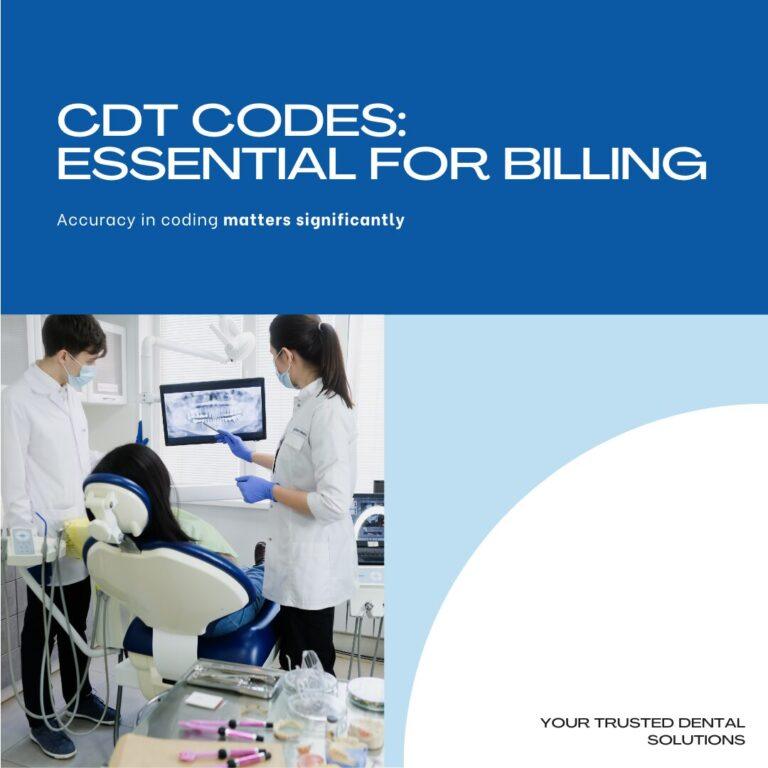
The Current Dental Terminology (CDT) codes are a universal language that connects dental practices and insurance providers. It is developed by the American Dental Association (ADA). CDT codes are important for precise documentation for dental processes, making sure reimbursement and reducing claim denials.
Top 10 Types of CDT Codes and How They Streamline Dental Billing:

What are CDT codes?

CDT codes are alphanumeric codes. It has five characters for instances (D0111). It is focused on dental processes and services. They give dental consideration,It connects dental practices and seamless insurers. The CDT codes are updated annually.

There are 10 types of CDT codes:

1) Diagnostic Codes (D0100-D0999)

Reason:

Diagnostic cover assessments, tests, and radiographs essential for surveying a patient's oral wellbeing.

Models:

D0120: Occasional Oral Assessment

D0210: Intraoral Complete Series of Radiographic Pictures

Frequency:

Occasional tests: When at regular intervals

Complete series or all encompassing X-beams: When each 3 to 5 years

Crisis tests: Case by case (requires documentation)

How They Help:

Diagnostic codes guarantee that dental specialists get suitable repayment for beginning appraisals, which are the establishment for making viable treatment plans. These codes additionally diminish vagueness, smoothing out claims endorsement for vital diagnostics.

2) Preventive Codes (D1000-D1999)

Reason:

Preventive codes center around keeping up with oral wellbeing and forestalling dental issues through cleanings, fluoride medicines, and sealants.

Models:

D1110: Prophylaxis (Grown-up Cleaning)

D1351: Sealant Application

Frequency:

Cleanings: Two times a year (every 6 months)

Fluoride medicines: Two times a year (more regular for high-risk patients)

How They Help:

By accentuating preventive consideration, these codes urge protection suppliers to cover routine upkeep, lessening the probability of exorbitant dental issues for patients. They additionally support rehearsals in advancing preventive administrations.

3) Restorative Codes (D2000-D2999)

Reason:

These codes relate to reestablishing damaged teeth utilizing fillings, crowns, and different techniques.

Models:

D2330: Sap-Based Composite Filling (Foremost)

D2740: Crown (Porcelain/Earthenware)

Frequency:

Fillings: Case by case (substitution limited by protection, ordinarily every 2 to 5 years).

Crowns: Normally restricted to once every 5 to 10 years for each tooth.

How They Help:

Helpful codes separate among materials and strategies utilized, guaranteeing that dental specialists are repaid precisely for the intricacy and cost of these systems.

4) Endodontic Codes (D3000-D3999)

 Reason:

Endodontic codes cover root channel treatments and other mashing-related strategies.

Models:

D3310: Root Channel (Front)

D3430: Retreatment of Root Channel

Frequency:

Root channels: Case by case (inclusion normally restricted to one root trench for each tooth per lifetime).

How They Help:

Root-channel medicines are many-sided and frequently misconstrued by patients. Legitimate coding legitimizes the expense and guarantees a smoother claims process for these fundamental systems.

5) Periodontic Codes (D4000-D4999)

Reason:

Periodontic codes address gum-related medicines, including medical procedures and support.

Models:

D4341: Scaling and Root Planing (Per Quadrant)

D4910: Periodontal Support

Frequency:

Scaling and root planing: Commonly covered once every 2 to 3 years (requires proof of gum illness).

Periodontal upkeep: Like clockwork after dynamic treatment.

How They Help:

Periodontal codes support claims for conditions like gum illness, guaranteeing patients seek important medicines without monetary hindrances. These codes additionally stress the significance of long-haul oral well-being upkeep.

6) Prosthodontic (Removable) Codes (D5000-D5899)

Reason:

These codes relate to false teeth and other removable prosthetics.

Models:

D5110: Complete Dental Replacement (Maxillary)

D5225: Incomplete Dental Replacement (Adaptable Base)

Frequency:

False teeth: Frequently covered once every 5 to 10 years. Changes might have separate cutoff points.

How They Help:

For patients requiring false teeth, these codes explain treatment plans and expenses, lessening disagreements regarding multi-stage strategies like fittings and changes.

7) Maxillofacial Prosthetics Codes (D5900-D5999)

Reason:

Maxillofacial prosthetic codes address specific prosthetics for facial recreation.

Models:

D5982: Careful Stent

D5994: Transitory Maxillofacial Prosthesis

Frequency:

Frequency relies upon clinical need and technique type (not ordinarily restricted yet requires avocation).

How They Help:

These codes guarantee exhaustive inclusion for patients requiring complex helpful work because of injury or inborn circumstances. They additionally feature the worth of multidisciplinary care in dental billing.

8) Implant services codes (D6000-D6199)

Reason:

Implant codes center around techniques connected with dental inserts and their reclamations.

Models:

D6010: Careful Situation of Embed Body

D6057: Custom Projection

Frequency:

Embed arrangement: Inclusion is interesting or confined to once per lifetime per site.

Rebuilding efforts (e.g., crowns, projections): Substitution regularly permitted once every 5 to 10 years.

How They Help:

Dental inserts are progressively famous, however frequently costly. Explicit codes for embedded parts and administrations guarantee straightforwardness and better possibilities of protection endorsement.

9) Orthodontic Codes (D8000-D8999)

Reason:

These codes cover medicines for adjusting teeth and remedying chomp issues.

Models:

D8080: Exhaustive Orthodontic Treatment (Young Adult)

D8670: Occasional Orthodontic Visit

Frequency:

Orthodontic treatment: Normally covered once per lifetime (may have a greatest age limit).

Intermittent visits: Covered as a component of continuous orthodontic treatment.

How They Help:

Orthodontic codes improve charging for long-haul medicines, guaranteeing that suppliers can follow progress and guarantors can support staged installments.

10) Adjunctive General Administrations Codes (D9000-D9999)

Reason:

These codes incorporate incidental administrations like meetings and sedation.

Models:

D9310: Counsel (other dental specialist)

D9222: Profound Sedation (Initial 15 Minutes)

Frequency:

Counsels: Covered depending on the situation (may require pre-approval).

Sedation: Recurrence relies upon the method requiring sedation; regularly endorsed depending upon the situation.

How They Help:

These codes represent extra administrations that probably won't fall under essential treatment classes but are fundamental for patient consideration.

How CDT Codes Smooth Out Dental Billing:

Normalization:

CDT codes dispense with inconsistencies by giving a uniform framework across practices and safety net providers.

Efficiency:

They diminish mistakes in documentation, prompting faster case endorsements.

Consistence:

Exact coding guarantees adherence to administrative norms, limiting review gambles.

Straightforwardness:

Patients and backup plans comprehend the administrations gave, improving trust and fulfillment.

Conclusion:

CDT codes are the foundation of dental billing, guaranteeing exactness, straightforwardness, and productivity. By arranging strategies methodically, they lessen guarantee questions and improve the monetary wellbeing of dental practices. Remaining refreshed on yearly code updates is essential for amplifying repayments and keeping up with consistency.

Top Future Trends in Dental Billing Software to watch

· 6 min read
Qiaben Health

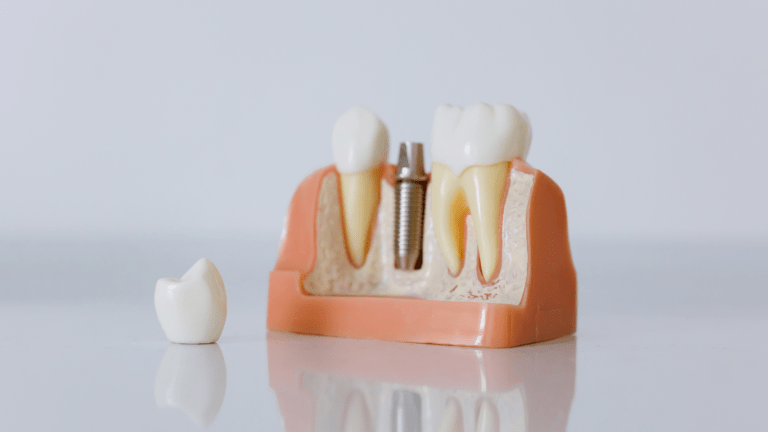
Dental billing software has changed dramatically over the past few years. What was once a simple ledger system is now an advanced set of AI-based solutions that aim to maximize revenue, increase compliance, and accommodate increasing patient expectations. Entering 2025, the future of dental billing technology will reshape the way practices function. This in-depth analysis looks at the nine most important trends that will influence the future of dental billing software—how they will affect your clinic, and how your staff can get ahead.

1. AI & Machine Learning for Error Detection and Prediction ????

Artificial intelligence is the most revolutionary force in dental billing today. Advanced systems employ AI to:

  • Scrub claims prior to submission, pointing out missing paperwork, invalid codes, or payer mismatch.
  • Automatically identify undercoding or overcoding to ensure accuracy for maximum reimbursement. 
  • Predict denials based on past trends, so high-risk outliers can be addressed in advance.

In 2025, almost 70% of dental practices are expected to be using AI-based billing software at least partially

Real-world Impact: 

One system saw a 25–40% reduction in denials and reduced staff claim
review time in half

AI-based billing operates like having a second set of eyes—catching coding snafus or documentation gaps unfamiliar to the team.

2. Cloud-Based Software and True Integration????

On-premise
deployments are being replaced with cloud-first approaches. Among the
advantages are:

  • Anywhere-secure access—perfect for multi-site practices and remote employees.
  • Automatic backups, updates, and patches—relieving IT burden and compliance risk. 
  • Streamlined integration between billing, EHR, and appointment modules—ending redundant data entry and errors.

Cloud platforms also facilitate collaborative workflows—critical to DSOs and maturing hybrid billing models. With the U.S. dental software market expanding (CAGR ~9.5%), cloud-based solutions are driving the charge.

3. Teledentistry & Remote Billing Integration ????

Teledentistry is no longer fleeting. ADA-approved codes such as D9995 (live consults) and D9996 (asynchronous consults) are now billable avenues through remote platform. Integrated billing software now seamlessly manages telehealth—elating eligibility, treatment codes, patient communication, and claims tracking for virtual visits. Billing platforms also integrate payment portals and SMS reminders so that patients can pay conveniently after tele-consults. As teledentistry evolves, billing platforms will probably include pre-built workflows—remote consent capture, eligibility checks, and remote documentation attachments.

4. Advanced Denial Management & Predictive Analytics ????

It's no longer sufficient to simply monitor denials; practices are leveraging software analytics to:

  • Identify denial trends by code, payer, and provider.
  • Track claim lifecycle metrics such as aging AR, first-pass ratios, and net collection rates.
  • Automate appeal processes by matching denial reason codes to templated narrative responses.
  • A Healthcare RCM report indicates enhanced denial analytics can lower revenue leakage by more than 20%

These data-driven dashboards provide administrators with instant insight into financial workflow health and enable focused staff training.

5. Patient-Centric Billing Experiences 

Patients increasingly expect the same degree of digital transparency and clarity available in retail and finance apps. Billing software is answering with:

  • Clear cost estimates at scheduling based on eligibility checking.
  • Online payments with mobile-friendly links via email or SMS.
  • Flexible EMI payment choices, integrated with providers such as Stripe or Sunbit.

This strategy keeps no-shows based on finances low, increases case acceptance, and preserves patient trust. Research indicates transparent billing directly leads to increased patient satisfaction—and fewer payment complaints

6. Security by Design and Regulatory Compliance

With HIPAA audits, GDPR, No Surprises Act, and more ransomware threats, billing systems need to provide:

  • End-to-end encryption and database protection.
  • Multi-factor authentication and role-based access.
  • Complete logging, version control, and annual audit reports.

With evolving digital threats, encryption and access controls should now be standard features, not options Qiaben Health Precedence Research. Vendors must also provide compliance documentation.

7. Emerging Technologies: Blockchain, AR, and Beyond 

Although still nascent, there are a number of emerging technologies beginning to surface:

  • Blockchain provides potentially immutable records that can enhance claims transparency and integrityarXiv.
  • Augmented reality (AR) provides for immersive training simulations for front-desk personnel to rehearse coding and billing processes.
  • Chatbots and voice AI manage appointment confirmations, estimate requests, or billing FAQs—so frontline teams can concentrate on harder work.

These technologies are establishing trust and efficiency for next-generation practices.

8. Hybrid & Fully Outsourced Billing Models 

Billing is becoming a hybrid service—where practices maintain control of eligibility verification and patient-facing payments, while outsourcing coding, submission, denials, and AR to specialized vendors. That means:

  • More rapid turnaround times (usually in 48 hours or less).
  • Improved coding accuracy with AI.
  • Transparent reports and workflows.

Practices achieve scalability, lower staffing burden, and greater collections through the blend of office control and specialty services. Most contemporary platforms support both models.

9. KPI Dashboards & Performance Monitoring 

Leading systems in 2025 provide dynamic dashboards to monitor:

  • Days in AR (<35)
  • First-pass acceptance rate (>90%)
  • Denial rate (<10%)
  • Net collection rate (>98%)

Trend analysis is driven by analytics tools such as Power BI or Tableau integrated into the billing system. From analyzing volumes, provider performance, payer trends, bill errors, and patient satisfaction, practices can improve staffing, training, and financial health continuously.

Practice Preparation Required 

In order to reap maximum benefit from these technologies, practices should:

  • Perform a platform audit – Detail existing software, integrations, AI capabilities, mobile functionality, and update mechanisms.
  • Review security posture – Confirm encryption, audit logs, MFA, and compliance documentation.
  • Clarify your model – Choose between in-house, outsourced, or hybrid billing by volume, personnel, and ROI.
  • Train staff on new tools – Offer onboarding modules for AI claims scrubbing, dashboards, telehealth workflows, and analytics.
  • Pilot innovations – Begin with a blockchain ledger pilot, AR billing workshop, or AI denial analytics.
  • Monitor KPIs regularly – Monitor AR aging, patient payment delay, denial rates, and collections on a monthly basis.

In the Future: Anticipated Developments 

2026–27: AI-denial robots automatically submit appeals; blockchain pilots go into practice management; teledentistry codes go mainstream.

Dental billing software is no longer an afterthought necessity—it's now a strategic competitive tool. Practices adopting these trends will have superior financial performance, patient allegiance, and operational durability in the next dentistry wave. 

Ready to Upgrade? 

Should you need assistance transitioning to future-ready billing, Qiaben Health can assist with:

  • Software assessment that aligns with critical trends.
  • AI and automation integration.
  • Remote/hybrid onboarding.
  • KPI dashboards and training programs

Essential Role of CDT Codes in Dental Billing: Accuracy Matters

· 3 min read
Qiaben Health

Dental billing is important for dealing with successful dental practices. Current Dental Terminology (CDT) codes are at the heart of it. These codes are maintained by the American Dental Association (ADA) and annually updated.These codes are important for precise dental procedures, insurance claims, and neglect of compliances.

What are CDT codes? 

CDT Codes are normalized codes used to precisely record and report dental strategies. Their motivation is to guarantee consistency in records, smooth out protection asserts, and coordinate with Electronic Health Records (EHRs).

CDT Codes

Key Purposes: 

  •  Announcing techniques on ADA guarantee structures.
  •  Determining eligibility for insurance reimbursement. 
  •  Ensuring smooth and efficient claim processing. 

Why accurate coding matters

1. Streamlines Insurance Claims 

Exact CDT coding guarantees that protection suppliers can obviously comprehend the medicines a patient got. At the point when codes are wrong, cases might be deferred or denied, prompting disappointment for both the dental office and the patient. Legitimate coding improves on the repayment cycle and rates up instalments. 

2. Prevents Revenue Loss

Blunders in coding, for example, undercoding (not charging for all administrations given) or over-coding (charging for administrations not delivered) can essentially affect a training's income. Under-coding prompts lost pay, while over-coding can bring about reviews, fines, or even lawful activity.

Dental practices  must be ethical and follow some standards. when it comes to CDT codes make sure to avoid misuse codes ,it may lead to compliance issues and allegations of frauds.

4.Improves Patient Trust

Straightforwardness is the key to gain trust with patients. Precise coding practices help to explain about patients' coverages and insurance claims. This clear communication with patients will lead to building trust with patients.

5.Supports Comprehensive Documentation

CDT codes play an essential role when it comes to patient records. Precise documentation is important to keep the patient's trust and then they will continue with us.

Normal Difficulties in CDT Coding: 

In spite of its significance, CDT coding isn't without challenges. 

Yearly Updates:

Remaining current with yearly code changes can plague.

Preparing Holes:

Without appropriate preparation, staff might make incessant blunders. 

Complex Strategies:

Certain dental medicines might require numerous codes, improving the probability of mix-ups. 

Best Practices for Exact CDT Coding: 

1.Stay Updated:

The ADA discharges updates to CDT codes consistently. Make sure  your team should focus on updated coding.

2.Invest in Training:

Give regular training classes for billing staffs.It will improve the confidence of your staff while facing difficult situations.

3.Use Technology:

Influence dental billing software with code check highlights. Using these tools we can avoid time-consuming processes.

4.Conduct Regular Audits:

Frequently check with coding practices to avoid the mistakes before costlier.

5.Join with Insurance Experts:

joining with a professional advisor to avoid the complex situation.

Conclusion:

Precise CDT coding is more than billing ,it's an essential for dental practices. Provide more importance to the coding and join with dental professionals for insurance claims it will enhance the revenue side and can gain the trust of our patients. Investing more in tools, technology and CDT coding will lead into powerful success.

How to Train Your Team for Effective Dental Billing Processes:

· 7 min read
Qiaben Health

Dental billing is no longer a clerical task—it is today a critical function with immediate ramifications on revenue, compliance, and patient satisfaction. Misfiled claims, late submissions, or unbilled staff who don't know about new CDT codes can cost practices thousands of dollars a year. That is why investing in formal training for your dental billing personnel is one of the smartest things that a practice can do in 2025 and beyond.

This in-depth guide covers methods, equipment, and best practices you can use to train your employees for the best dental billing practices. From one-site practices to growing DSOs (dental support organizations), the right training will enable you to reduce denials, streamline workflows, and realize more collections.

team dental billing

Why Dental Billing Training Is Essential

Dental billing is just making claims, getting paid, reconciling—well, it's one of the toughest practice management fields, actually. Insurance rules are constantly changing, CDT codes are updated annually, and patients' demands for billing transparency just keep growing.

Well-trained, staff eliminates:

  • Unacceptably high denial rates due to coding errors or lack of documentation.
  • Delays in payment from insurers.
  • Regulatory threats for HIPAA, No Surprises Act, and payers.
  • Aggravated patients who have no idea what they're saying or paying out-of-pocket

Training ensures that employees can:

  • Work dental billing software and practice management systems with ease.
  • Accurately apply CDT and ADA codes.
  • Be aware of payor policies and submission rules.
  • Handle denials and appeals in an effective manner.
  • Communicate effectively to patients about their bill.
  • Plain and simple: properly trained billing staff keeps your practice financially healthy and your patients happy.

team dental billing Click here

The Must-Have Training Topics Every Dental Billing Team Needs to Know 

When creating your team's training program, it's essential to address the following topics:

1. Billing Workflow & Best Practices

All staff members should know how claims flow through your system, from patient check-in to payment. This would include eligibility checks, treatment plan estimates, claim submissions, and posting payments. A well-defined workflow keeps all the tasks from falling through the cracks.

2. Mastering Dental Software

Billing is software-based. Training should include:

  • Entering treatment plans properly.
  • Running insurance aging reports.
  • Posting payments and adjustments.
  • Creating financial performance dashboards

Even experienced billers can overlook utilizing functionalities of your PMS or EHR system. Software mastery translates into efficiency and accuracy.

3. CDT Coding & Annual Updates

The ADA publishes new CDT codes annually. A slight deviation in a single code can make the difference between a paid claim and a denial claim. Teams need to:

  • Become up to date with new and removed codes.
  • Learn requirements for documentation of certain procedures.
  • Know medical vs. dental coding differences for crossover claims

4. Insurance Payer Policies & Rules

Each payer is unique. Training should prepare staff to:

  • Read explanation of benefits (EOBs).
  • Monitor frequent causes of denial by payer.
  • Make changes on claims for various networks (PPO, Medicaid, etc.).
  • Be aware of state and federal policy changes

5. Denial & Appeal Management

No matter how accurate your staff is, denials will occur. The key is to understand how to respond in a timely manner. Training needs to include:

  • Denial patterns recognition.
  • The use of templated appeal letters.
  • Tracking resubmissions and responses.
  • Escalating appeals as needed

6.Compliance & Security

HIPAA, GDPR, and regulations require billing information to be kept secure. Staff must be trained in:

  • Responsible handling of patient information.
  • Use of secure communication lines.
  • Compliance with the No Surprises Act's transparency requirements.


Training Formats That Get Results 

Training is not a one-size-fits-all solution. To generate sustainable outcomes, exercises must integrate multiple learning styles:

Workshops & Boot Camps: 

Hands-on activities where staff work through billing processes within a mock environment.

Online Courses & Webinars: 

Easy-to-use solutions on issues like CDT revision, denials management, or HIPAA training.

Certification Programs: 

Certifications like Certified Dental Billing Specialist (CDBS) confirm your staff's competence and build confidence.

Peer-to-Peer Training: 

New hires are trained by veteran billers, employing real-life scenarios and troubleshooting tips.

Mock Audits & Case Studies: 

Mock audits allow employees to find errors and learn how to correct them before affecting revenue.

The use of live training combined with on-demand materials maintains training adaptable and accessible for all learning styles.

Building a Continuous Training Culture 

One of the mistakes practices commit is equating training as one act. In reality, billing requires ongoing learning. Here's how to establish a culture of ongoing learning:

Quarterly Code Review Sessions

Take time every quarter to review new CDT codes, payer rule changes, and common denial reasons.

Monthly KPI Review

Use billing dashboards to track first-pass claim rates, denial percentages, and aging accounts. Connect these metrics to training topics.

Team Knowledge-Sharing

Promote employees to talk about payer updates or coding information during regular meetings.

Annual Compliance Training

Refresh employee knowledge of HIPAA, GDPR, and the No Surprises Act.

Personal Development Plans

Provide for individual goals, including certification or advanced billing skills, and reward achievements.

Measuring the Impact of Training 

Training only works if it makes a measurable difference. Procedures should track:

  • Denial Rate– Reduction in denials after training means employees are coding more accurately.
  • Days in A/R– Faster collections equate to improved claim handling and follow-up.

More to the point, first-pass claim rate:

  • Increased acceptance rates translate to fewer resubmissions.
  • Patient Satisfaction – Decreasing complaints about billing point to patients getting clearer communication.

By tying training to performance, you can show:

ROI Areas where more focus is required.

Tools & Resources for Dental Billing Training 

Below are some trusted resources that will take your training program to the next level:

  • ADA CDT Code Book & Guides – An absolute necessity for annual updates.
  • AAPC Courses– Comprehensive coding and billing certifications.
  • Dental Claims Academy – Offers framework modules and mentorship.
  • Dental Zing Webinars – Live and recorded webinars on billing and coding subjects.
  • Practice Management Software Tutorials – Many vendors offer free training videos and certification courses.
  • Having internal resources and external tools creates a balanced training environment.

Creating a Training Roadmap 

An effective billing training process does not have to be complicated. Here is an example roadmap:

Month 1: Complete current billing performance audit; identify gaps.

Month 2: Perform a billing boot camp on workflow basics.

Month 3: Start software mastery classes.

Quarter 2: Add CDT update training and denial management seminars.

Quarter 3: Focus on payer-specific rules and compliance.

Quarter 4: Conduct mock audit and review yearly performance metrics.

Your staff will have core and advanced knowledge at year's end.

Preparing for the Future of Dental Billing 

Billing is evolving rapidly. Offices must prepare their staff for emerging trends such as:

  1. AI-driven claim scrubbing to avoid mistakes prior to submission.
  2. Cloud billing solutions for remote employees.
  3. Virtual consult codes for teledentistry billing.
  4. Blockchain pilots for open claims.
  5. Training your existing staff to embrace these technologies ensures that your practice won't fall behind tomorrow.

Conclusion 

Staff education for effective dental billing processes is one of the most impactful investments you can make in 2025. It's not simply about denials reduction—it builds trust, boosts patients' trust, ensures compliance, and ultimately boosts revenue.

By tackling the most important billing areas, through the use of numerous types of training, by tracking results with KPIs, and staying up-to-date on emerging trends, your practice can create a high-performing billing department ready for tomorrow.

We at Qiaben Health can help you create billing systems that work—from software integration to staff training and KPI tracking. If you're ready to take billing performance to the next level, we can guide you through it step by step.

Mastering the Dental Billing Process for Optimal Efficiency

· 4 min read
Qiaben Health

Mastering the Dental Billing Process for Optimal Efficiency:

 The dental billing process is an essential to the victory and fiancial health of any dental practice.Dental billing process has more challenges like claim denials, payment cycle is very slow and satisfying patient expectation around billing.This process helps you to optimise your dental billing process and optimise the cash flow ,reduce errors and give a easy experience for both patients and staff. Mastering these procedure helps patients financially and also increases patient satisfication.

1.Essentials of Dental billing:

   1.1  Key Phrasing

       For anybody new to dental billing, it is urgent to figure out essential phrasing:

  • EOB (Explanation Of Benefits):

            This report from the protection supplier makes sense of what administrations were covered, instalment sums, and the leftover equilibrium.

  • CDT Codes (Current Dental Terminology):

            These are normalised codes used to report dental administrations. Remaining refreshed on CDT changes is fundamental for exact case entries.

  • Pre-approval versus Pre-assurance:

            Make sense of the distinction between these terms for assist rehearses with understanding when they need to look for endorsements.   

   1.2  Steps in the Dental billing Cycle:

      Give a significant level gander at each move toward the billing cycle:

  • Patient Enrolment: 

            Collect the important details like demographics and insurance information.

  • Protection Check: 

            Affirm the patient coverage, deductibles and co-pays .

  • Guarantee Accommodation: 

           Guarantee all codes are right, and important documentation is connected.

  • Subsequent meet-ups on Denied Cases: 

           Address any issues proactively to rapidly resubmit.

  • Instalment Posting: 

          Record instalments from protection and patients.

  • Patient Charging and Follow-up:

         Convey patient articulations in the event that there's any equilibrium and circle back to exceptional sums.

Master dental billing process

2. Segment : Common Difficulties in Dental Billing

     2.1 Exploring Complex Insurance Contracts

          Numerous dental workplaces battle to remain refreshed with the subtleties of every insurance supplier's contract. Arrangements much of the time change, which can affect inclusion qualification. Suggest checking these subtleties before every arrangement to stay away from shocks.

     2.2 Case Refusals and Postponements

          Cases can be denied because of reasons like inaccurate patient data, coding blunders, or missing documentation. Share the top explanations behind dissents and how to stay away from them, similar to twofold really taking a look at subtleties before accommodation or setting up cautions for missing information.

     2.3 Overseeing Extraordinary Installments

          Neglected patient adjusts can make income issues. Talk about normal reasons patients defer installments, for example, disarray over what protection covers, and how clear correspondence can address these errors forthright.

Mastering Dental Billing Efficiency

3. Steps to optimise the dental billing process:

  • Accurate patient information: 

           The important to collect a correct and complete information about the patients to prevent the billing issues.

  • Verify insurance details:

           In advance verify the patients insurance details it helps to know about the patient coverage, deductibles. Tools or services that can help streamline verification.

  • Use accurate CDT codes: 

          Use the accurate CDT(Current Dental Terminology) coding and keep up-to -date.

  • Smooth out Guarantee Accommodation:

          Examine computerised guarantee accommodation versus paper documenting, and suggest involving a dental practice the executives programming for following cases.

  • Keep steady over Denied Cases:

          Recommend having a devoted colleague circle back to denied guarantees rapidly to determine issues and resubmit.

  • Lay out a Patient Instalments Strategy:

         Exhort on making clear approaches for patient instalments, co-pays, and post-protection changes in accordance with limit extraordinary equilibriums.

  • Put resources into Preparing and Innovation:

         Empower preparing for charging staff on the most recent systems and utilising refreshed programming to remain coordinated and proficient.

4. Segment : Advantages of a Smoothed out Dental billing Interaction

  • Further developed Income: 

         Make sense of how faster instalments benefit the training's income.

  • Upgraded Patient Fulfilment: 

         Depict how exact, convenient charging can work on the patient experience.

  • Diminished Authoritative Weight: 

         Feature the time saved with effective billing, permitting staff to zero in more on understanding consideration.

Conclusion:

    Sum up the primary concerns and urge dental practices to put time and assets in their charging processes. Notice that while it might require some work forthright, the drawn out productivity gains, monetary dependability, and patient fulfilment make it definitely justified.