
How an Efficient RCM Process Improves Cash Flow
08/25/2026 5 min read
Managing a healthcare practice involves more than providing excellent patient care. It also requires a smooth and organized billing process to ensure payments are received on time.
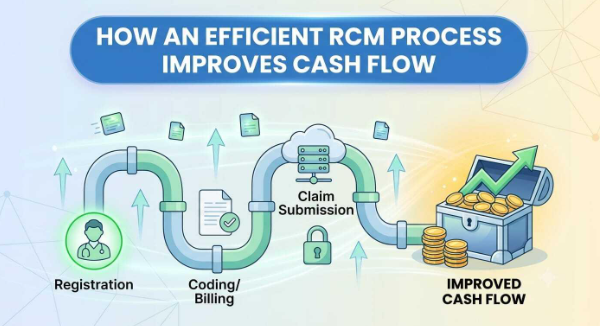
RCM process helps healthcare providers, improve claim approvals, and maintain a healthy cash flow. When every step of the revenue cycle works together, practices can spend less time dealing with billing issues and more time focusing on patients. It also reduces many common revenue cycle management mistakes that affect financial performance.
In this article, we'll explore how an effective revenue cycle process supports better financial performance and long-term success.
Why Cash Flow Matters in Healthcare
Healthy cash flow helps healthcare organizations manage their daily operations and continue providing quality care.
A steady cash flow allows practices to:
- Pay staff on time
- Purchase medical equipment and supplies
- Invest in new technology
- Expand healthcare services
- Maintain financial stability
Poor cash flow can create operational challenges and slow the growth of a healthcare practice.
1. Faster Insurance Verification
Insurance verification is the first step in preventing billing issues.
Benefits
- Confirms patient coverage
- Reduces billing errors
- Prevents claim rejections
- Improves payment accuracy
Best Practice
Verify insurance details before every appointment to avoid delays later in the billing process.
2. Accurate Medical Coding
Correct coding helps insurance companies process claims quickly and accurately.
Why It Matters
- Reduces claim denials
- Prevents coding errors
- Speeds up reimbursements
- Supports compliance
Best Practice
Keep coding staff updated with current coding guidelines and review claims regularly.
3. Timely Claim Submission
Submitting claims without unnecessary delays helps practices receive payments sooner.
Benefits
- Faster reimbursements
- Fewer missed filing deadlines
- Improved revenue collection
- Better financial planning
Best Practice
Submit claims as soon as services are completed and all documentation is verified.
4. Effective Denial Management
Managing claim denials becomes easier when healthcare providers use smart digital tools. These tools can identify common billing issues, improve claim accuracy, and reduce manual work before claims are submitted. If you're interested in learning how technology can help reduce denials, explore our guide on How Smart Tools Cut Dental Claim Denials: A Step-by-Step Playbook.
Why It Matters
An effective denial management process helps practices:
- Identify the reason for denials
- Correct errors quickly
- Resubmit eligible claims
- Reduce repeated mistakes
Best Practice
Review denied claims regularly and use denial trends to improve future claim submissions.
5. Better Accounts Receivable (AR) Management
Outstanding payments should be monitored closely.
Benefits
- Faster payment collection
- Reduced aging accounts
- Improved cash flow
- Lower financial risk
Best Practice
Follow up on unpaid claims regularly and prioritize older outstanding balances.
6. Reduced Billing Errors
Billing mistakes often result in delayed payments and additional work.
Common Errors
- Incorrect patient information
- Missing documentation
- Coding mistakes
- Insurance errors
Best Practice
Review every claim carefully before submission to improve accuracy.
7. Improved Team Communication
Revenue cycle management involves multiple teams working together.
Good communication helps:
- Reduce delays
- Improve documentation
- Minimize billing errors
- Speed up claim processing
Best Practice
Encourage collaboration between front desk staff, healthcare providers, coders, and billing teams.
8. Using Technology to Improve Efficiency
Modern healthcare technology can simplify many parts of the revenue cycle.
Helpful Tools
- Electronic Health Records (EHR)
- Billing software
- Eligibility verification systems
- Claim tracking tools
- Reporting dashboards
Best Practice
Use reliable digital tools to reduce manual work and improve billing accuracy.
Signs Your RCM Process Is Working Well
A well-managed revenue cycle often shows positive results such as:
- Faster claim approvals
- Fewer claim denials
- Shorter payment cycles
- Lower accounts receivable balances
- Better cash flow
- Improved operational efficiency
- Higher patient satisfaction
Monitoring these indicators can help healthcare providers measure the success of their billing process.
Tips to Improve Your RCM Process
Small improvements can make a big difference over time.
- Verify patient information before every visit.
- Confirm insurance eligibility early.
- Submit claims on time.
- Use accurate medical coding.
- Review claims before submission.
- Monitor denied claims regularly.
- Follow up on unpaid claims quickly.
- Train staff on updated billing procedures.
- Use technology to automate routine tasks.
- Track key performance indicators to identify improvement opportunities.
Conclusion
An efficient RCM process plays an important role in maintaining healthy cash flow for healthcare practices. From verifying patient information to managing denied claims and collecting payments, every step contributes to better financial performance.
By improving billing accuracy, reducing delays, and adopting consistent processes, healthcare organizations can strengthen their revenue cycle while creating a smoother experience for both staff and patients. Investing in a well-managed revenue cycle today can support long-term financial stability and sustainable growth.
Looking for more healthcare billing and revenue cycle insights? Visit Qiaben for expert articles, practical tips, and the latest industry updates. If you have any questions or need support with your medical billing or revenue cycle processes, our team is here to help. Get in touch with us today to learn how we can support your practice.