
Cloud-Based Medical Billing Software Benefits: How It Can Improve Your Practice
08/24/2026 7 min read
Managing medical billing can be difficult for a busy healthcare practice. Staff members have to deal with patient information, claims, payments, insurance requirements, billing records, and many other daily tasks. When billing information is stored on individual computers or handled through outdated systems, it can become difficult to access and manage everything efficiently.
Cloud-based medical billing software offers a different approach. Instead of keeping important billing information on one computer or server, cloud-based systems allow authorized users to access information through a secure internet connection. This can make billing workflows more flexible, organized, and easier to manage.
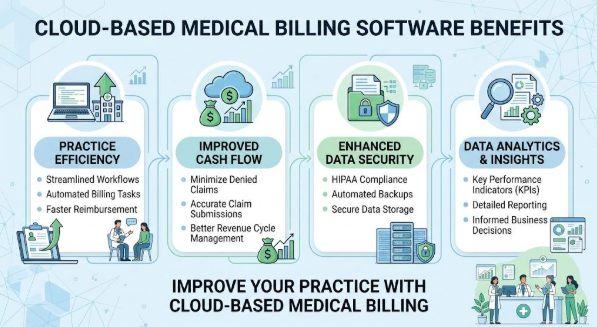
What Is Cloud-Based Medical Billing Software?
Cloud-based medical billing software is a billing system that stores information on remote servers rather than only on computers inside a medical practice.
Users can usually access the system through an internet-connected device, depending on their permissions.
This means billing teams do not necessarily need to be in the same physical location to work with billing information.
For example, a billing employee working from another location may be able to review claims, check account information, or work on billing tasks without being physically present in the practice.
1. Access Billing Information From Anywhere
One of the biggest advantages of cloud-based software is accessibility.
Traditional systems may limit access to computers located inside the office. Cloud-based platforms can allow authorized users to access the system from different locations.
This can be useful for:
- Remote billing teams
- Multiple office locations
- Healthcare groups
- Practice managers
- Staff working outside normal office hours
Better access can also make communication between the practice and its billing team easier.
2. Supports Remote Work
Remote work has become more common in healthcare administration.
A cloud-based system can make it easier for billing staff to work remotely while still accessing the information they need.
Instead of transferring files between computers or relying on emails for every task, authorized staff can work within the same system.
This can help reduce unnecessary delays and make daily billing work more flexible.
3. Keeps Billing Information in One Place
Healthcare practices deal with a large amount of information.
Claims, patient balances, payments, insurance details, and billing records all need to be organized properly.
A cloud-based system can bring many of these activities into one central platform.
This can reduce the need to switch between multiple systems and make it easier for staff to find the information they need.
A more organized workflow can also reduce confusion and unnecessary manual work.
4. Makes Collaboration Easier
Billing often involves more than one person.
The front desk may collect patient information, the coding team may review services, and the billing team may submit and follow up on claims.
When everyone is working with the same up-to-date system, communication can become easier.
For example, if a claim needs additional information, the appropriate team member can review the account and take action without waiting for files to be manually transferred.
5. Reduces Dependence on Office Hardware
Traditional billing systems may require servers, computers, storage devices, and other hardware.
Hardware can fail, become outdated, or require maintenance.
With a cloud-based system, much of the technical infrastructure is handled through the cloud service.
This can reduce the amount of hardware that a practice needs to maintain on-site.
However, practices should still choose a provider that offers reliable infrastructure, security measures, backups, and technical support.
6. Can Make Software Updates Easier
Medical billing processes can change over time. Software also needs regular updates to remain useful and secure.
With cloud-based software, updates can often be managed centrally by the software provider.
This can reduce the need for staff to manually install updates on every computer.
It also helps ensure that users are working with the same version of the system.
7. Helps Improve Billing Workflow
A good billing system should do more than store information. It should help staff complete their work efficiently.
Cloud-based billing software can support different stages of the billing process, including:
- Patient information management
- Charge entry
- Claim preparation
- Claim tracking
- Payment posting
- Accounts receivable management
- Denial follow-up
- Reporting
When these activities are organized within a connected workflow, staff can spend less time searching for information.
8. Provides Better Visibility Into Billing Performance
Practice managers need to understand what is happening with their revenue cycle.
Cloud-based systems may provide dashboards and reports that show important information such as:
- Outstanding claims
- Accounts receivable
- Payment activity
- Denials
- Collection performance
- Claim status
- Patient balances
Having this information available in one place can help managers identify problems earlier.
For example, if outstanding claims suddenly increase, the billing team can investigate the reason rather than waiting until the problem becomes serious.
9. Helps With Multiple Locations
Healthcare organizations with more than one location can face additional billing challenges.
Each location may have different staff members and different daily workflows.
A cloud-based system can make it easier to manage information across multiple locations while giving authorized users access to the information they need.
This can support more consistent billing processes across the organization.
10. Supports Faster Communication
Billing problems often require communication between different people.
A claim may need clarification from the practice. A payment may need to be reviewed. A denied claim may require additional documentation.
When information is available through a shared system, staff can often find the necessary details faster.
This can help reduce delays caused by searching through emails, paper files, or separate spreadsheets.
Cloud-Based vs. Traditional Billing Software
Both traditional and cloud-based systems can support billing operations, but they work differently.
Traditional systems may rely more heavily on local computers and on-site infrastructure. Cloud-based systems are designed to store and provide access to information through remote infrastructure.
Cloud-based software may offer advantages such as:
- Easier remote access
- Centralized information
- Flexible collaboration
- Reduced dependence on local hardware
- Easier software updates
- Better accessibility for multiple locations
However, the best choice depends on the practice's needs, budget, existing systems, and security requirements.
How Cloud-Based Software Can Improve the Billing Process
The biggest benefit of cloud-based billing software is not simply that information is stored online.
Its real value comes from creating a more connected workflow.
When billing information is easier to access, teams can work together more efficiently. When reports are easier to generate, managers can identify problems sooner. When repetitive tasks are reduced, staff can focus on more important billing activities. For example, a practice can use its billing system to identify unpaid claims, review outstanding balances, and prioritize accounts that need follow-up. This creates a more organized approach to revenue cycle management.
A well-organized billing system can also make it easier for staff to review procedure and billing information before submitting claims. Understanding CPT codes is an important part of this process, as these codes describe the medical services provided. This complete guide to CPT codes in medical billing explains their role in accurate billing in more detail.
Final Thoughts
However, software alone does not guarantee better financial performance. Practices also need accurate processes, trained staff, proper security, and regular follow-up. This is where having the right billing support can make a difference. Qiaben helps healthcare practices manage important medical billing and revenue cycle activities, including claims management, payment follow-up, denial handling, and other billing tasks. By combining organized billing workflows with experienced support, healthcare practices can build a stronger, more reliable revenue cycle.
With the right technology and reliable billing support, healthcare practices can spend less time dealing with administrative challenges and more time focusing on their patients.