
7 Best Practices for Accurate Medical Billing
08/23/2026 5 min read
Accurate medical billing is essential for every healthcare practice. It helps ensure timely payments, reduces claim denials, and improves the overall financial health of your organization.
Many healthcare organizations experience payment delays because of avoidable medical billing errors that can be corrected with the right processes.
Even small billing mistakes can lead to delayed reimbursements, extra administrative work, and frustrated patients. By following proven medical billing best practices, healthcare providers can improve efficiency and focus more on delivering quality patient care.
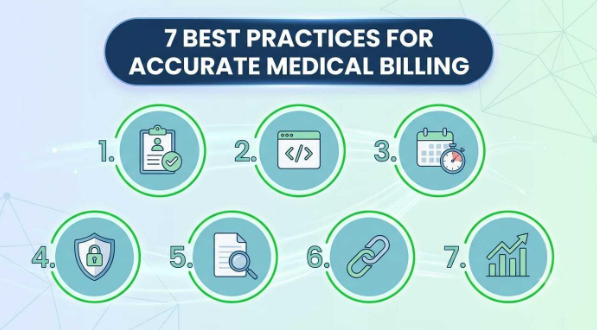
In this article, we'll explore seven practical ways to make your medical billing process more accurate and reliable.
Why Accurate Medical Billing Matters
An efficient billing process offers many benefits for healthcare providers.
It helps you:
- Reduce claim denials
- Receive payments faster
- Improve cash flow
- Minimize billing errors
- Save time for staff
- Enhance the patient experience
Small improvements in billing accuracy can make a big difference over time.
1. Verify Patient Information Before Every Visit
Incorrect patient information is one of the most common causes of billing problems.
What to Check
- Patient name
- Date of birth
- Insurance details
- Contact information
- Policy number
Best Practice
Always confirm patient details before each appointment, even for returning patients.
2. Confirm Insurance Eligibility
Insurance coverage can change at any time. Verifying eligibility before providing services helps prevent unexpected claim denials.
Benefits
- Fewer rejected claims
- Faster claim processing
- Better payment accuracy
- Clear communication with patients
Best Practice
Verify insurance coverage before every visit and update any changes immediately.
3. Use Accurate Medical Coding
Correct coding is essential for successful claim submission.
Common Coding Mistakes
- Incorrect diagnosis codes
- Missing procedure codes
- Outdated coding information
Best Practice
Keep coding staff updated on the latest coding guidelines and perform regular coding reviews.
4. Submit Claims Without Delay
Late claim submission can result in payment delays or claim denials. Submitting claims correctly is just as important as submitting them on time. Understanding each stage of the claim submission process can help reduce errors, improve claim accuracy, and speed up reimbursements. To learn more, read our guide on Step-by-Step Claim Submission Process in Medical Billing.
Best Practice
- Prepare claims promptly after services are provided.
- Track payer submission deadlines.
- Review claims before sending them to avoid unnecessary corrections later.
5. Review Claims Before Submission
A quick review can prevent many avoidable errors.
Check for
- Missing patient details
- Incorrect codes
- Incomplete documentation
- Missing provider information
- Billing inconsistencies
Best Practice
Use a claim review checklist before every submission.
6. Monitor Denied Claims Regularly
Claim denials provide valuable information about billing issues.
Why It Matters
Reviewing denied claims helps identify:
- Repeated billing mistakes
- Documentation gaps
- Coding issues
- Process improvements
Best Practice
Analyze denial reports regularly and take corrective action to prevent the same errors from happening again.
7. Invest in Staff Training and Technology
Medical billing rules and healthcare regulations continue to change. Keeping your team informed helps improve billing accuracy.
Best Practice
- Provide regular staff training.
- Use modern billing software to reduce manual work.
- Automate repetitive tasks whenever possible.
- Keep billing systems updated.
Well-trained staff combined with reliable technology can improve both efficiency and accuracy.
Simple Tips for Better Medical Billing
Here are a few habits that can strengthen your billing process:
- Verify patient information before every appointment.
- Confirm insurance eligibility early.
- Use accurate medical codes.
- Keep documentation complete and organized.
- Submit claims on time.
- Review every claim before submission.
- Monitor billing performance regularly.
- Train staff on updated billing guidelines.
- Use technology to reduce manual errors.
- Communicate clearly between clinical and billing teams.
Common Benefits of Following Medical Billing Best Practices
Implementing these practices can lead to:
- Higher claim approval rates
- Faster reimbursements
- Improved cash flow
- Fewer billing corrections
- Lower administrative workload
- Better patient satisfaction
- More efficient daily operations
These improvements support both financial performance and quality patient care.
Conclusion
Following medical billing best practices is one of the most effective ways to improve billing accuracy and reduce unnecessary delays. Simple steps such as verifying patient information, using accurate coding, reviewing claims carefully, and monitoring denials can help healthcare practices avoid costly mistakes.
Accurate medical billing is essential for maintaining a healthy revenue cycle, minimizing claim denials, and ensuring timely reimbursements. By following these seven best practices - from verifying patient information to staying updated with coding changes and leveraging automation - healthcare providers can improve billing accuracy, reduce administrative burdens, and enhance the overall patient experience.
Visit Qiaben for expert insights, practical tips, and the latest updates on medical billing, coding, and revenue cycle management. If you're looking to streamline your billing processes, reduce claim denials, and maximize reimbursements, our team is here to help. Contact Qiaben today to discover how our tailored medical billing solutions can support your practice and drive long-term financial success.